

This headline may become something normal in the near future. Today, it is the brine we keep throwing away.
Today I want to keep talking about water reuse and brine valorisation, but not in the technical way.
I want to do it as an open-hearted conversation. The kind you’d have with a colleague over coffee, when nobody is taking notes and you can finally admit the things you didn’t understand for years.
Many of you already know our guest, Christos Charisiadis from Brine Consulting.
I had the chance to meet him almost two years ago, and he has become one of those references you keep coming back to, one of those people who chose a niche so specific that, over time, the niche became a field, and the field became a movement.
The first time I heard the words brine mining, it was September 2023, in Seville, at the IDA Congress. And honestly? It sounded like Chinese to me.
Getting what out of the brine? I had spent years designing and handing over desalination plants. My only worry about the brine was whether it could be discharged without air entrainment issues, and whether we could execute the outfall on time. That was it. That was the whole brine conversation.
I thought there was no other choice. The brine was waste. The brine went back to the sea. End of story.
But it seems there is another choice. And like any big shift, it takes time.
A brief 4 minutes segment of the above conversation was uploaded in our Youtube Channel, in case some of you find more convenient this platform to get some insights:
The moment
The thing that broke my frame was a conversation with a friend about Taweelah Desalination Plant 900 MLD, in which I was involved as Engineering Coordinator.
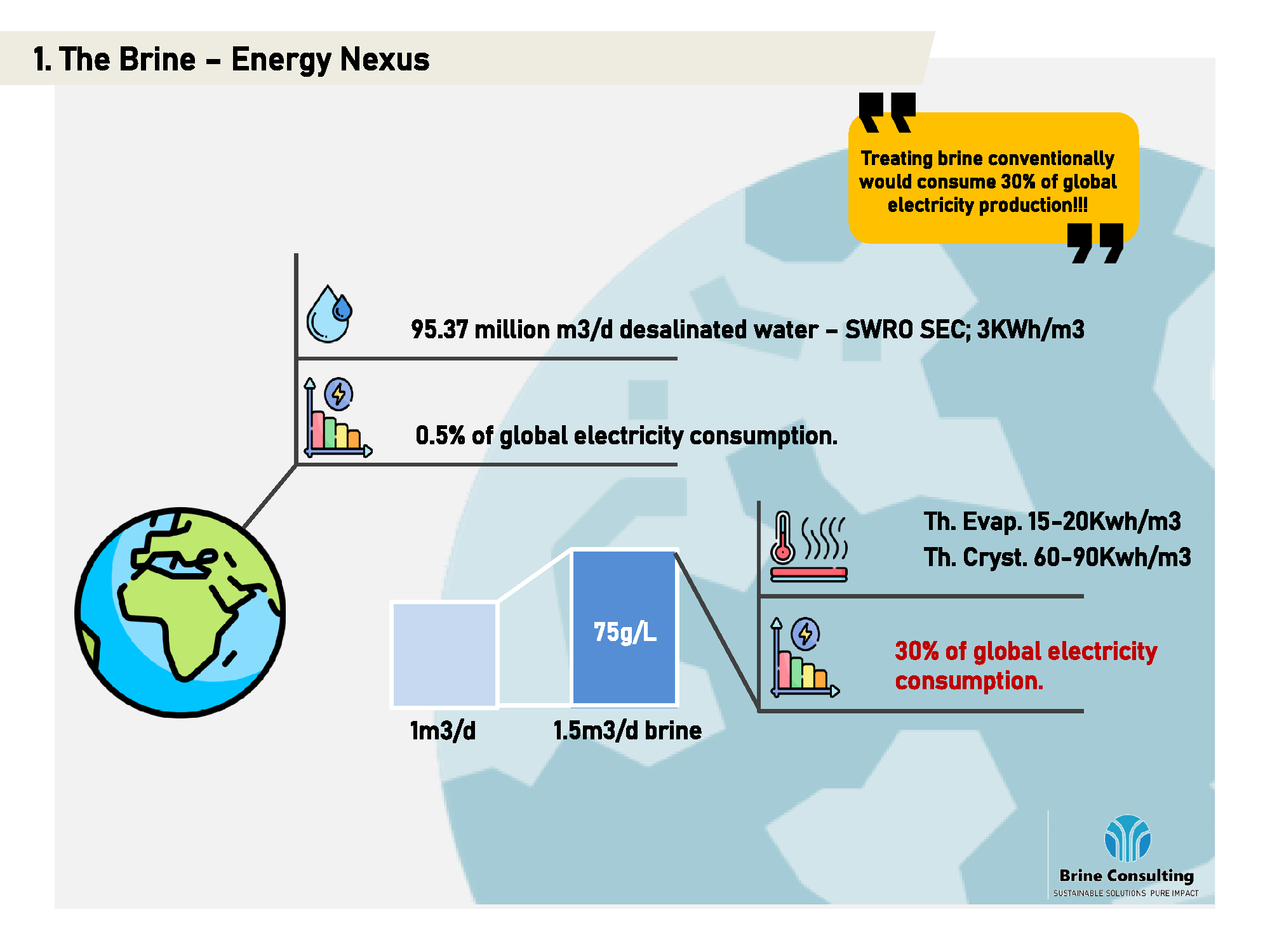
Taweelah produces around one million cubic metres of fresh water per day. It also produces about 1.5 million cubic metres per day of brine that goes straight back to the Gulf.
Read that again. We are building enormous, world-class facilities that produce more waste than final product. That is the actual ratio.
And nobody on the team thinks of it that way, because we’ve all been trained to think of brine as the byproduct, not as the thing.
That’s when the brine valorisation conversations started to make sense to me. As something obvious that we’d been ignoring because we were too busy delivering the project on time.
So why does it take so long?
This is the question I keep coming back to. Innovation and technology deployment take time. Fine. But why does it take so long, and what can we actually do to adopt this faster?
Christos gave me a frame, he said engineers tend to think in CAPEX and OPEX. Two axes.
But in brine valorisation, you have four: CAPEX, OPEX, volume, and risk.
And risk doesn’t scale linearly with project size, it scales geometrically. Double the plant, you don’t double the risk. You multiply it by something much uglier.
That’s the first answer to why it takes so long. The bigger the operation, the bigger the prize, and the bigger the fear.
And right now we’re still at the stage where the technology providers are telling clients “trust us, this will work for 20 years” and the client is sitting on the other side of the table thinking I have never heard of any of this and you want me to bet a billion dollars on it.
Which leads to the line that made me laugh and wince at the same time:
“ZLD doesn’t make commercial sense unless you have a knife on your throat.”
Zero Liquid Discharge, the dream of getting everything out of the brine, leaving only dry salts, only happens when a regulator is forcing you to do it, or when your operation literally cannot continue without it.
Otherwise, the economics don’t close.
The crystalliser alone consumes 60 to 90 kWh per cubic metre. The capex for the alloys is brutal. In a full brine ZLD scheme, the thermal crystallisation step can eat 60% of the total project cost.
So the realistic sweet spot, for most of us, isn’t ZLD. It’s MLD — Minimum Liquid Discharge.
Concentrate more, recover more water, leave a smaller, more interesting brine behind.
Does this mean the ZLD market is going down? Not at all, quite the opposite, especially in industrial applications. However, in desalination schemes, MLD will probably be the next step.
You can also see ZLD approaches, for example, in King Salman Park. And of course, the China and India ZLD markets, as we mentioned in our previous episode, continue expanding as well.
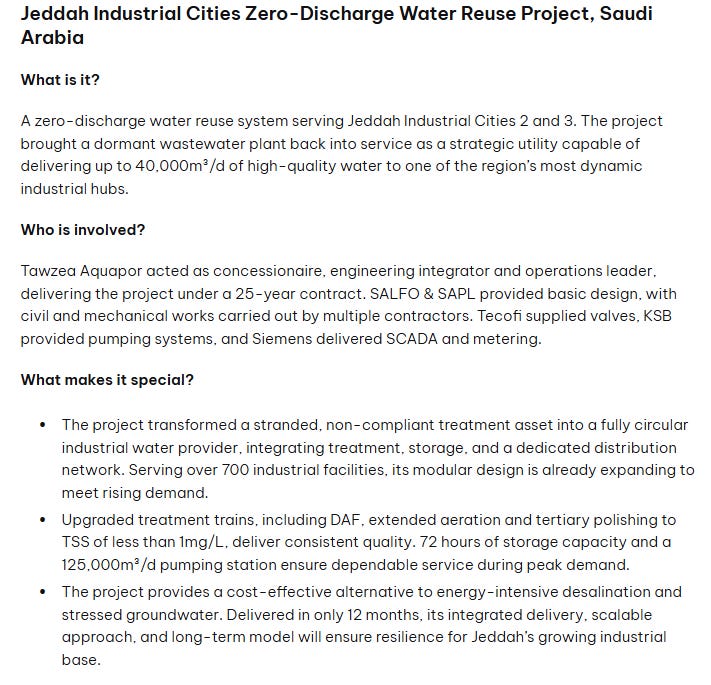
Actually, this week the project was awarded in Global Water Summit as Reuse Project of the Year.
Which minerals actually make business sense?
Here is where I had to update my mental model. I used to assume that if you were going to recover anything from seawater brine, it would be salt. Sodium chloride. The obvious one.
Sodium chloride is about 30% of the dissolved load in seawater RO brine, which means recovering it produces enormous volumes of a product with very low commercial value.
Locations such as Indonesia and Canary Island may have strong business cases for sodium chloride. As they import this “basic” material, but at a very high cost. And you know what? For instance, the Canary Islands rely on desalination for a large percentage of their water supply, meaning they are discharging sodium chloride into their coastlines. They could potentially recover it, probably within a reasonable business case.
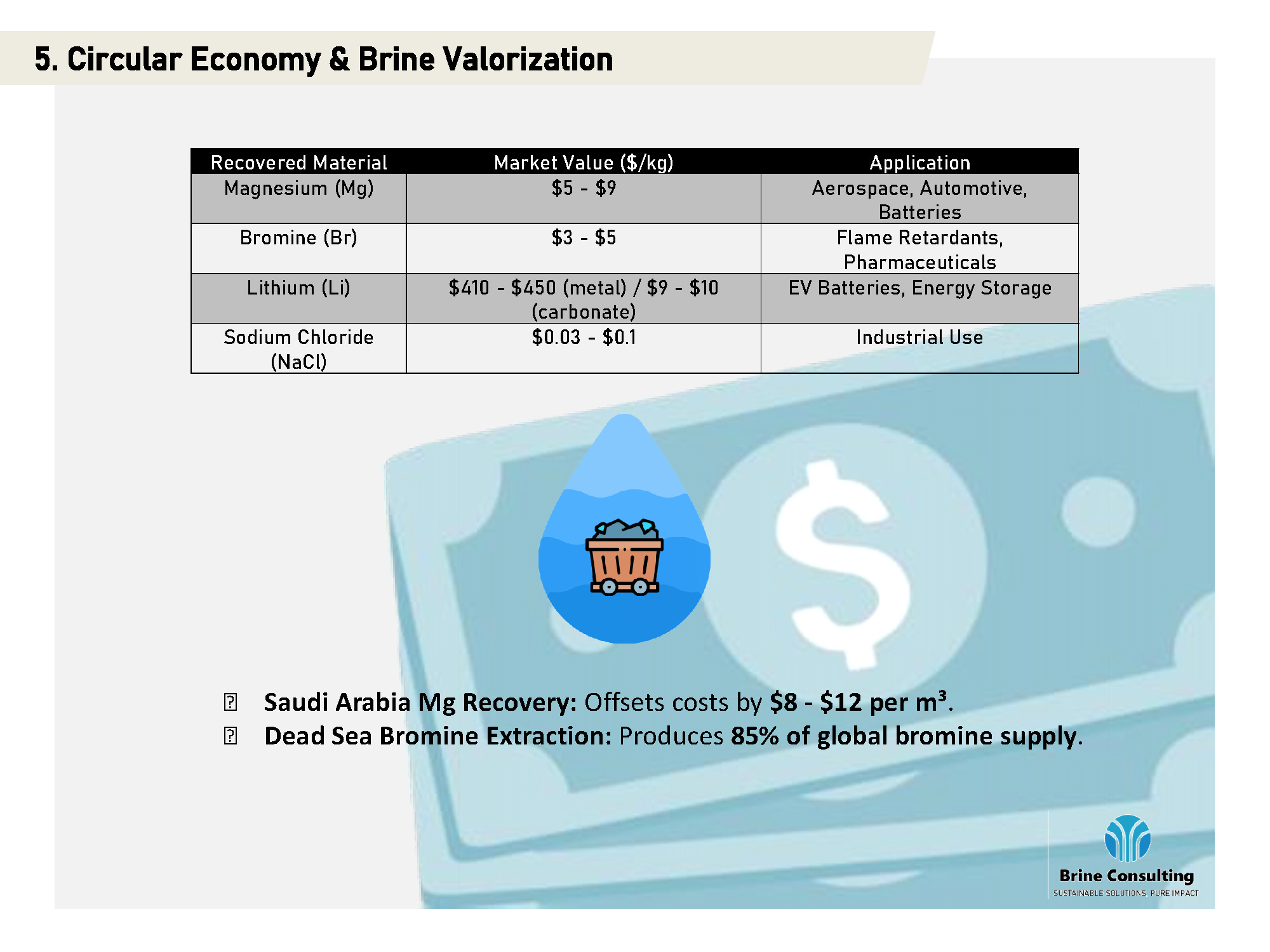
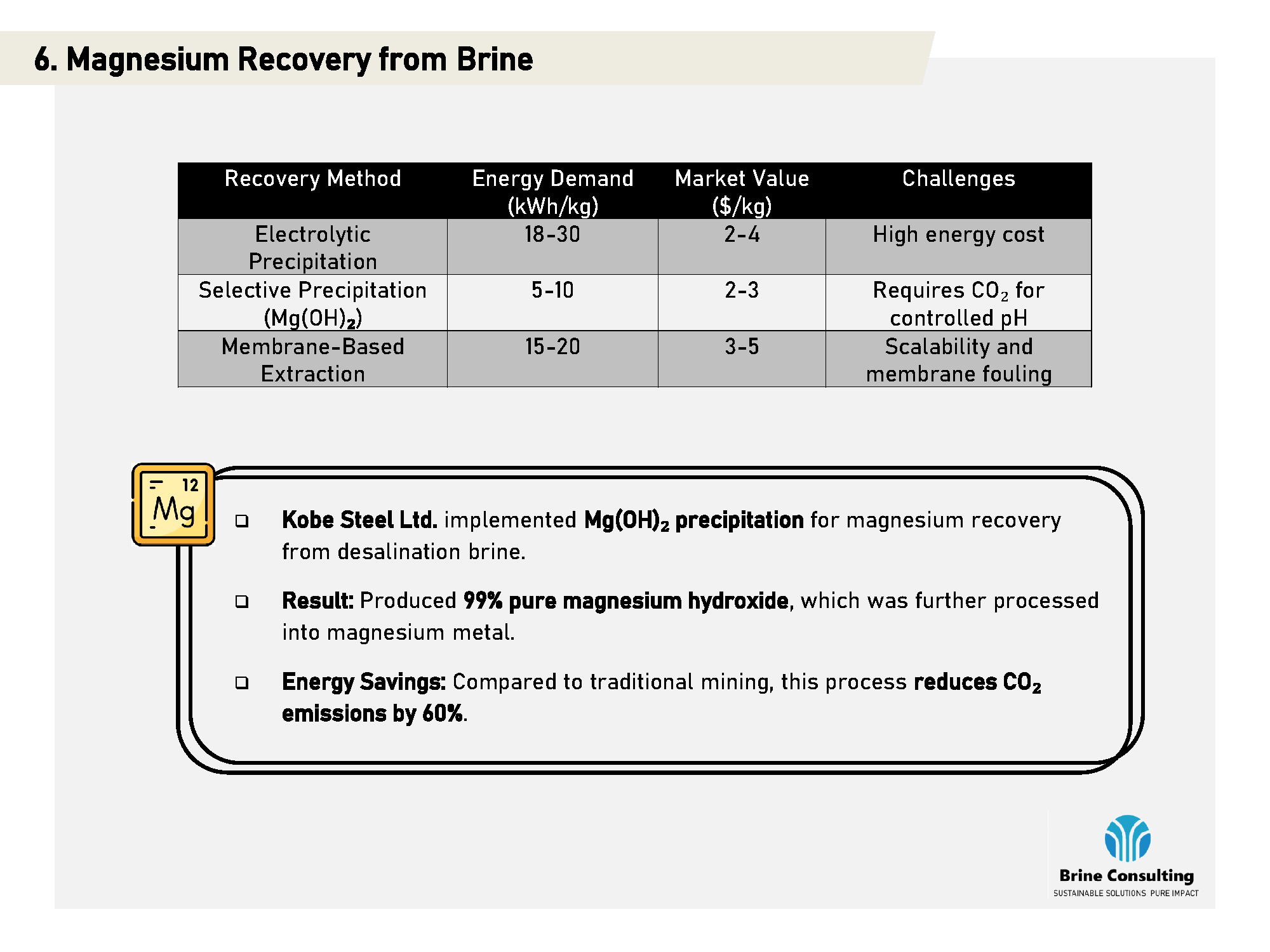
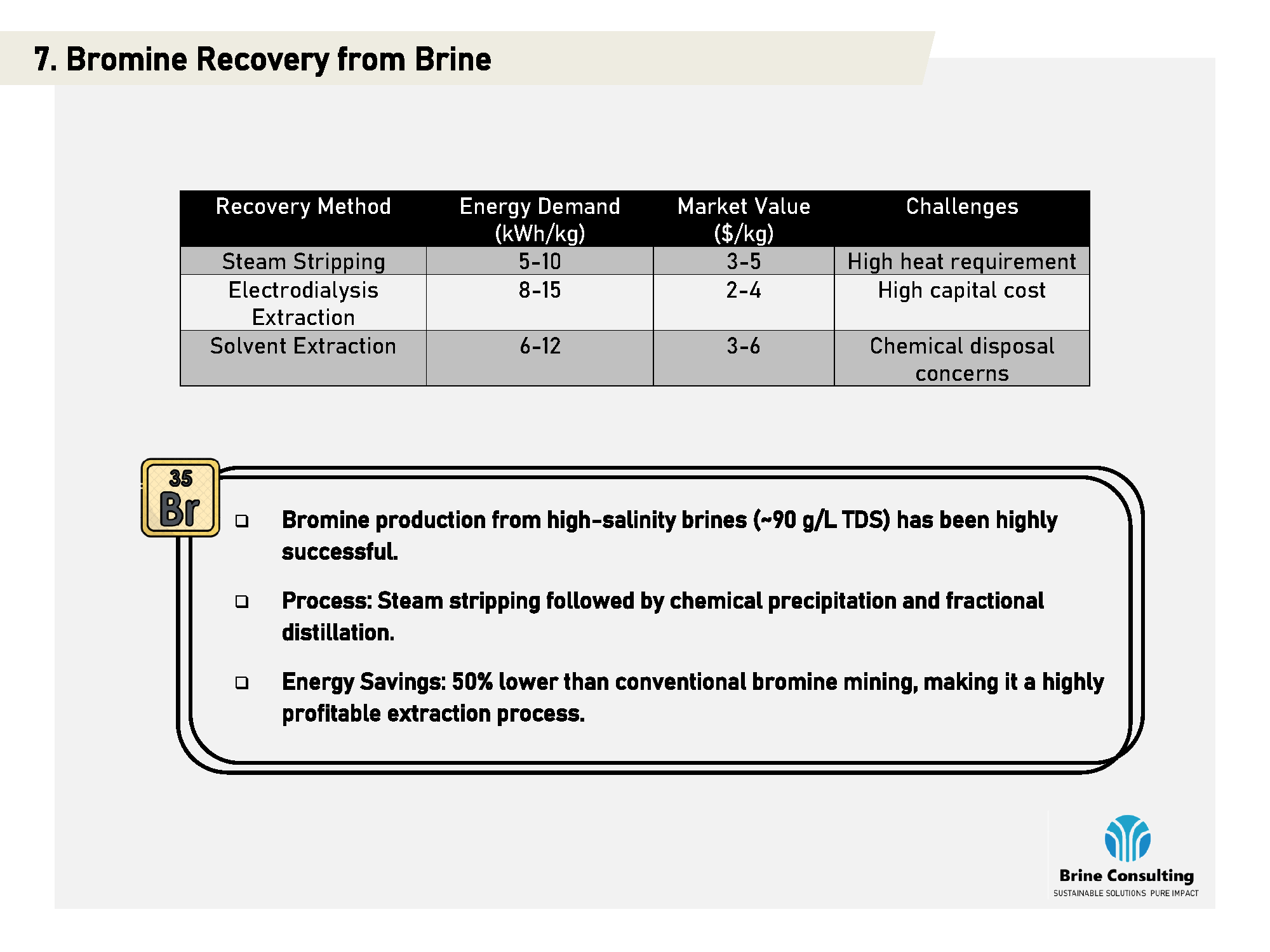
Other interesting molecules, business-case-wise, are magnesium and bromine.
Magnesium especially is interesting, because the geopolitics of magnesium supply have become uncomfortable for a lot of countries and the price reflects that.
Magnesium primary purpose is acting as an essential alloying agent that gives aluminum structural strength and corrosion resistance, alongside being die-cast directly into vital automotive components like steering columns, gearbox casings, and seat frames. Because pure magnesium oxidizes rapidly, it cannot be stockpiled long-term; the entire global supply chain operates on a fragile, just-in-time delivery model that relies on China for up to 90% of its primary production.
This extreme geographic concentration turned 2022 into a disastrous year for industrial procurement. Following sudden energy-rationing mandates in Chinese smelting hubs, global supply vanished overnight, forcing market prices to skyrocket from a historical baseline of $2,000 per metric ton to unprecedented peaks of over $10,000. Because magnesium has no viable metallurgical substitute, this supply shock triggered a massive industrial panic, forcing aluminum producers to halt shipments and threatening a total shutdown of global automotive assembly lines. The crisis ultimately served as a severe geopolitical wake-up call, prompting Western nations to officially designate magnesium as a critical strategic mineral and aggressively fund localized recycling and alternative supply chains.
Bromine serves as a highly sensitive geopolitical choke point due to its extreme supply consolidation, with Israel’s Dead Sea operations and the United States' Arkansas brine fields controlling over 60% of global output, leaving major industrial hubs acutely vulnerable to regional instability.
Bromium acts as a quiet chemical gatekeeper for three massive global industries: the electrical and electronics sector—where it protects printed circuit boards and powers memory chip manufacturing—the energy sector, and the construction industry.
And then there’s the other category: the strategic minerals.
Lithium is the obvious one, the EV transition runs on it, and most of the world’s lithium currently comes from a handful of salars in Chile, Argentina and Bolivia.
Direct Lithium Extraction (DLE) from brine is still maturing, but the pressure to develop it is enormous, because every country now wants its critical minerals produced somewhere it can actually defend.
The El Paso example Christos mentioned.. The biggest inland desalination plant in the world, brackish water, huge volumes.
They’re concentrating further, precipitating calcium sulphates, splitting the rest into acid and base via bipolar membranes, and they already have commercial buyers for all three products.
The geography worked: enough volume, close enough to customers. Brine valorisation is, in the end, a logistics problem dressed up as a chemistry problem.
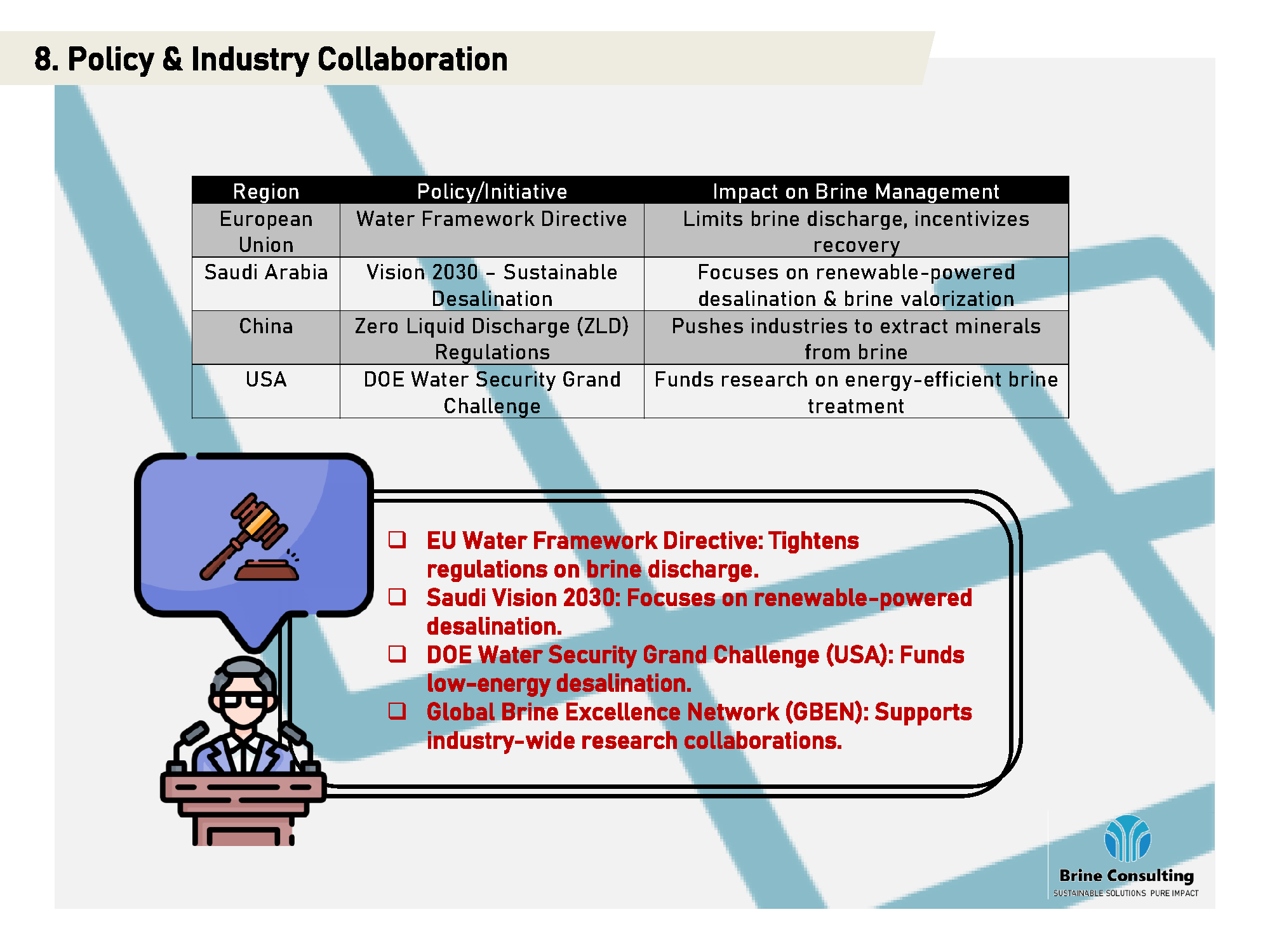
The regulatory piece
This is the part of the conversation I wish we’d spent more time on.
Right now, in most jurisdictions, the brine discharge permit is the binding constraint. If the regulator lets you discharge, you discharge.
If the regulator tightens, either through a discharge fee, a salinity cap, or a flat ban in sensitive ecosystems, then suddenly the math on MLD and brine valorisation changes overnight.
The “knife on the throat” Christos talked about is, almost always, a regulatory knife.
Inland desalination in the US is already pushing the issue because there’s nowhere to discharge. And the geopolitical conversation about critical raw materials means governments are starting to look at brine not as a waste stream but as a domestic mineral resource sitting in plain sight.
The regulator may be the one who decides whether your brilliant valorisation scheme gets built or stays on a PowerPoint slide forever.
And then the client enters panic mode
This was the part I laughed at the most, because it’s so true.
“If you put these things in front of a client that has zero idea about water, they get immediately into panic mode.”
Anyone who has presented a non-standard water solution to a non-water client knows this scene by heart. You’re explaining the process…showing the recovery numbers, through the mass balance.
And you can see the moment, usually around the third slide, when the client’s eyes glaze over and they stop hearing the technical argument and start hearing risk. Just risk. Pure undifferentiated risk.
And then the question comes. Always the same question: Has this been done before? At this scale? In our region? With our water?
And if the honest answer is “not exactly, but —” the meeting is effectively over. They want someone else to do it first.
They want a BOO or a BOT or a PPP where someone else is holding the risk. They want references they can call. They don’t want to be the case study.
This is the actual reason adoption is slow. It’s that the people writing the cheques cannot tolerate being the first one to find out what doesn’t work.
And so we sit, collectively, waiting for someone braver, or someone with a regulator’s knife at their throat, to go first.
So what do we do about it?
We build the references. We talk about the projects that do work, even the small ones, even the partial ones — calcium precipitation here, magnesium recovery there, a brackish-water MLD scheme somewhere else.
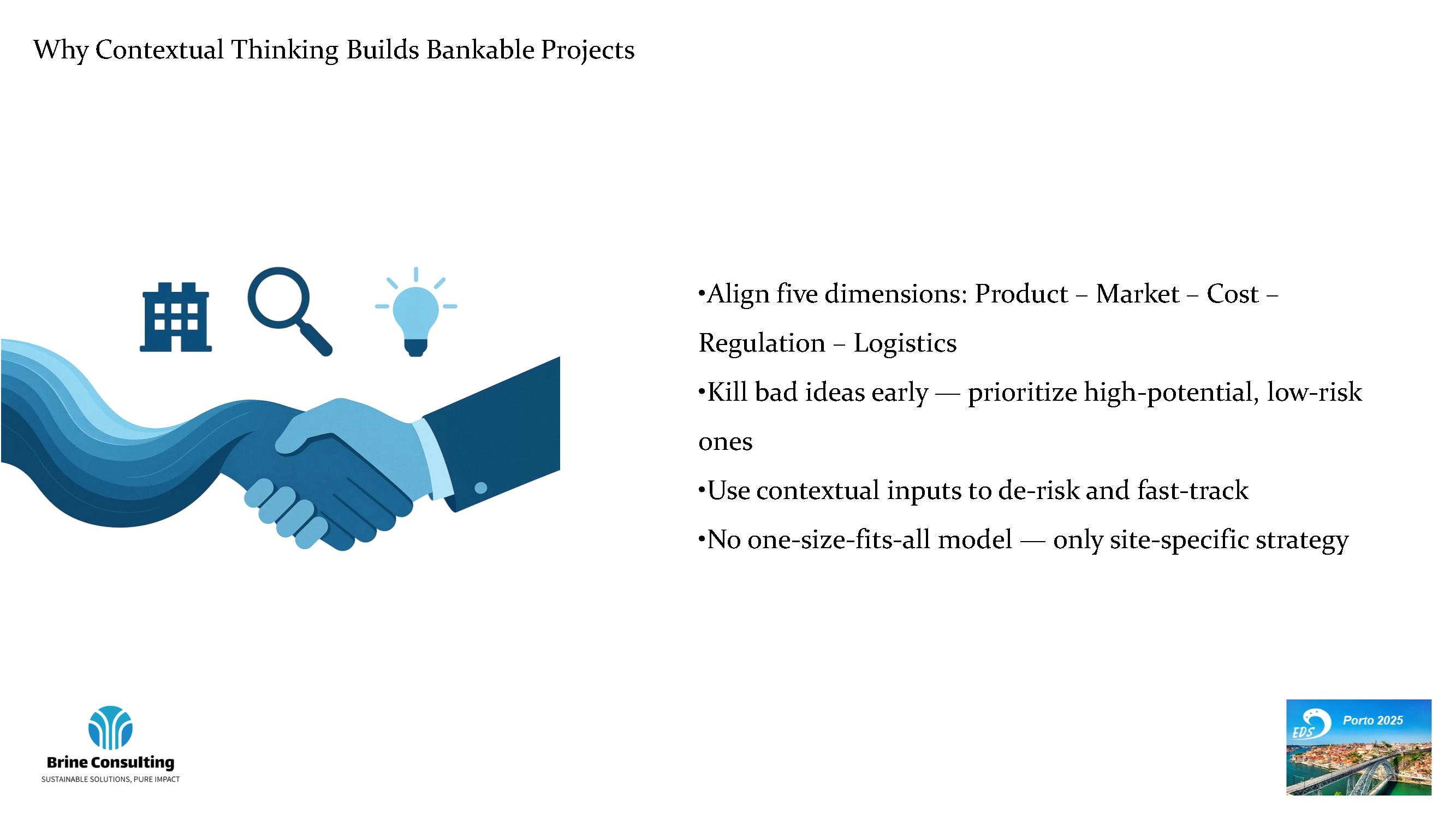
💡Probably this is the key. For instance, let’s take a sodium chlorite reference case, an “easy one.” Let’s build it, demonstrate it, and learn from it. Clients will gain confidence. New mineral applications. Support from the people or consultants who can develop the business case: what do I do with these minerals, what is the business case, how is it structured, etc.
Every small commercial success makes the next client a little less panicked. Mega-projects matter not because they’ll be perfect but because they’ll generate the operating data the industry has been starved of.
We also have to do something engineers find genuinely hard, which is talk like humans.
Christos said it better than I will: we need to build cross-industry skills.
We need to stop thinking only in calculations. We need to be able to walk into a room of people who don’t know what a membrane is and explain, in their language, why the brine that goes back to the sea is also the magnesium that they’re currently importing from a country they’d rather not depend on.
And finally — and this is the part I want to say to anyone early in their career — patience and presence.
This space rewards people who stick around.
The conferences, the working groups, the technical committees, the awkward LinkedIn posts. It all compounds.
The reason Christos is the person I called for this conversation is that he has been in the same niche for ten years, refusing to leave, while the rest of the world slowly caught up to where he already was.
That’s the job. Help the next client be a little less afraid.


