
Ok, this publication reaches around 1,000 water peers across the globe.
Today, I encourage you to take this episode COMPLETELY, it gets better as it develops. Whenever you can, find 45 minutes in the coming days and watch the full video.
Pay close attention to our guest. He is one of the most inspiring and insightful people I’ve met in the last three years, which is exactly why I invited him to join the conversation.
Consider this a 45-minute workout for your brain. I guarantee you will learn something valuable.
For years, when I told friends China was probably handling water better than most of Europe, they looked at me like I’d lost it. The image is sticky for them: smog, polluted rivers, opaque industry. It takes a while to update.
David Bailey, a multi-language-fluent entrepreneur, early career in Chinese government / diplomatic affairs, now 20+ years in water inside China’s water sector and now serves as Vice President of the China Desalination Association, I’m more convinced than ever that the conversation about global water leadership has to include China, and that most water professionals outside Asia are working with a 15-year-old picture of a country that has already moved on.
China sells water rights. They’ve been doing it for a decade.
This was the moment that genuinely surprised me, and David told me it surprised Alejandro Sturniolo too when they discussed it last year.
About ten years ago, China set up what is effectively a water rights exchange market, a public, government-owned marketplace where the right to use water is allocated by basin, tied to the GDP a province or city has committed to producing.
If your industrial activity needs more water than your allocation, you don’t just pump more. You buy the right from a neighboring province in the same basin.
It’s not identical to the “water positive” or water credit frameworks emerging globally, but the underlying philosophy is the same: water is a finite resource with a price, and you cannot consume it faster than the system says you can.
China implemented this at national scale a decade before most of the world started seriously talking about it.
The reason is brutally simple.
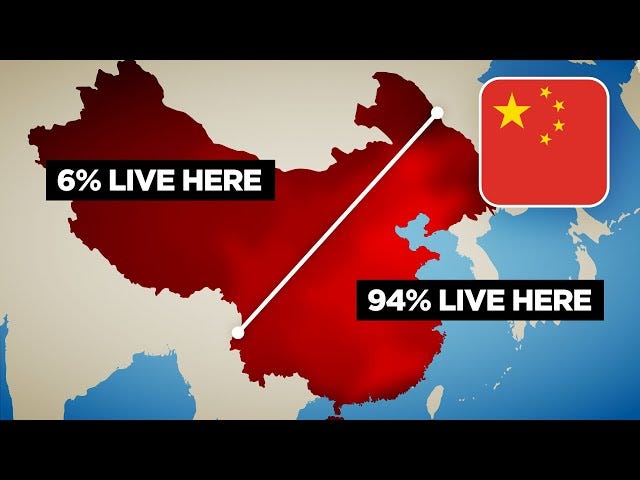
China has less than half the global average of available water per capita, and the water that exists is geographically misaligned with the population. Abundant in the south, near-desert in the north.
A thousand years ago they were already digging tunnels to move water around. Today they’re pricing it into the economy.
Groundwater is, for industry, essentially banned.
In most countries, regulating groundwater is a political nightmare. In China, for industrial use, it’s mostly settled: forbidden.
Agriculture can still apply for permits, but with strict caps.
The default assumption in industrial planning is that you will not be touching the aquifer.
Try imagining that conversation in your own country.
The world’s largest Zero Liquid Discharge market is in China
This was the part I most wanted to flag for our community. China is the world’s largest manufacturer of petrochemicals, steel, cement, and most of the heavy industries that produce nasty wastewater.
Combine that with the water rights system above and the groundwater ban, and you get a regulatory environment where industrial sites have one realistic option: Minimum Liquid Discharge (MLD) or Zero Liquid Discharge (ZLD).
David estimates that China holds 60–70% of the global market for the core ZLD technologies, particularly evaporation and crystallization.
If you’re buying a ZLD system anywhere in the world right now, the heart of it was very likely engineered or built in China.
There’s a fascinating bit of behavioral history here.
A decade ago, plants would build a ZLD system to pass inspection, then quietly bypass it because operating costs were too high.
The fix wasn’t a better fine, it was making the owner of the company personally liable, including jail time.
As David put it: “the market is much worse than the money.”
Once that became real, the operations market caught up to the construction market, and the technology kept improving because it had to.
That’s a regulatory design lesson worth sitting with.
Landfills are essentially gone. Power plants now compete for garbage.
Around a decade ago, China subsidized power generation from waste burning, not solar, not wind, but garbage-to-energy specifically. The goal was to make burying waste economically irrational.
It worked so well that the subsidy was removed two or three years ago because it was no longer needed.
Today, power plants in different cities compete on price to acquire garbage from one another, because without garbage they can’t generate power and they can’t earn margin. Landfills have been almost entirely closed.
The leachate technology market that used to exist around landfills has shifted to dewatering leachate from pre-incineration processes.
David was honest about the gap: China is still behind countries like Germany or Finland on garbage classification at the household level. That’s a real weakness. But the disposal end of the system has been re-engineered in a way most Western cities are nowhere near.
The honest weakness: hyper-competitiveness eating itself
I asked David directly what China is not doing well, because lately I struggle to find weaknesses, and I don’t trust that instinct.
His answer was surprisingly self-critical, and I think important.
The problem is mentality. When a technology matures in Europe, maybe 5–10 companies manufacture it.
When it matures in China, 10,000 do. And then those 10,000 don’t compete on quality or R&D; they compete on price, racing each other to the floor.
David called it “out of logic competitive.” It hurts foreign competitors, yes, but it also hurts Chinese entrepreneurs like him who want to invest margin into next-generation R&D.
You cannot fund the future on zero-margin commodity pricing.
The government is aware and has tried to push back with policy, but he doesn’t think those measures are working yet.
His view: it’s a generational shift. The older generation built itself out of poverty by producing more and cheaper; the next generation will need to build out of value.
This is the most honest “constructive critique” of the Chinese water industry I’ve heard from someone inside it, and it tracks with what I see at trade shows.
Why he’s betting on tubular ceramic membranes
David’s company, Conceptech, makes tubular ceramic membranes, and the reasoning behind the bet says a lot about where he thinks the industry is heading.
His starting concern is one most of the industry doesn’t like to talk about: the membranes we currently rely on — PES, PVDF, PP, polyamide — have a manufacturing process that is not environmentally friendly, requires heavy chemical use, generates significant wastewater, and produces modules that at end-of-life become waste themselves.
We are, in his words, using non-sustainable technology to purify water and calling it sustainability.
Ceramic membranes are made from earth and high-temperature firing. After their service life, you can return them to the oven and remake them.
The catch right now is cost — ceramic is roughly 15–20 times more expensive per square meter than PVDF — which limits adoption to applications where stability matters more than price (pharmaceuticals, semiconductors, certain industrial reuse).
Tubular vs. flat-sheet matters too.
Flat-sheet ceramic is cheaper to manufacture and works submerged like an MBR, but every maintenance event means draining the tank.
Tubular runs inside-out like a reverse osmosis skid — higher membrane cost per square meter, but lower CAPEX on infrastructure and dramatically lower OPEX over time. For long lifecycle thinking, tubular wins.
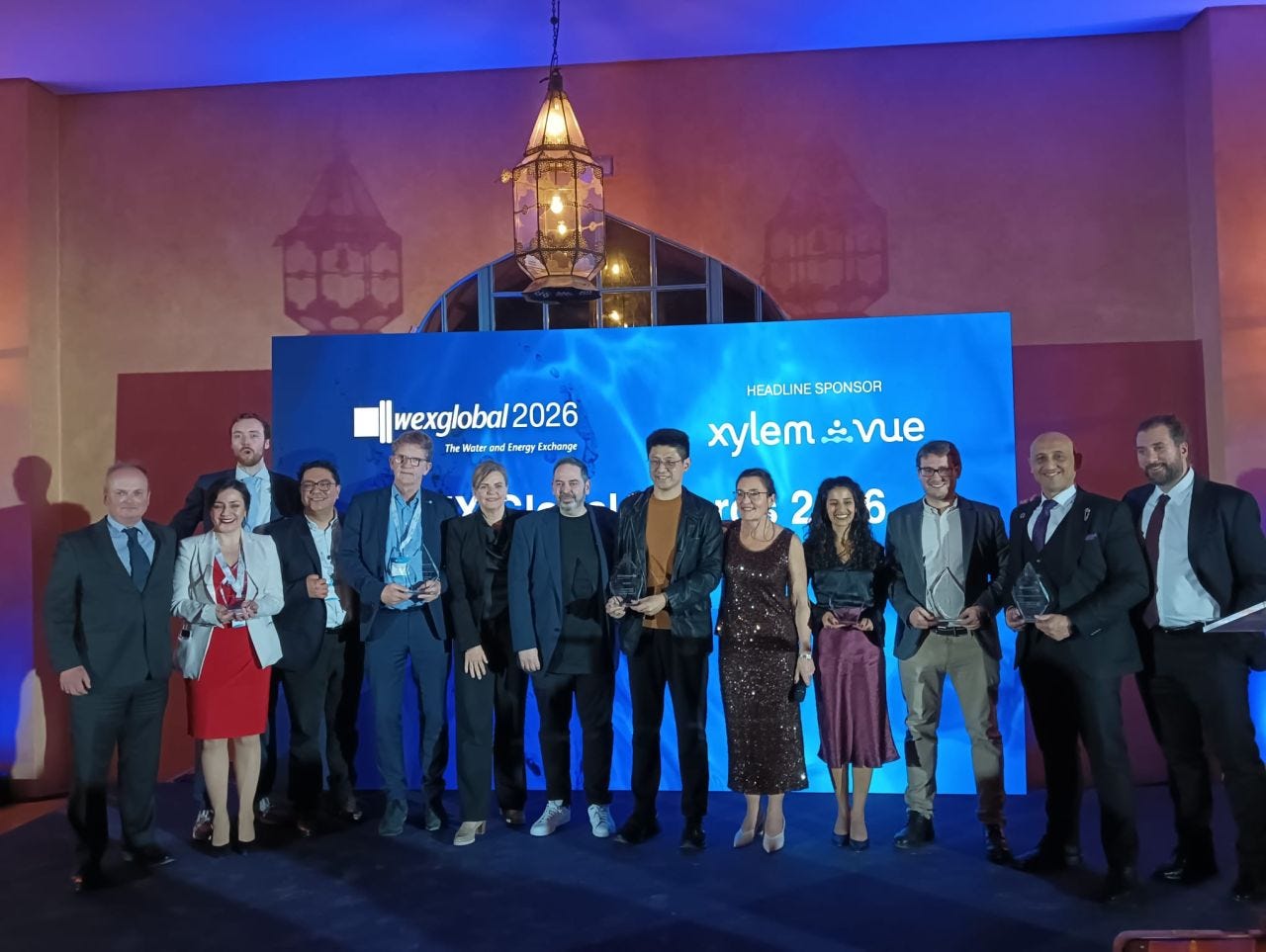
The challenge is making good tubular ceramic at low cost, which is where Conseptec’s manufacturing innovation (the one that won them a 2024 Sustainability Award in Saudi Arabia as well as below in latest WEX Global 2026 in which I was part of the judge) sits: a precision-controlled heating process that drops energy consumption — the dominant cost driver, since raw material is under 20% of total cost — significantly.
And here’s the wedge that’s opening the market for them faster than expected: PFAS regulation in the EU and UK.
Once you’re inside a PFAS-free requirement, ceramic stops looking expensive. It starts looking inevitable.
Continue the discussion
I want to leave them as open questions rather than tidy conclusions:
Lifecycle cost analysis is still a rare skill.
David and I agreed that maybe 1–2% of professionals genuinely run a real CAPEX-plus-OPEX-plus-end-of-life analysis.
Most people pick the cheaper sticker price and call it a day. Until that changes, sustainable technologies will keep losing tenders they should win.
Regulatory design beats technology cheerleading.
China didn’t get to a functioning ZLD market by inventing better evaporators.
It got there by making non-compliance personally costly to executives, banning the easy alternative (groundwater), and pricing water at the basin level. Technology followed.
The “today’s tools are the final answer” trap is real.
David said something I keep turning over: he doesn’t believe the membranes we use now will still be in use in 300 years.
The honest entrepreneurial question isn’t “what’s the best product on the shelf?” it’s “what does the shelf look like in fifty years, and am I building toward it or away from it?”
And finally: keep updating your map of China.
The country David described is not the country most Western water professionals describe at conferences.
If your mental model is more than a few years old, it’s wrong. Go visit. Talk to people like David. Be willing to be surprised.
Thanks again to David Bailey for his time and his honesty, including the parts that weren’t flattering. That’s the conversation worth having.


