

🧠 Nuclear energy is making a comeback, but not through large-scale plants. The focus is shifting toward medium, small, and even microreactors.
This could enable much wider deployment of nuclear energy worldwide, creating more opportunities to integrate desalination—where energy consumption remains the main bottleneck—into these business models.
In some cases, water will also be a critical system within these plants, creating additional opportunities for water professionals.
Last November I was at a desalination congress in Valencia, and it caught my attention they included Nuclear Energy in the agenda.

Not the giant plants we picture, but small modular reactors, SMRs.
The narrative behind is the idea that if you could bolt a compact, predictable source of energy next to a desal plant, you might unlock desalination.
But what’s driving the development of Nuclear in Energy after? I guess it is related to AI development and Data Centers and the geopolitics of Energy.
I remember 3 key sessions:
The first one led by Jose Luis San Vicente as Director, Commercial Operations EMEA from Westinghouse, a sober account of how nuclear megaprojects run years late and billions over budget.
They have a full reactor portfolio spanning three scales: the AP1000 (large), the AP300 SMR (mid), and the eVinci microreactor.
AP300 design certification is anticipated by 2027, followed by site-specific licensing and first-unit construction toward the end of the decade.
There’s an active European pipeline — a UK project (Community Nuclear Power) to build four AP300 units in Northeast England targeting early-2030s operation, plus MoUs in Ukraine, Slovakia, Finland and Sweden.
Second session with Marco Cioffi from Ansaldo Energy, about SMR’s, developing the EAGLES-300 — a ~300 MWe lead-cooled fast reactor, with consortium partners ENEA (Italy), RATEN (Romania) and SCK CEN (Belgium), formally established in June 2025.
I actually had a meeting with Marco a few days before the event to discuss a few questions about how to integrate desalination into the nuclear business model. Here is the publication I wrote a few weeks ago explaining it.
Desalination: Key Numbers Every Professional Should Know

A few weeks ago, I met with Marco Cioffi, from Ansaldo Energy, who was running the numbers for his business, discussed at the recent Valencia conference.
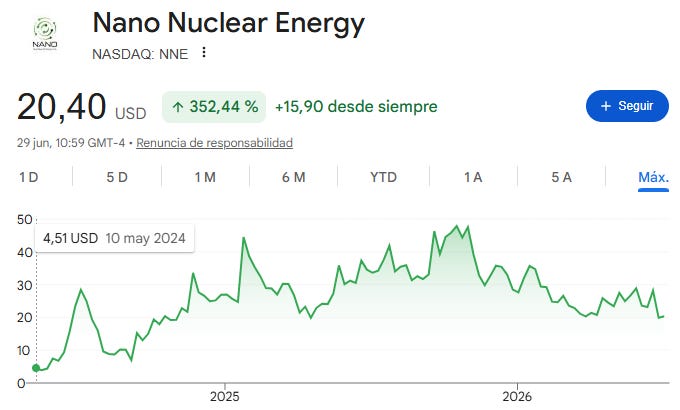
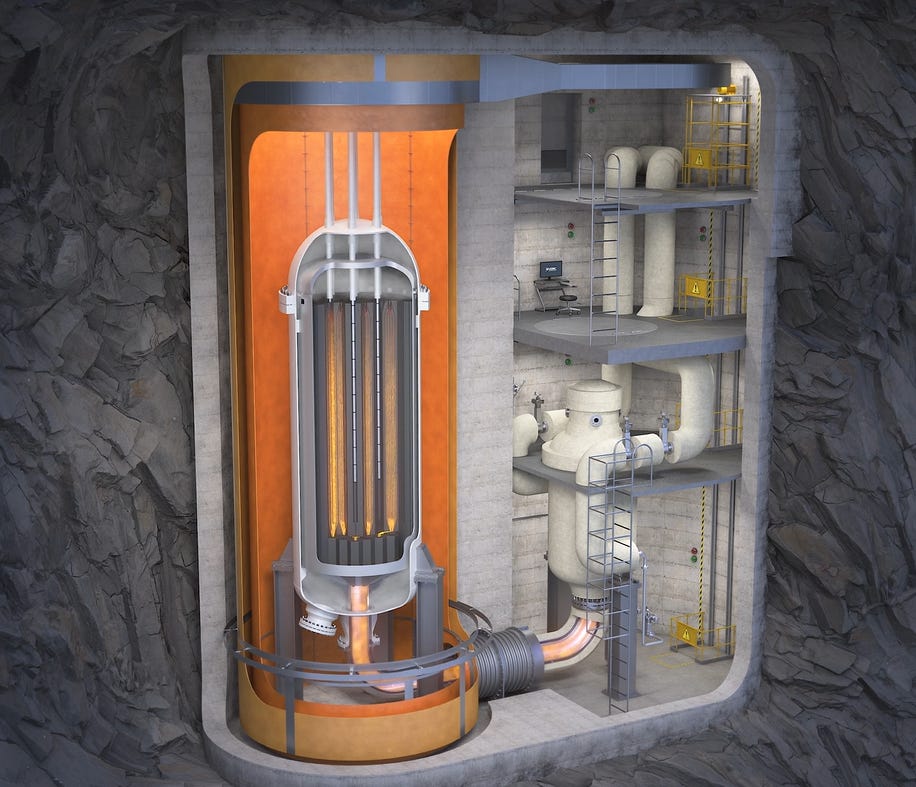
Third one, I had lunch and met Florent Heidet, CTO of Nano Nuclear Energy, about Micro Modular Reactors. Their own guidance points to a demonstration unit in the second half of 2027. Target market is defense, remote sites, and data centers.
A pure-play microreactor developer, the smallest scale of the three by far. Their flagship is the KRONOS MMR, a 45 MWt / 15 MWe.
Why didn't anyone tell us this two years ago? Our investment would have grown by 3.5× in just 700 days. And then we wonder why capital keeps flowing into other sectors... 😂
I left Valencia wanting to understand the nuclear business from the inside.
And it turned out the best person to ask had been sitting in my group of friends the whole time. Jose Antonio Briones (Pepe for friends) and I studied civil engineering together in Granada.
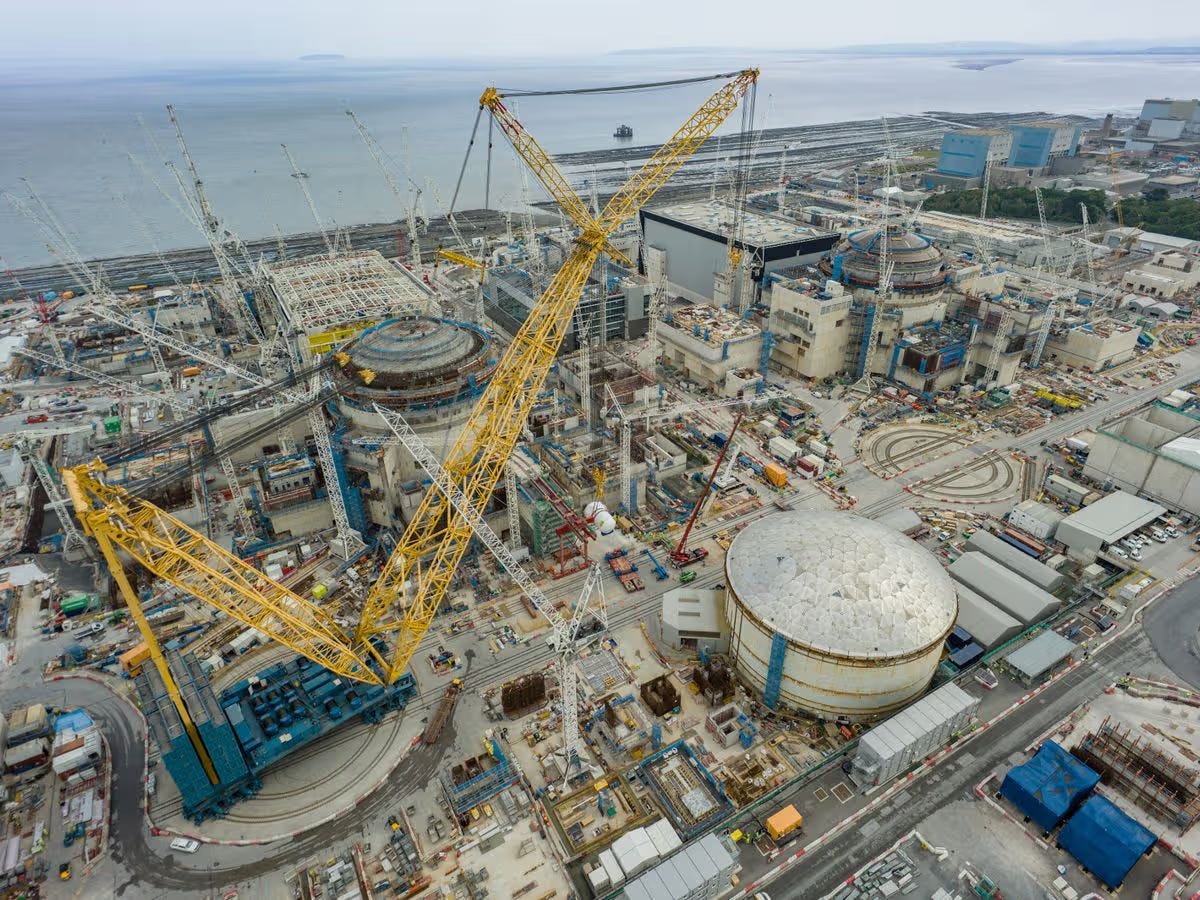
He went on to do a master’s in Paris on large energy structures, spent three and a half years at EDF — Électricité de France, the French nuclear utility — working on the structures and the installations of the reactor building, and later moved to Bristol to work on site for the lead contractor at Hinkley Point C in England.
Design office and construction site, both sides of the same reactor. So I asked him onto the community and share a conversation about it.
The first thing I learned is that nuclear engineers and water engineers are, secretly, in the same business.
“Pressurised Water” is right there in the name
Ask most people what cools a nuclear reactor. The answer is water.
The reactor type that dominates the West is the PWR, the Pressurised Water Reactor — and as Pepe pointed out, the very first word of the design is water.

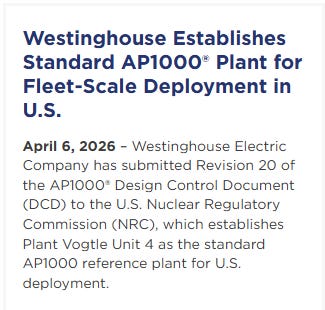
The European evolution of that design is the EPR, the European Pressurised Reactor, the one built at Flamanville in France, Olkiluoto in Finland, Taishan in China, and Hinkley Point C in the UK.
Strip away the mystique and a PWR works on a principle a water engineer recognises instantly: the reactor core heats water under pressure; that water passes its heat to steam generators; the steam spins a turbine to make electricity; and a third, separate circuit pulls in river or sea water to carry the waste heat away.
My favourite detail is about control. When an operator wants more electricity, what actually happens is that the flow of water through the reactor increases.
When they want to shut it down, they gradually starve it of water. The throttle of a nuclear plant is, in effect, a water valve.
Because water is the coolant, it also decides where you can build.
A PWR has to sit on a river or on the coast, because it consumes enormous quantities of water and must have somewhere to dump its heat.
And the rules are strict in a way any of us doing marine works will appreciate: you typically can’t return cooling water more than about three degrees warmer than what you took in, so as not to cook the local ecosystem. That single constraint shapes the entire marine infrastructure.
If you visit the coral reefs along the west coast of Saudi Arabia, especially from Jeddah southwards, you’ll find several combined desalination and power complexes. I remember working on one project where I was told,
“Before you build the desalination plant, go out there, collect any live corals, and relocate them to a safe area to avoid the local impact of the brine discharge.”
When our survey team went out, they couldn’t find any living coral. All dead.
Is this explanation entirely correct? I’m not fully sure. Some people argue that it wasn’t the localized thermal discharges alone, but the generally warm waters of the Red Sea that caused the coral decline.
At the same time, the northern Red Sea remains one of the world’s premier diving destinations, and developments such as Amaala are built around protecting this unique marine ecosystem. Coral reefs in the Gulf of Aqaba are also renowned for their exceptional resilience.
This illustrates just how complex these environmental questions are. It is often difficult to attribute ecosystem changes to a single cause when localized impacts may be occurring alongside broader regional or global climate trends.
And that marine infrastructure is staggering. Pepe told me the original budget for the marine works at Hinkley Point C — just the breakwater, the intake tunnels running out under the sea to fetch water, the outfalls — was on the order of £200 million on its own.
The intake tunnels run about three and a half kilometres out to sea. A project inside the project.
I sat there doing the mental arithmetic, because in desalination we capture seawater and discharge brine too — and in our world the marine works can swallow almost the entire margin of a plant if goes wrong.
Suddenly a lot of things made sense.
For years I’ve watched marine contractors quote our desal intakes and thought how are they this expensive, they’ll never win work like that. Now I understand: many of them are calibrated to power-station, the €200-million kind.
When they see a modest €20-30-million desal intake, they’re not hungry for it. That’s why so many of our plants end up working with mid-tier, more conventional contractors — and on a desal project, the marine works so often set the schedule (no intake, no commissioning) and are the single most volatile line in the budget.
Move the same plant a hundred kilometres up the coast and the number moves with it.
Remember, we have a course that is far from perfect, but I believe it is extremely valuable for any professional with any level of responsibility related to these systems. It provides the context you need and highlights the areas that deserve the most attention to help avoid costly mistakes. → Register Here
Fukushima was a water-pump story
People remember explosions and radiation.
On 11 March 2011 a magnitude-9.0 earthquake struck off Japan. The plant’s structure did its job: the operating reactors scrammed — shut down automatically — exactly as designed. The engineering held.
Then the sea arrived. The tsunami that followed reached around 13–15 metres at the site, overtopping a seawall designed for a wave of roughly 5.7 metres.
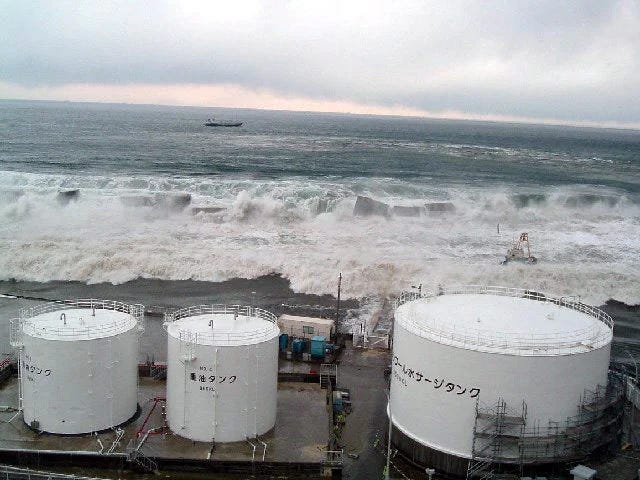
The wave first knocked out the seawater pumps along the shoreline, then flooded the turbine and reactor buildings and drowned the emergency diesel generators and electrical switchgear sitting in the basements.
The result was a station blackout: both off-site grid power and on-site backup power gone. With no power, there were no working cooling pumps.
And here is the cruel physic, even a reactor that has been shut down is not “off.”
Pepe used the image of a cigarette: you stub it out, the flame is gone, but the ember keeps burning, and it will still burn your skin. That latent decay heat kept building until the cores overheated, melted, and produced the hydrogen that blew apart the outer buildings.
So the proximate cause of the worst nuclear accident of our century was not “literally” the reactor and not the earthquake. It was the loss of cooling water circulation, a set of pumps.
The fatal vulnerability was co-locating the backup power and the ultimate heat sink below the tsunami line.
Engineers even have a name for the nightmare: the LOCA, Loss of Coolant Accident. A water problem.
The pump that moved a continent
Now follow the chain outward, because this is maybe part of the reason that unblocked a piece of the global energy transition.
Germany had spent years arguing about nuclear. In 2010, Angela Merkel’s government had actually extended the lifetimes of the country’s reactors — the “phase-out of the phase-out.”
Then Fukushima happened. Within days, in mid-March 2011, Berlin reversed course and imposed a moratorium, pulling the eight oldest reactors offline.
By 30 May 2011 the government had committed to closing every German nuclear plant by 2022, a decision parliament ratified by 513 votes to 79.
The last three German reactors finally went dark in April 2023. As the Clean Energy Wire archive lays out, it was the swiftest reversal in German energy policy since reunification — and it threw the country’s full political weight behind the Energiewende, the renewables transition.
Whatever you think of that decision, a wave overtops a seawall in Japan. Basement pumps flood.
A continent’s largest economy abandons nuclear and pours itself into wind and solar.
The energy transition in Europe took a particular shape because a set of cooling-water pumps went underwater.
Why these projects are always late and always over budget
EPR projects in Europe have been a near-uniform story of overruns: Olkiluoto in Finland ran something like 14–18 years long and roughly tripled its cost;
Flamanville in France stretched well over a decade past plan;
Hinkley Point C’s bill has climbed from an original ~£18 billion (2015 prices) toward the mid-£30-billions, with first power now expected around 2030.
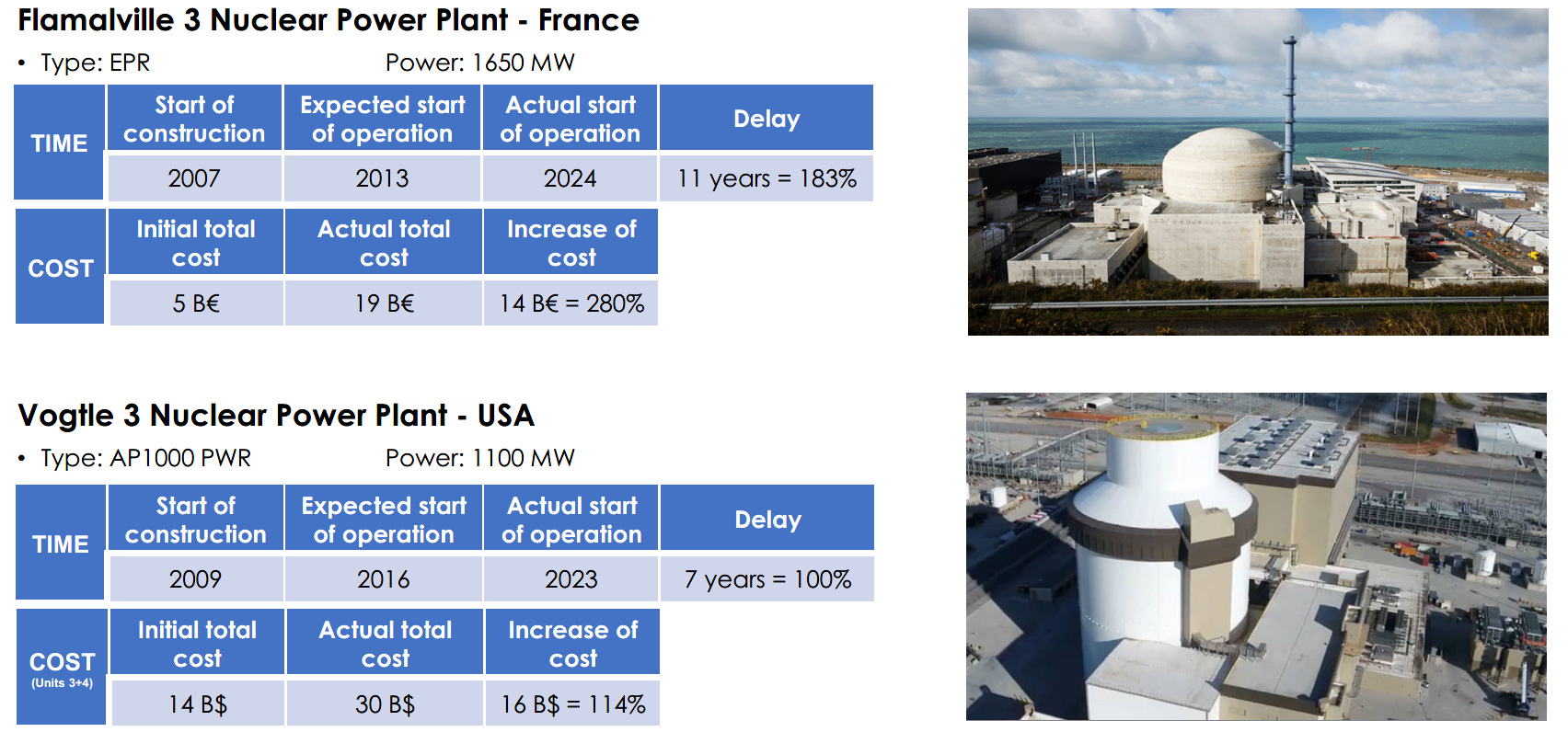
Pepe explained the mechanism.
Construction often starts before the design is fully finished, so you build, discover a clash, and rework.
The safety systems are so complex that every one generates fresh regulatory and engineering challenges — Hinkley’s design assessment reportedly logged hundreds of unresolved findings and thousands of design changes, some of them added because of Fukushima.
Europe also lost industrial muscle memory after decades of barely building anything, so the supply chain and the know-how had to be rebuilt from scratch.
But the deepest reason is one Pepe put bluntly: in nuclear, the only way to avoid delay is to compromise on safety.
A single accident can make a country like Germany tear up its entire energy policy.
So you get validation chains that are punishingly long — a document is drafted, then verified, then confirmed, three levels deep — and concrete shells one and a half to two metres thick, reinforced with diameter-40 bars you’d almost never see on an ordinary civil site, packed so densely that anchoring the actual equipment to the wall becomes a physical puzzle.
It’s the price of zero error.
It’s the same pattern we live in water, just slower and less dramatic.
A hundred years ago our job was simply to supply water and discharge it. Then we learned we were polluting, so the rules tightened. Then industrial chemistry produced contaminants nobody had heard of, and the rules tightened again.
Pepe had the phrase for it: return of experience, trial and error. Regulation is the scar tissue of past failures.
After Fukushima, the French didn’t abandon nuclear; they bolted diesel backup pumps onto steel towers several metres up, so that whatever floods, something still pumps.
And they raised the design wave at new plants to a one-in-ten-thousand-year event. The rule changed because the sea taught a lesson.
The mystery almost nobody knows: how a reactor is actually designed
When Pepe worked on the outer containment shell — the thick concrete skin meant to survive an external assault, anything from a stray airliner to a missile — he and his team knew exactly what reinforcement to install.
But they were not allowed to know the design loads themselves.
The inputs that determined how much the shell had to withstand were classified — secret défense in France — held by the Ministry of Defence together with a tiny inner circle of the design team.
Think about what that means. The engineers building the wall didn’t know what size of impact it was being built to survive, by design, so that nobody could reverse-engineer the threat the plant could or couldn’t take.
In the water world we have nothing remotely like it; our design basis is on the drawings for anyone to read. I’ve handled plenty of confidential commercial information, but a structure whose own builders are blind to its load case is a different category of secrecy — and a measure of just how strategic these assets are.
We’ve now seen desalination plants treated as critical wartime targets in the Middle East. A desal plant in Saudi Arabia, in Iraq, in Israel can be the thing keeping an industry or a city watered, and that makes it a target.
I learned this the expensive way back in 2016, costing our first Saudi project. I’d penciled in a modest budget for the security system, a fence, some cameras, the kind of thing that runs €50,000 here, etc counting a total of 2 M€.
By the time the real requirements landed — anti-vehicle barriers, high-spec cameras with specified image quality, coastal radar to spot an approaching boat, sign-offs with the authorities — we were heading toward five to seven million.
I didn’t understand it then. Critical water infrastructure and critical energy infrastructure are converging on the same threat model.
The small reactors coming for the data centre, and maybe the desal plant
Which brings me back to Valencia, and to where the technology is heading.
The pitch for SMRs — small modular reactors — is essentially a reaction to everything above: instead of one vast bespoke building that takes fifteen years, you factory-build smaller units of roughly 300 MW, deploy faster, and spread the risk.
The trade-off, as Pepe noted, is that you’ve now got ten small things to keep secure instead of one big one, which is a real question.
To give a sense of scale: a single full-size EPR puts out around 1,650 MW — enough to power the whole Madrid region. An SMR is a fraction of that, but far more manageable.
The United States is moving fastest; its Department of Energy has fast-tracked a batch of advanced-reactor developers, and the demand pull is coming overwhelmingly from one place — data centres.
The hyperscalers have been signing nuclear deals at a startling pace: Meta with Oklo and an Illinois plant, Google with Kairos Power, Amazon investing some $20 billion around Talen’s Susquehanna site and exploring SMRs, X-energy partnered with Amazon.
The largest US tech companies have collectively contracted for well over 10 GW of new nuclear in roughly a year, chasing carbon-free, always-on power for AI.
The geopolitics of energy is reaching for our sector, and we should be paying attention.
We’ll watch the SMR race. When the documents start naming desalination in the same breath as the data centre, the water sector has already been invited into the ring.
A few key quotes
A quick journey through our talk as usual.
On why water decides everything
“Access to water is the key factor that determines where you can site a nuclear plant.”
“A pressurised-water reactor has to sit on a river or by the sea. It needs to cool itself, and it consumes enormous quantities of water.”
On the name being the clue
“The very first word you meet in the design is ‘pressurised water.’ The heart of how it works is putting water under pressure.”
“When you want more electricity, what you’re really doing is increasing the flow of water. When you want to shut it down, you gradually cut the water off.”
On Fukushima
“The worst accident that can happen in a nuclear plant is the LOCA — the Loss of Cooling Accident. Running out of cooling.”
“The plant’s design withstood the earthquake perfectly. What it didn’t withstand was the height of the wave.”
“The pumps were electric. The power dropped, they stopped pumping, and the whole thing was left with no cooling.”
“It’s like a cigarette. You stub it out in the ashtray, but it keeps smouldering — and if you press it to your arm, it still burns you.”
On regulation and safety
“It’s systematic, and almost impossible to avoid — because the only way to dodge the delays is to give up on safety, and that’s the one thing this sector can’t allow.”
“There’s no margin for error. You cannot fail.”
“One accident can make a country like Germany put its entire energy policy in question.”
“Return of experience. Trial and error.”
On cost overruns and delays
“Validation chains that are excessively long. You draft a document, it gets verified, then it gets confirmed. Three levels of validation.”
“Diameter-40 rebar — you barely see that on any kind of civil works.”
“The reinforcement is so dense it ends up looking like a collage of anchor plates, and eventually you run out of physical space to fix the equipment to the wall.”
On the secrecy of reactor design
“We knew the reinforcement we had to place. We knew what we had to build. But we had no access to the inputs it was designed with — those are defence secrets.”
On the design-versus-construction gap
“Someone makes a mistake and the error flows downstream — but when you get to site, you’re the one who eats it.”
“It becomes a tennis match between the designer and the constructor over who owns the problem.”
“Patience, tact, and understanding everyone’s difficulties — otherwise the project simply doesn’t move.”
On the sheer scale of Hinkley Point C
“It’s the closest thing there is to the pyramids of Egypt. To get around the site, you had four bus lines.”
“It wasn’t a site. It was a city being built — with barracks and a football pitch.”
On the marine works
“The original budget for the marine works alone was £200 million. The intake pipes run three and a half kilometres out to sea. A project inside the project.”
“You can’t discharge water more than three degrees warmer than what you took in, so as not to disturb the ecosystem. It’s measured to the millimetre.”
On critical infrastructure as a target
“Desalination plants have already become critical targets. Any new design now has to take that into account.”
“I put in €50,000 for security. It ended up between five and seven million — cameras, anti-vehicle barriers, coastal radar. That’s when I understood what a critical asset really is.”
On SMRs and where this is heading
“You build one big building or ten small ones. That’s the dilemma.”
“The Americans can afford it — they live far from anyone else’s missiles.”
“Data centres paired with SMRs. I think that’s where the technological future is going. And here we are, watching the bulls from behind the fence.”
On the water sector’s moment
“The elite up there — whoever they are — are making decisions to make water investable. The money is coming.”
“The UK right now is a good place to work in water. Very few people realise the scale of the problem they have.”


