
I had been meaning to upload this workshop we recorded some time ago with my friend Guillermo Mateos from Tarnos.
Since our community has grown significantly—and many new subscribers have shown a strong interest in the Desalination MBA section available to our Premium members—I thought this was the perfect time to share it.
I have already written and spoken about this topic over the past few months, so I won’t repeat everything here. Instead, I encourage you to watch the workshop and come back to it whenever you face questions in your own projects.
Throughout the session, you’ll gain a solid understanding of intake screening systems, including stoplogs, coarse and fine screens, washing systems, fish protection devices, and the most common operation and maintenance issues, as well as typical design mistakes.
And of course, we also touch on one of those classic engineering debates that always sparks lively discussions, which configuration is better: dual-flow or centre-flow?
I’d also like to take this opportunity to share a couple of stories and real project scenarios that I encountered some years ago, related to different approaches for screening seawater before it is pumped to the pretreatment stage (whether DAF or filtration).
If any of you have practical experience, feedback, or a different perspective on these solutions, I’d love to hear your thoughts. Those discussions are often where the best learning happens.
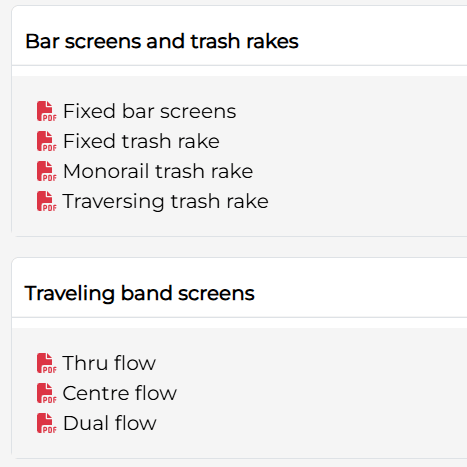
First, I’ll simply show you the most common arrangement from the below options that Client may request. There is a winner combination lately on major projects.
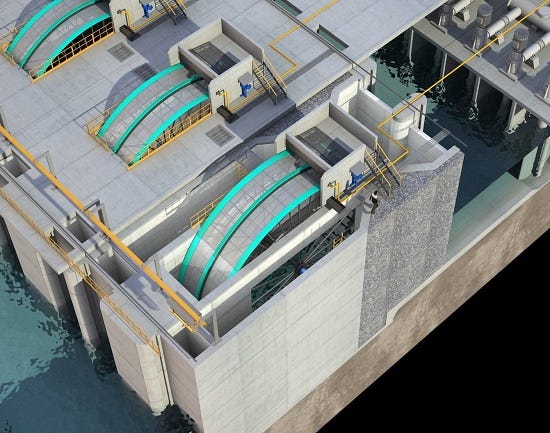
A short story about drum screens...
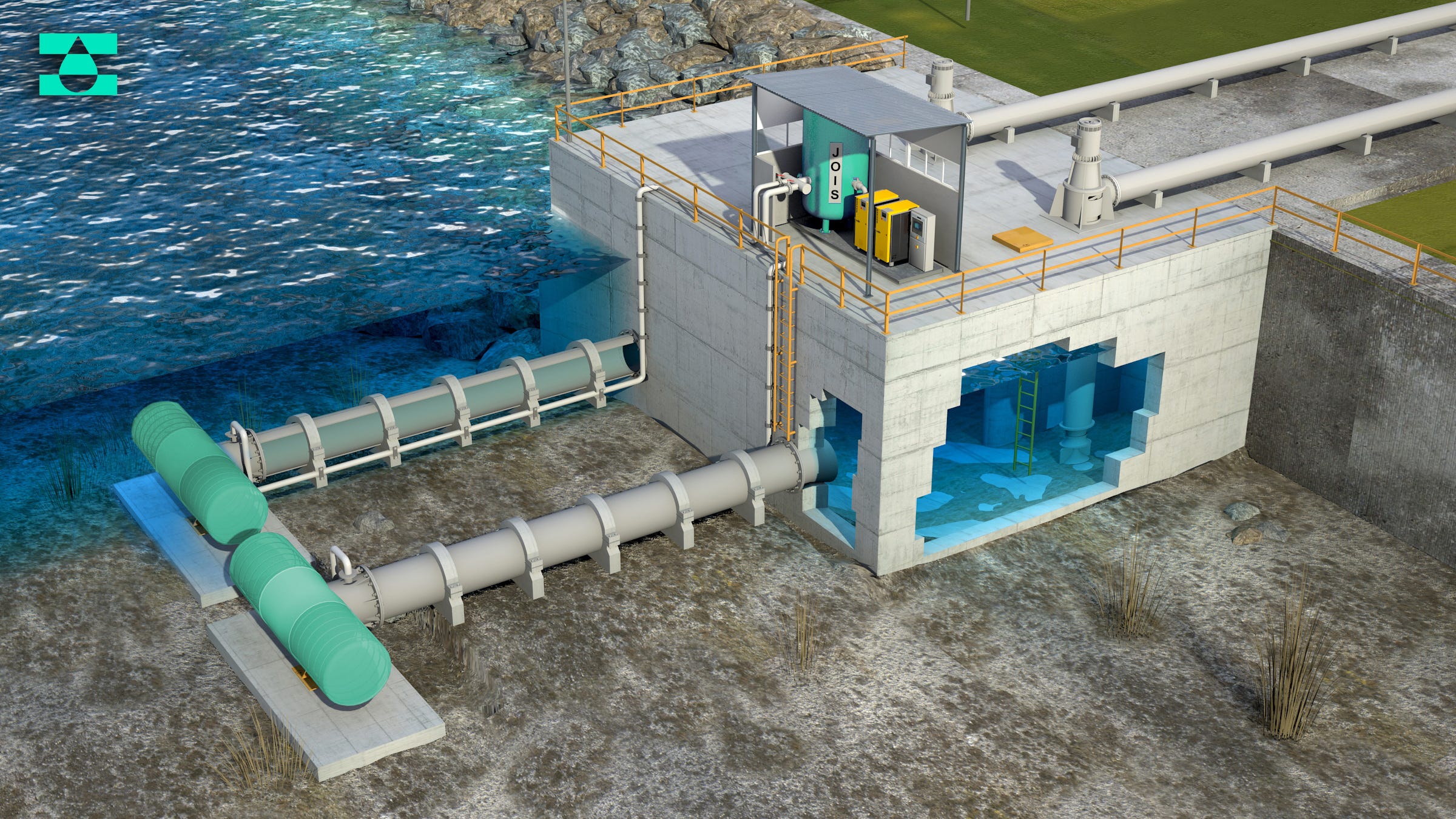
Why not screen underwater? Intake + screening in one integrated solution.
And a bonus with a question…❓ about the ongoing debate on whether 316L stainless steel with cathodic protection is suitable for seawater service instead of using superduplex.


