

When we turn on the tap, we assume the water has made its journey without incident.
But the reality is that in every network in the world, without exception!, a percentage of water never reaches its destination. It is lost along the way, literally.
The concept even has a technical name: Non-Revenue Water (NRW).
It covers not just physical leaks, but also measurement errors, fraud, and unmetered supply.
This concept was highlighted by Viktoria Edwards from Fido Tech a few weeks ago in Wex Global as she “did not like at all the terminology used”, probably referring the term “revenue” suggesting that we should perhaps use different language to reflect that this part of the business is much more than revenue.
Our guest David has been a great supporter since December 2023, with a few calls as I wanted to understand what the reality is in daily operations. Having someone who has spent years in the field, getting their boots dirty and testing each of these technologies day by day, builds exactly the kind of practical knowledge we aim to share here in The Water MBA.
The figure varies enormously from country to country, city to city, and is directly linked (as David made clear) to investment in infrastructure renewal.
Detecting leaks matters, but renewing infrastructure matters just as much, if not more. We cannot rely on detection technology alone if the pipes are already 60 years old.
David presented a table that, frankly, is awesome. A leak of just two millimetres in diameter, at a typical pressure of 6 bar, amounts to nearly 2,500 cubic metres of water per year. That is: one Olympic swimming pool.
A tiny, invisible pinhole. An Olympic swimming pool lost every year.
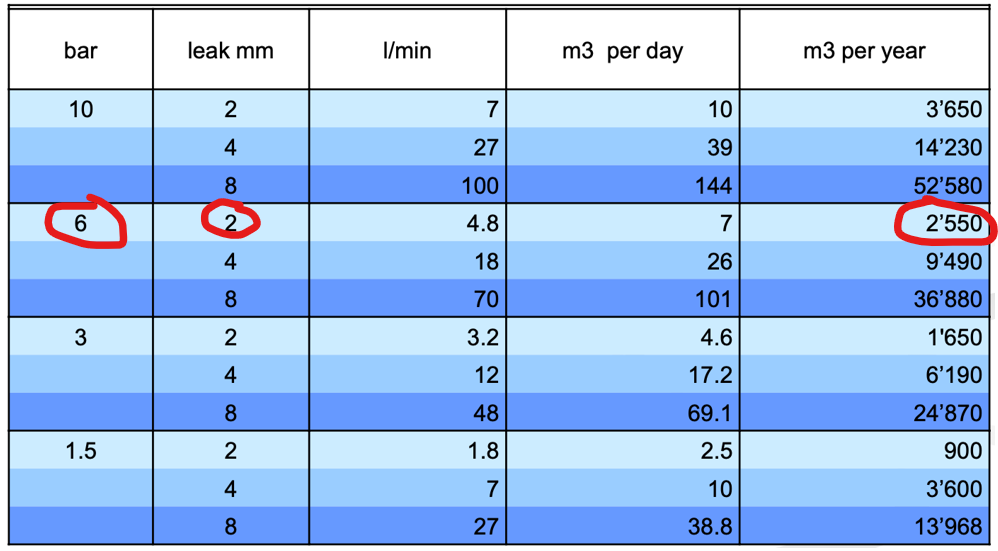
Multiply that across the thousands of kilometres of network in any mid-sized city and the scale of the problem starts to sink in.
And it is not just a matter of water resources (though in areas of severe water stress that alone would be reason enough), it is also a matter of public safety.
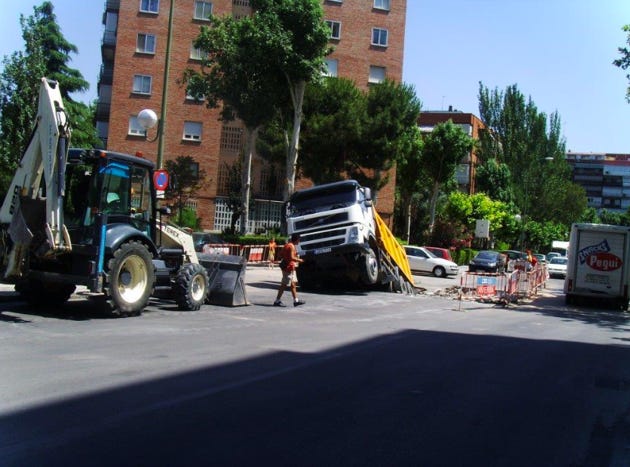
Leaked water follows the path of least resistance, erodes the surrounding soil and can eventually create sinkholes.
And sinkholes swallow whatever is above them: cars, roads, even people.
The technologies, a richer ecosystem than I expected
Before this workshop back in 2024, my mental image of “leak detection” was fairly basic: someone with a device listening to the ground.
And while that exists and works, the ecosystem of available technologies is far broader and more sophisticated.
The first level: non-invasive
Starts with something as fundamental as network sectorisation. Dividing the network into DMAs (District Metered Areas), well-contained zones where everything that enters and exits is measured, makes it possible to monitor the minimum night flow: that window between 3 and 4 in the morning when consumption should be nearly zero.
If that minimum flow rises from one month to the next without explanation, it is a warning sign.
No sophisticated technology required, just well-collected, well-interpreted data.
From there come acoustic pre-locators, devices placed on valves and hydrants that listen for the vibration frequencies generated by leaks and allow operators to narrow down problem areas.
They are affordable, manageable by non-specialist staff, and have become the workhorse of day-to-day operations for most utilities. A two-person crew can cover around 10 kilometres of metal pipework in a single working day.
Then, to pinpoint the exact location within a flagged stretch, geophones and correlators come into play. They measure the difference in the time it takes a sound wave to travel from the leak to each of two sensors, and triangulate the position. Surgical precision before the excavator moves in and break any other existing utility :)
Satellite detection is particularly intriguing: radar imagery that picks up moisture in the soil and is overlaid on network maps. The concept is spectacular, inspecting kilometre after kilometre without sending anyone into the field.
The reality for satellite, based on David’s direct experience, is that it currently generates too many false positives in urban environments. Where it may have more of a future, we reflected together, is in arid regions: transmission pipelines in Middle Eastern deserts, remote areas where physical access carries an enormous cost.
The second level: in contact with the water
Where investment rises, but so does precision.
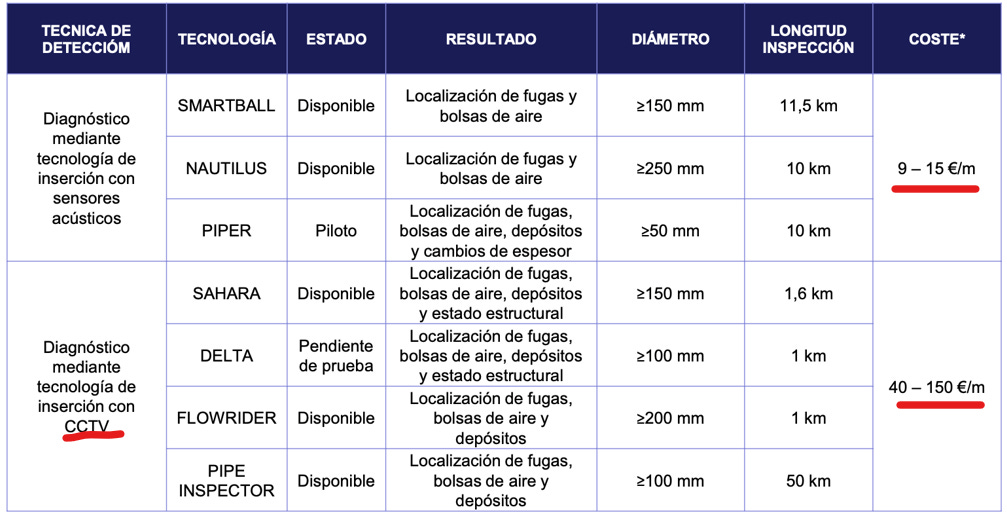
Acoustic spheres (equipped with hydrophones, gyroscopes and electromagnetic sensors) are inserted into the pipeline and travel with the water flow, listening from the inside.
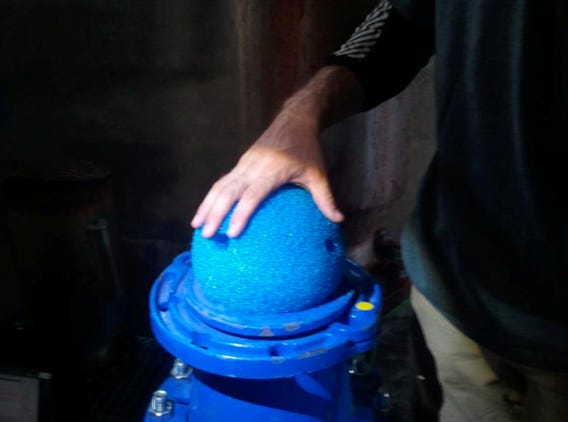
They can cover 10 kilometres of inspection in a single run, with sensitivity that far exceeds any external system.
The most memorable pitfall David mentioned: if any branch connections are not closed in time, the sphere can escape through them. It has happened. More than once.
Beyond the cost of the material itself, the real cost lies in the human work behind it, the information gathered and stored, and the hours invested in the process.
In this technology, one of the most intriguing brands I have come across lately is Aganova, because it goes beyond the mere use of the sphere. They take a very interesting approach through a Water Positive framework. They also have a Water Positive Manager (who would have said, 4 or 5 years ago, that this role would exist…!) named José Carlos Gil. It may be worth reaching out to him to learn more about it.

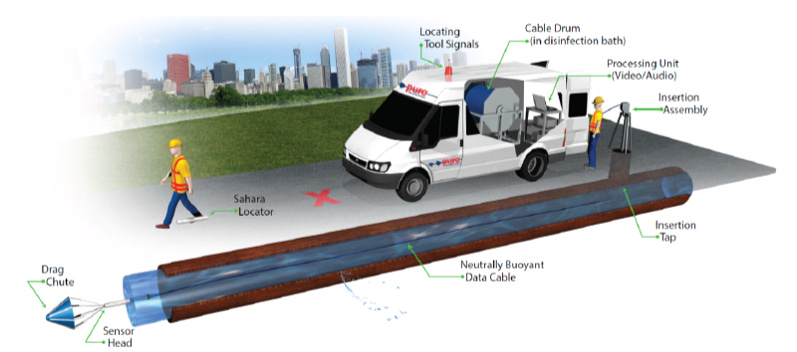
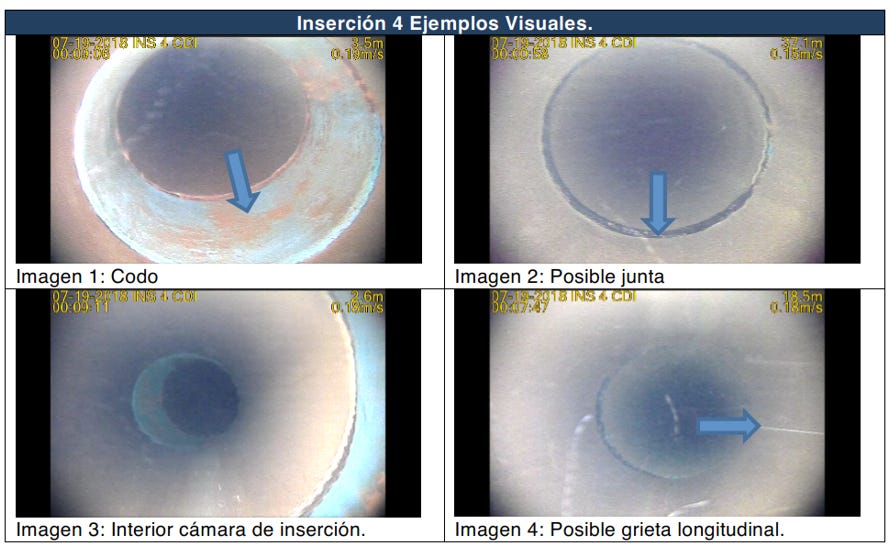
For cases where precision is absolutely critical, a pipe beneath a motorway, a metro crossing, a protected historic area, there is the option of the cable-fed CCTV camera: a system that advances metre by metre, recording the inside of the pipe in real time, capable of detecting not only leaks but cracks, corrosion and structural deterioration.
It is slow (one kilometre per day), expensive, and requires a specialist crew. But when the margin for error in excavation has to be zero, nothing comes close.
And finally, permanent hydrophone systems: sensors installed at fixed points on critical sections of the network, continuously connected to the internet, that send real-time alerts the moment an anomaly is detected.
For the most sensitive infrastructure, the kind that cannot wait for a quarterly inspection campaign, this is, in David’s words, absolutely essential.
A very interesting part of the conversation was how the theory is understood, along with its advantages and disadvantages, but in the end what really matters is which technologies are commercialised, how much they cost, and how they perform. As a result, there is a need to test several of them, analyse the results, and compare their behaviour.
When operating well beats building new
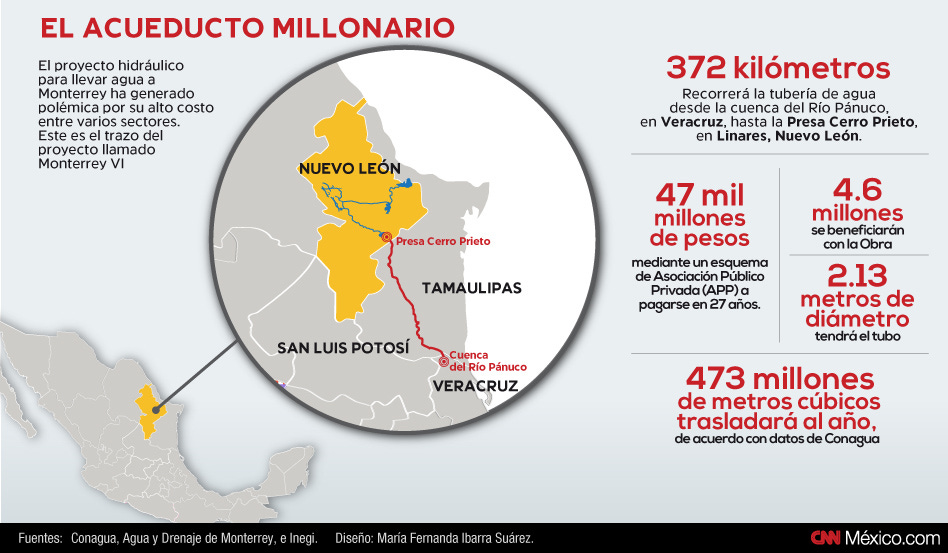
A few years ago, the city Monterrey in MExico needed more water.
The solution on the table was ambitious: 372 kilometres of two-and-a-half-metre diameter pipeline, a colossal infrastructure project.
I travelled to Mexico to tender this project. The risk of estimating costs on this kind of project was huge.
The pipe crossed many properties, with some “dangerous” areas due to narcotraffic control. The geotechnical and topographic conditions were highly variable.
Estimating construction time and required resources is, simply, a huge risk the longer the pipeline is.
The project was finally cancelled.
Instead, investment went into something less glamorous but equally powerful: pressure management.
Regulating valves that learn the consumption patterns of each sector and adjust their output pressure in real time, always guaranteeing the minimum required pressure at the most critical point, without over-pressurising the rest of the network.
Here the approach case of Idrica in this city.
The result: fewer leaks, less water lost, demand met, without building a single additional metre of new infrastructure.
The answer is not always more infrastructure. Sometimes it is operating better what already exists.
This connects to something I witnessed over years of working on transmission and distribution projects in countries like Bangladesh and Senegal: material selection is never just a calculation of upfront cost.
In markets where operation and maintenance capacity is limited, ductile iron ( expensive, heavy, robust…) wins because it guarantees decades of service with minimal intervention.
The true price of any infrastructure always includes what it costs to keep it alive.
The “future”: Artificial Intelligence
It is funny we talked about AI already back in 2024, and it was already clear the greatest potential for improvement in this field does not come from inventing new types of sensors, but from better interpreting the data that existing sensors already produce.
A sphere travelling through a pipeline generates a vast amount of acoustic, electromagnetic and pressure information.
Today, much of that information is still interpreted manually, a technician with headphones, listening to recordings, marking where they think they heard something anomalous.
Machine learning changes that. If you train a model on enough cases… this sound, in a 200mm polyethylene pipe, at this pressure, turned out to be a leak of this size…the system learns to recognise patterns that the human ear cannot process at scale.
Reliability improves. False positives decrease. And eventually, the system may be able to quantify not just the location but the volume of the leak.
We are at the very beginning of that transformation. But the direction is clear.
Big event coming up
As conversations around water losses, leakages, and non-revenue water (NRW) continue to gain urgency, a major event in Brazil is bringing together professionals tackling these challenges head-on.
One member of our community will be attending, sharing insights and connecting with others working to reduce system inefficiencies.
If you happen to be there as well, feel free to send me a message, great opportunity to meet and exchange perspectives.

What i take away
Urban water management is, at its core, an exercise in technical humility and intelligent prioritisation.
There is no perfect technology that meets every requirement at once, affordable, precise, fast, non-invasive, applicable to any material and any diameter.
Every tool has its domain. The skill lies in knowing when to use which one.
It deserves more attention than it gets. And the professionals who know it, listen to it and care for it, people like David, deserve to be heard.
Do you have experience working with distribution networks or leak detection? I’d love to continue the conversation in the comments or in our networking chat.


