

They say we learn best by doing and interacting. This year, I want to put that idea into practice.
Throughout 2025, I received many proposals for collaborations, business opportunities, advisory roles... While I have to say no to most of them to protect my time and the quality of The Water MBA, one opportunity stood out.
I have accepted an advisory role for a local community of farmers in the south of Spain.
I decided to say yes because this is a chance to document a real-life project from the ground up.
Space reserved for future sponsors
I want to share every step, reflection, and even the failures with you.
In the water sector, I believe learning by doing is becoming more important than ever. Additionally to reading or watching an episode, we can now look at a live case together and ask questions as the project unfolds.
Documenting a long term advisory service
The new series follows my role as an advisor for a community of farmers here in Spain.
This project began maturing at the end of 2025. These farmers are facing significant pressure on their water resources and are looking for a way to stay resilient in the mid-to-long term.
This isn’t a polished case study written after the fact. It is a live look at a major water challenge, starting from square one.
I’m not the main expert on this matter, so why would people trust my help?
I’m drawn to these challenges.
I’m at point “A” and want to reach point “B”. What are the steps to get there? What strategies are needed? Which conversations matter? Who can I count on? How do I connect the dots and move the needle to make things happen?
The challenge of groundwater depletion
The case involves a community of farmers facing extreme pressure on their water resources.
In my region, agriculture accounts for 90% of water consumption.
The entire economy and the well-being of thousands of families depend on it.
However, they are stuck in a cycle that many regions worldwide will recognize: they are consuming groundwater faster than the natural cycle can replenish it.
After forty years of extraction, the water table is dropping, pumping costs are rising, and salinity is creeping in.
These farmers aren’t looking for a quick fix for next month; they are worried about what happens in ten or fifteen years if a major drought hits and the wells run dry or turn too salty for their crops.
Why I chose this specific project
There are four main reasons I took this on.
First, it is a mid-to-long-term project, which allows us to study the technicalities carefully without the pressure of immediate deadlines.
Second, it is local. I am only thirty minutes away from the fields, which means I can visit the farms, talk to the growers, and see the reality on the ground rather than managing it through a screen.
Third, it is a multidisciplinary puzzle. To solve this, we have to look at hydrogeology, aquifers, salinity intrusion, economics, and social impacts.
Finally, I enjoy being a “dangerous amateur.” I may not be the world’s leading expert on groundwater, but I know how to connect the dots and bring in international experts to find the right path.
Balancing well-being and the environment
The context here is sensitive. These farms are located near a national park and a natural reserve.
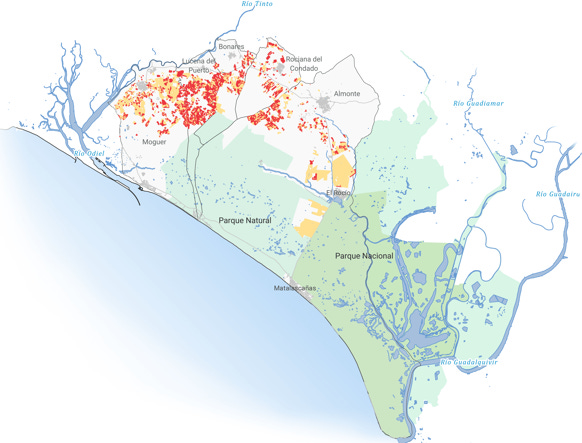
We are all aware that high extraction levels affect the environment, but there is a difficult tension between conservation and the local economy.
In many cases, illegal wells and short-term municipal interests have allowed the situation to reach a breaking point.
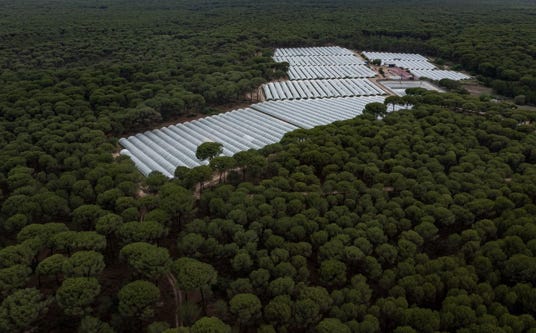
The crops are not all the same, either.
We have berries, which are very sensitive to salt, as well as rice and vegetables. Each has a different impact on the water table.
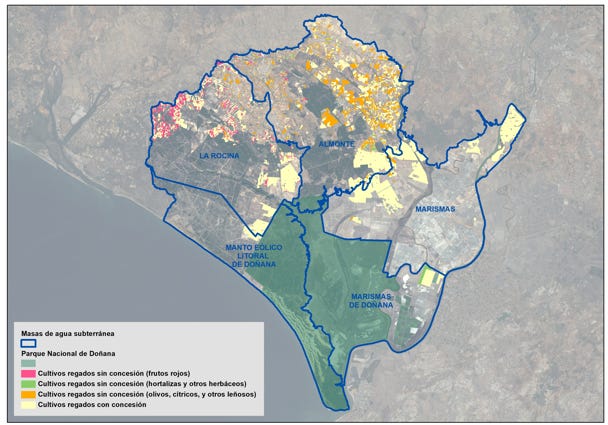
Most farmers are not willing to simply reduce consumption because that directly leads to less income and less food production. They want solutions that allow them to remain resilient without giving up their livelihood.
Two paths forward: Aquifer recharge and “desalination”
We have filtered our options down to two main alternatives.
The first is Managed Aquifer Recharge (MAR). This involves taking water—whether from storms, river runoff, or even recycled wastewater—and injecting it underground to replenish the storage. This could help lower salinity and ensure we have a “bank” of water for dry seasons.
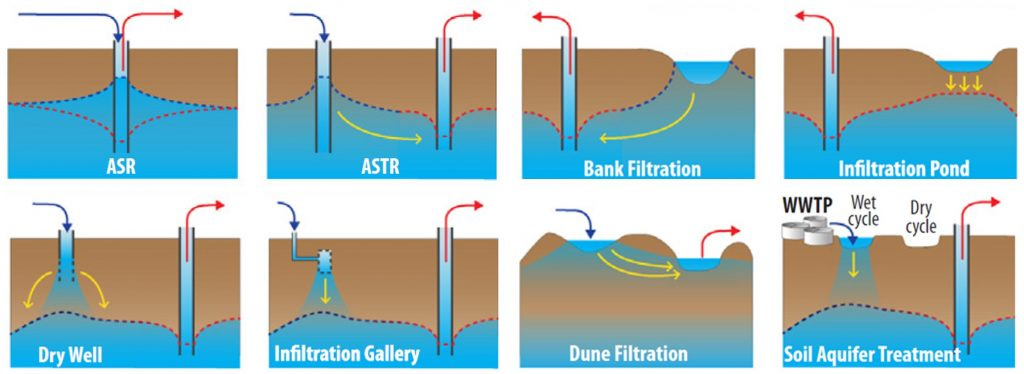
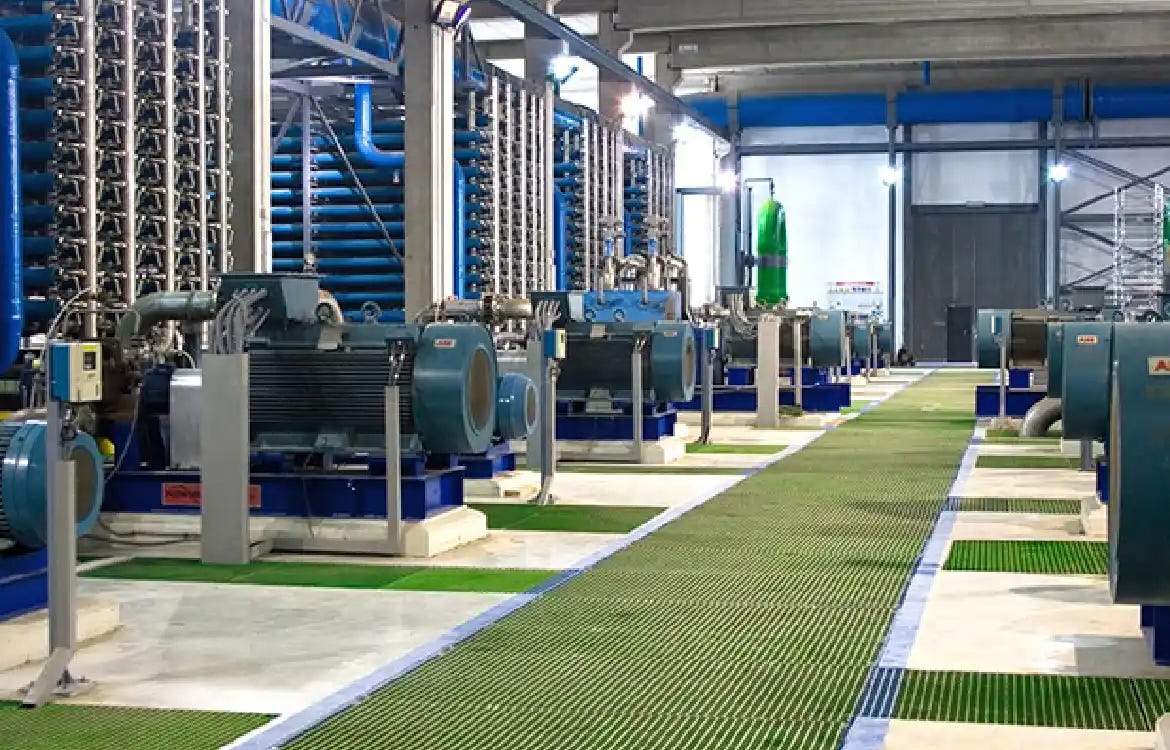
The second path is a brackish water treatment plant. Unlike seawater desalination, we are dealing with lower salinity levels, but the goal is the same: to create a reliable, high-quality water source that is independent of the weather.
Important Updates
Last Christmas, Santa brought me a new smart TV.
For a couple of weeks, I was genuinely excited about something very simple: a remote control with direct access to YouTube, Apple TV, and other apps.
Watching video on TV is just… incredibly convenient. And that’s when it clicked.
Until now, we’ve been running two separate platforms:
one for videos (for our 71 paid members), and
one for writing (this place).
To make life much easier — and seeing how important TV-based video consumption already is (and will be even more in the future) — I’ve decided to migrate all our videos (more than 100 episodes) into this single platform, which will probably be available soon in your Smart TV.
What does this mean for you?
From now on, you’ll receive everything in one place:
the writing,
the full video episodes,
and the ability to engage and comment directly with the community.
Taking advantage of this new setup, I’ll also start sending one additional edition per week (maybe Thursday), featuring one of the most successful episodes from 2024–2025.
To maximize discoverability over the coming years, I’m also launching:
a YouTube channel, where 3–5 minute segments will be published (exactly the same clips you’ll start receiving in your inbox from next week), and
Spotify, with the audio-only version of each episode preview (automatically generated from the uploads).
If you’d like, you can include these channels in your regular listening or viewing habits, or simply dip in when something catches your interest.
I genuinely believe this approach will significantly boost the value of our community in 2026: more learning, better networking, and stronger business conversations, all in one place.
Thanks for reading, sharing, and supporting our work.


