

I am recapping this conversation now because, after a year of reflection, I am finally able to articulate what we learned. It is impressive how the more time passes, the clearer the connections become.
I highly recommend saving this episode and watching it with enough time, because it’s essential if you truly want to be a “MBA” in the near future. We’ll be releasing more in-depth episodes on PPPs, water tariffs, financing, and more, so this one is especially important!
Looking back at our session with Ben Solis, an economist with deep experience in water regulation, I see how much the financial health of a utility dictates its ability to serve people.
We often focus on the engineering side of water, but the math is what makes those projects possible. Many utility operators are struggling as cities expand and demand rises.
The money coming in from users often falls short of what is needed to keep the system running.
Ben helped me look at the sector through an economic lens to understand who is actually carrying the burden of the cost.
The massive gap in global access
The numbers Ben shared are a wake up call.
We all know the official data, right now, about 2 billion people still lack safely managed drinking water. In 2015, the world set a goal to reach 100% coverage by 2030, but we are falling behind. If we maintain the current trend, we will only reach 81% by that deadline.
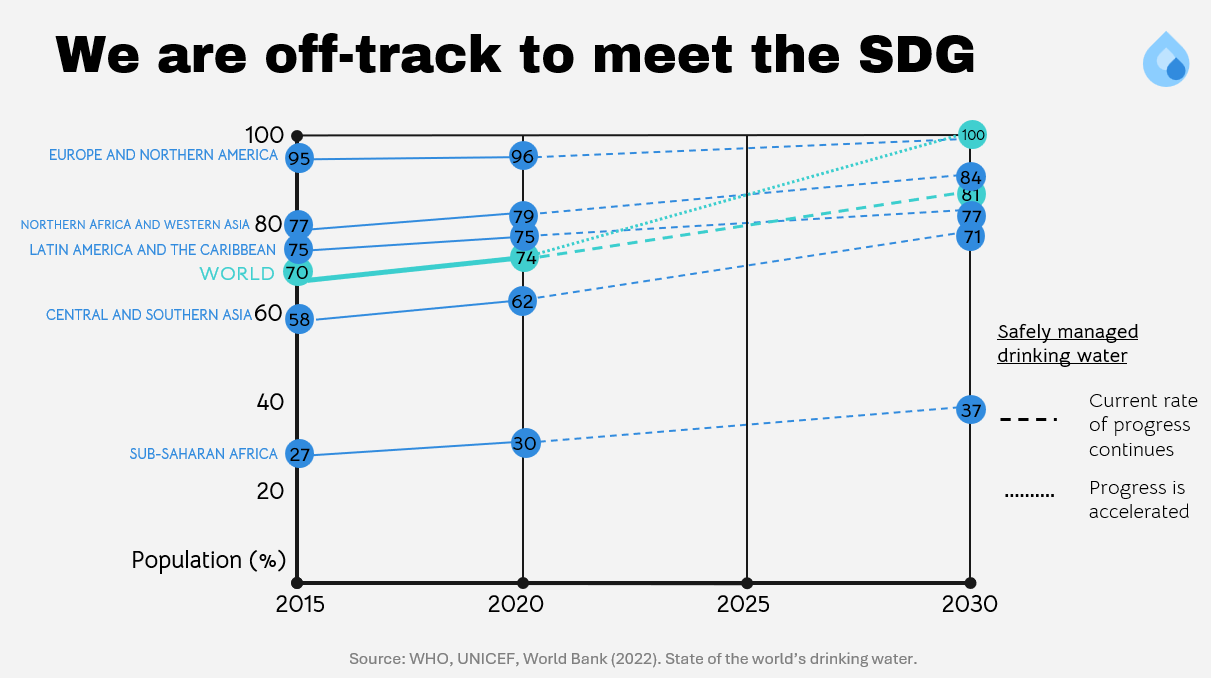
In regions like Latin America, progress has stalled, and in Sub-Saharan Africa, it is lagging. This is not just a matter of building more pipes. Climate is making our water sources uncertain.
Even if you have a connection today, there is no guarantee the water will be there tomorrow.
To fix this, we need to fill an annual spending gap of $140 billion. We simply have to invest faster and better.
The difference between financing and funding
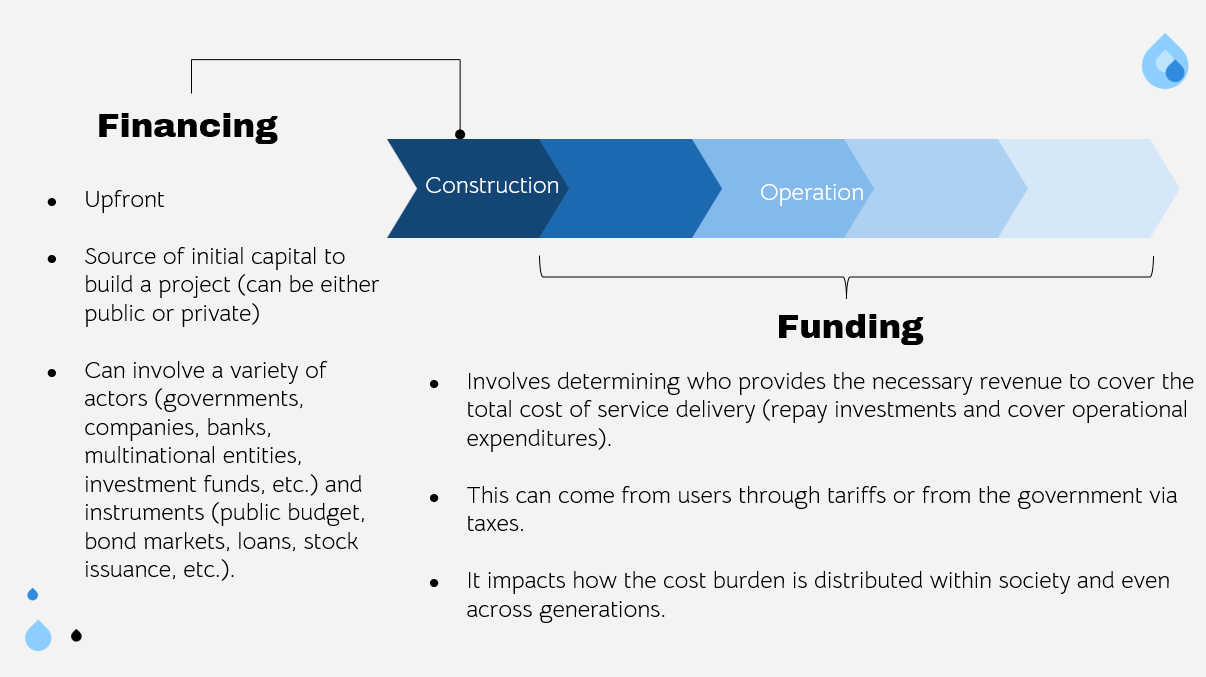
One of the most helpful lessons was the distinction between financing and funding, there are many colleagues do not know about this. These terms are often used interchangeably, but they are very different concepts.
Financing is the upfront money needed to build a project. This can come from the government, but it can also come from private loans or bonds. Funding is how you pay that money back over the life of the project.
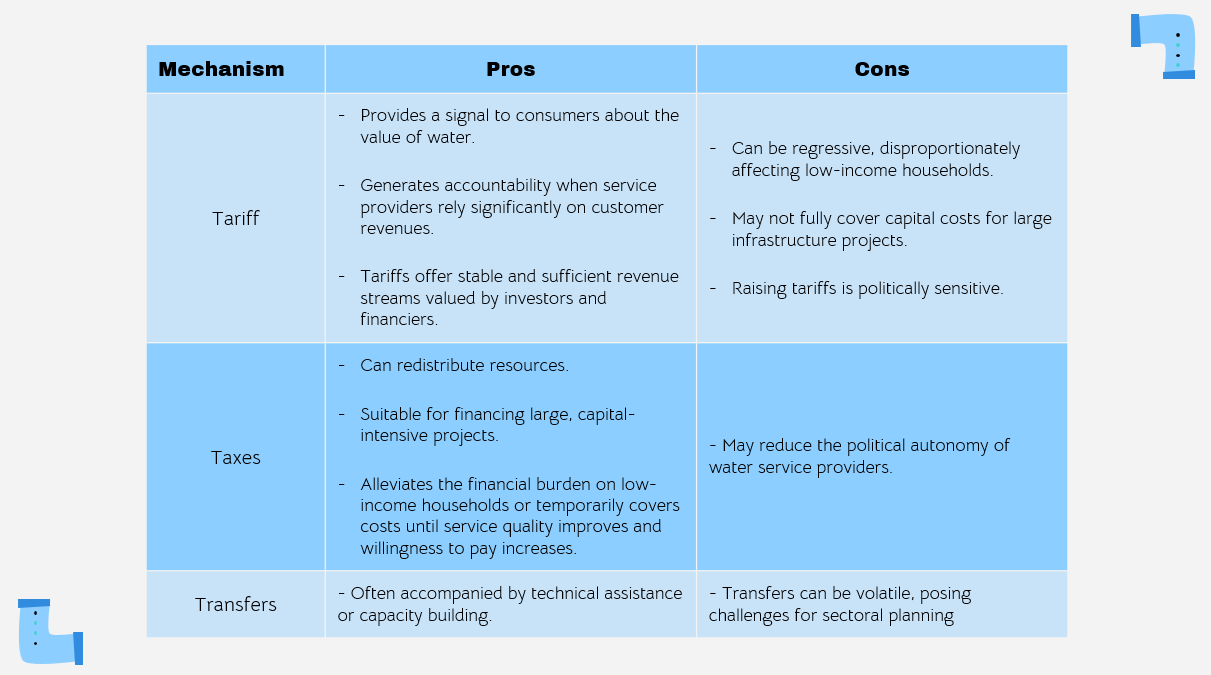
Funding only comes from a few sources: tariffs (what users pay) or taxes (what the government pays). We can get creative with how we finance a plant, but eventually, either the taxpayer or the water user has to foot the bill for the long term operation.
Moving past the public versus private debate
There is a long standing tension in our industry about whether water should be managed by the public or private sector. Ben argues that this is often a false dilemma.
Currently, 80% of water infrastructure worldwide is public.
The problem is that many governments want to do everything on their own but have hit their debt limits.
Ben points out that it does not matter if a utility is public or private as much as it matters if it works.
We see successful private models in Chile and the UK (well this one with some shadows but AMP8 will make things better I’m confident…), and successful municipal models in Germany.
Even in Cuba, there is a mixed public-private company.
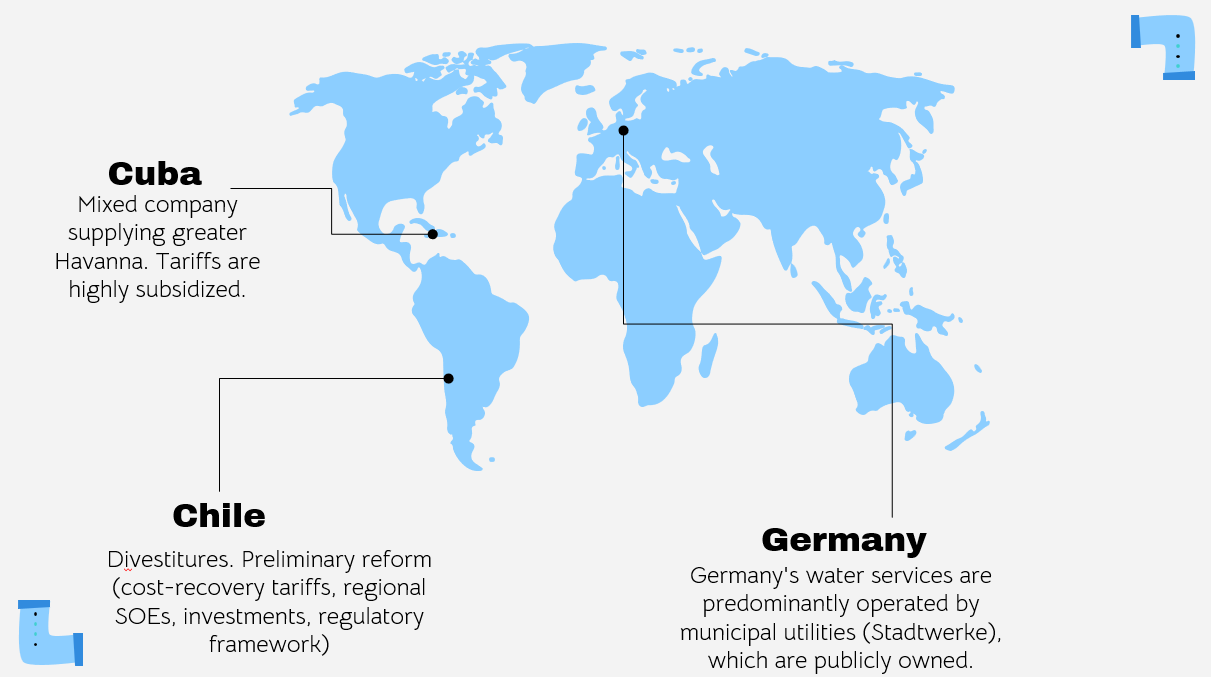
The focus should be on who is in the best position to deliver the service rather than sticking to a rigid ideology.
Looking at the hidden costs of groundwater
We also discussed the invisible side of the business: groundwater. In many places, the water level in aquifers is declining because we take more out than nature puts back., this may sound familiar to you if you’ve read our publication a few weeks ago.
This causes land subsidence, where cities like Mexico City literally sink, breaking the pipes we are trying to maintain.
Ben shared a case from Peru where they implemented a tariff for those who extract groundwater.
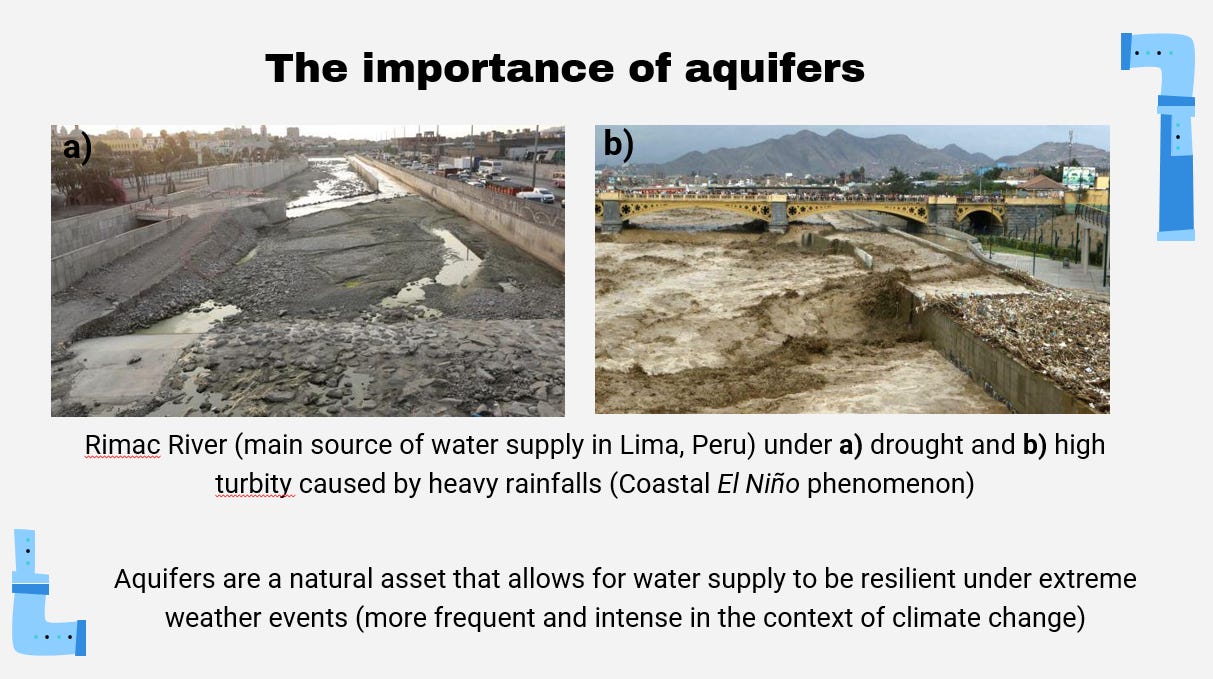
The logic is straightforward:
if a utility is spending money to recharge the aquifer or bring in surface water to relieve pressure, the people pumping from that aquifer should contribute.
It is a way to ensure large industrial users are not being subsidized by regular residential customers while signaling that groundwater has a real economic value.
Recommendation
This is my suggestion for you:
Watch and listen to the episode.
Share your Questions in our Networking Chat, or send me directly a message to me. We’ll try to solve them.
Read this book (water, politics, and money).
I’m sure there will be a before and after in your understading in our business in this specific field. A matter of few hours.
A reflection for your pillow tonight
Looking back a year later, I realize our biggest hurdle might not be technology, but the lack of a clear financial plan.
If we keep doing things the same way, we already know we will miss our goals.
In your own corner of the water sector, do you see a clear plan for where the money will come from in ten years?
Are we being honest about the cost of water, or are we just hoping the next generation will find a way to pay for it?
Thanks for reading, watching, and overall, engaging from time to time!


