

This week at The Water MBA, I have the pleasure to share my chatting with Virginia Villanueva, head of the water sector at ICEX.
I had wanted to have this conversation for a long time because we often see the ICEX logo at trade fairs or seminars, but we don’t always understand the machinery behind it.
Virginia not only brings the institutional vision but also comes from the “trenches” of the private sector, having worked for years in engineering and consulting before jumping into public administration, and this is particularly interesting.
I wanted to understand also how Spanish water talent is projected beyond our borders.
In a sector where technology and management are world-leading, having a figure who helps connect “technical supply” with international demand is vital to remaining competitive.
Brief Story
In June 2025, I attended the High-Level Colloquium of IDRA in Seville. The gala dinner was held at the Real Alcázar—an absolutely beautiful setting.
I had already contacted Virginia in 2024 to learn more about her work and about ICEX, so I felt extremely fortunate to be seated right next to her during the dinner.
I took the opportunity to better understand her background and the work she carries out every day.
What struck me most was that, while everyone else was enjoying a “relaxed” business dinner in such a stunning place, she was still constantly on her phone, handling last-minute arrangements for the following day.
That alone says a lot. It confirmed to me how much she loves her job and how much dedicated, behind-the-scenes work often goes unnoticed by those attending an event.
For that reason, I want to express my support and gratitude to professionals like Virginia.
Context
The water sector in Spain lives a paradox: we are world leaders in areas such as desalination and reuse, but we sometimes lack that unity of message that other countries possess. The challenge is not just technical, but strategic.
With the climate crisis accelerating the need for infrastructure in the Middle East, Latin America, and Asia, the challenge for our companies is to position themselves in increasingly aggressive markets where new Asian players compete strongly on costs.
The transition from engineering to public strategy
Virginia shares a career path that many in the sector will recognize.
After years of technical work in hydrological planning and environmental assessment in the private sector, and following a period of intense international activity traveling to countries like Haiti or Kosovo, she decided to seek a role that would allow her to capitalize on that experience from another perspective.
Her arrival at ICEX was not through the usual path of economics or law, but from environmental sciences and agricultural engineering.
This technical base allows her to understand what companies are talking about when they seek support for a sludge project or a desalination plant, providing a sensitivity that goes beyond the purely commercial.
The facilitating role of commercial offices
One of the key ideas from our talk is how ICEX acts as a connector.
It is not just about providing grants, but about opening doors.
Through direct and reverse missions, they bring decision-makers from countries like Jordan, Egypt, or Morocco directly to our companies.
It is a way of bringing demand closer to supply, allowing a manager of a Spanish technological SME to exchange a business card with a high-ranking ministerial official from another continent without having to organize an uncertain trip.
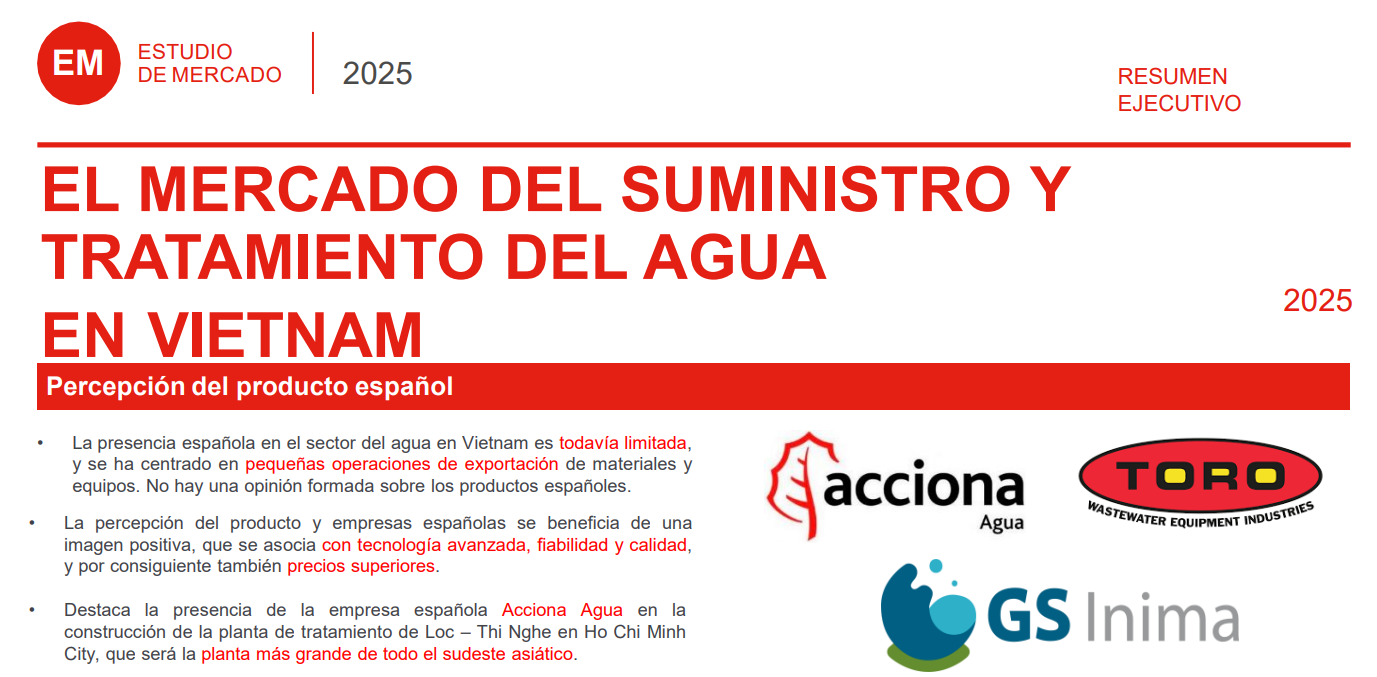
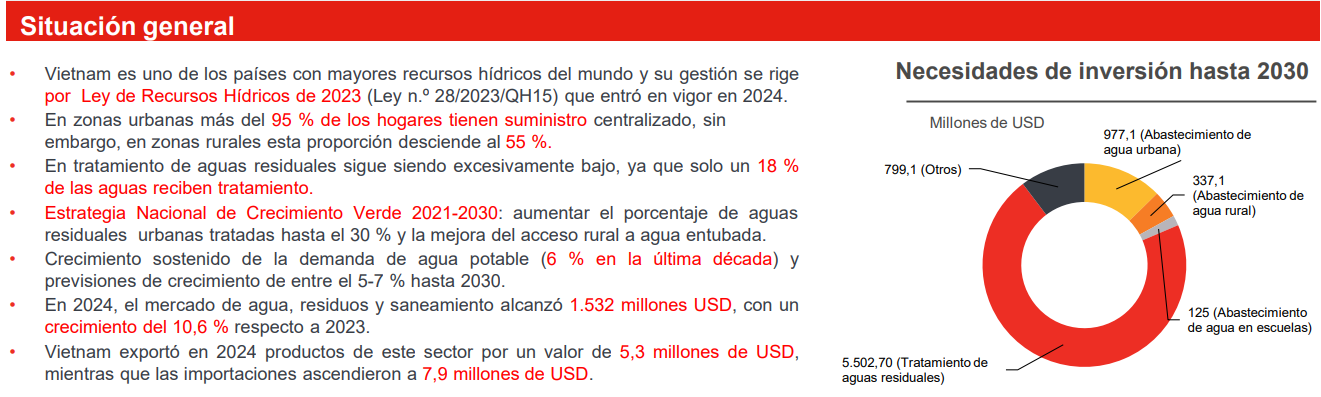
Additionally, the market intelligence they gather from different countries is extremely valuable. The executive papers and reports they make available greatly help in understanding water-related opportunities in each country, as illustrated in the example below:
Strengths and weaknesses of the Spain brand
When analyzing the current position of our companies, Virginia is honest.
Our great strength is the indisputable technical leadership in the integrated water cycle and basin management, a model that even the European Union and the World Bank take as a reference.
However, our weakness lies in institutional fragmentation and the lack of a common narrative. While other countries project a very powerful image of unity, in Spain we sometimes find it hard to “sell” ourselves with a single voice.
Furthermore, and this is only my personal opinion, in pure construction, it is difficult to compete with giants like China, which forces us to move toward added value: technology, digitalization, and efficiency.
New horizons in sludge and industry
Looking toward 2026, there are clear trends that will mark the international agenda. One of them is sludge management, moving from simple reuse to reduction at the source.
The concept of “Water Positive” in industry is also gaining weight. Companies no longer just look to reduce their water footprint but to compensate for it in the same basins where they operate.
This vision of “water and industry” opens an immense market for Spanish consultancy and technology, which must be attentive to these new demands for corporate sustainability.
Next event
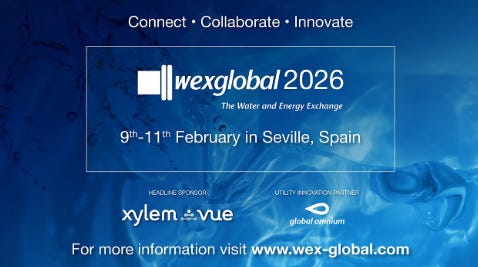
As part of my effort to better understand how everything works, I will be attending WEX Global from 9 to 11 February in my home city.
Whenever an important event is hosted close to where I live, I don’t want to miss the opportunity. Through this, I learned that ICEX and Virginia were collaborating in some capacity, so I asked Virginia to put me in touch with the event organizer.
Thanks to her support—and, of course, thanks to Mark Barker—I now have the opportunity to attend the event, serve as a judge awarding different categories, and take part in a site visit to a local irrigation community.
I’ll gather insights from the event and share them with all of you afterward.
My reflection
We sometimes complain about a lack of support, but are we truly taking advantage of the contact networks and strategic knowledge that already exist within our institutions?
Is it possible that our greatest hurdle to continuing to lead the global water sector is not a lack of technology, but our inability to build a shared, strong national narrative?
What I do know is that I am extremely proud of institutions like ICEX. Knowing that I can turn to them and obtain real value—supporting not only Spanish companies, but ultimately generating a positive ripple effect in other countries through these reverse missions—is something that is difficult to quantify in purely numerical terms.
I only wish we had more water professionals like Virginia and the rest of the ICEX team. To achieve that, I hope this conversation and essay help inspire colleagues around the world.
Thank you for reading, watching, and engaging!


