

I am seeing more and more large-scale desalination projects worldwide. There has been a very clear trend over the last ten years: what used to be considered a large plant—100-200,000 m3/day—is now essentially a standard mid-size facility. Today, we are already seeing plants of 300, 600 and even 1,000,000 m3/day, and large intake and discharge structures have become quite common.
In the end, every desalination plant must take water from the sea and discharge brine back into it. On top of that, we also have power plants, which capture seawater as well and return it to the sea, not with higher salinity, but at elevated temperatures. Below example of an impressive project.
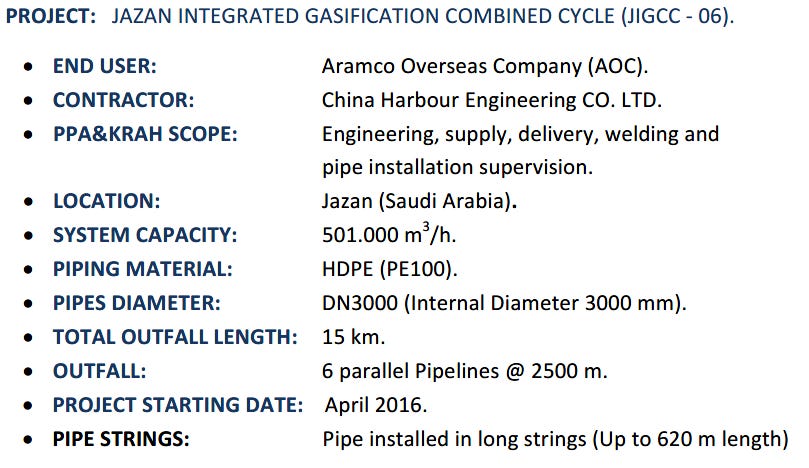
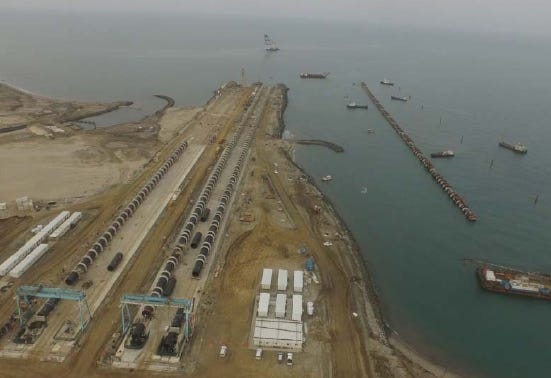
This is exactly what this workshop was about: shedding some light and presenting a solution that we believe is and will be highly relevant.
I was discussing not long ago with Antonio my intention to implement these pipes, mainly because for very large diameters the only real alternative is GRP.
When you are working with a tight project schedule, the CAPEX or budget may look acceptable on paper, but with a simple Excel analysis you quickly realize that you may end up jeopardizing the project or introducing excessive risk due to the lengthy installation process.
Many professionals— I would say around 90%—are not able to make a fair comparison of CAPEX, OPEX, and schedule when evaluating two or three alternatives.
Below you can see a brief extract from our Intake & Outfall Course (available here). It clearly shows that once you integrate the GRP installation process into the overall desalination project schedule, it almost becomes irrelevant if your CAPEX is USD 5 million lower. You still need to hand over the plant on time; otherwise, those USD 5 million will quickly look insignificant when delay liquidated damages start to apply.
So well, let’s talk about the hdpe pipes with structural walls:


