

Water beyond our circles, this week it is time to take our community to one of the leading podcasts in agriculture and rural economy in Spain, to talk about our community, about the water–food nexus, to discuss farmers’ problems regarding water management, whether brackish desalination plants make economic sense, how politics are affecting the daily work of farmers, etc.
Before watching the episode, I recommend reading the information we share below. The conversations are easier to follow and understand if you first read the reflections. That makes the perfect combo for knowledge transfer. And you can always take part in the Q&A through our chats.
Story
I went to my daughter’s birthday party last year. Parents were there and, you know, I start asking what do you do, etc.
In my region, 90% of water is used for agricultural purposes. Many friends have crops and farms (olives, oranges, rice, berries, cotton,…).
One of them was Alfonso Ariza, he had a farm, so I asked him many things: “how much water do you use?”, “where is your water coming from?”, “did you have any issues during droughts?” … and then he looked at me and said, “do you know about water?” I said, “well, I’m trying…”, and then he told me to go to his podcast, which I was not aware of, but it is now one of my favourites, because they are like conversations taking place in a bar: no filters, no fixed thoughts, reflections, questions, probably mistakes.
So the outcome is already available:
What did we discuss?
I identify my profession as an “endangered species,” noting that a generation of talented engineers has been lost to sectors like renewable energy or consulting due to the 2008 economic crisis and a lack of investment in Spanish public works.
Our discussion emphasizes that water management is often hampered by short-term political interests, specifically pointing to how “water transfers” (trasvases) have become a toxic word in Spanish politics, preventing unified national planning.
Despite these challenges, Murcia is highlighted as a global leader for its ability to regenerate 99% of its wastewater for agricultural use, demonstrating a level of efficiency and technology that exceeds even highly praised models like Israel.
The narrative shifts to the global scale, where I discussed my role in developing the world’s largest reverse osmosis desalination plant in the UAE, which produces 900,000 m³ of water daily and integrates extensive solar power to lower energy costs.
In contrast to these massive international feats, we “critique” the bureaucratic paralysis in Spain, where the Hydrographic Confederations have shifted from technical to political control, often burdening farmers with high costs and slow permit processes for essential infrastructure like small reservoirs.
We argue that as groundwater supplies like Doñana are overexploited, desalination / brackish water treatment plants and water reuse will become inevitable necessities for both urban growth and agricultural survival.
To secure the future, we advocate for a more decentralized approach to water management, encouraging the construction of small, local basins that allow individual farmers to store runoff water during the rainy season rather than letting it run into the sea.
The conclusion is that water is a finite, strategic resource that is currently undervalued by the general public; society must move beyond political divisions and invest in long-term infrastructure to ensure stability for the next generation
What are the major concerns of farmers in my region?
Context
Here are a few maps. We are located in the south of Spain.
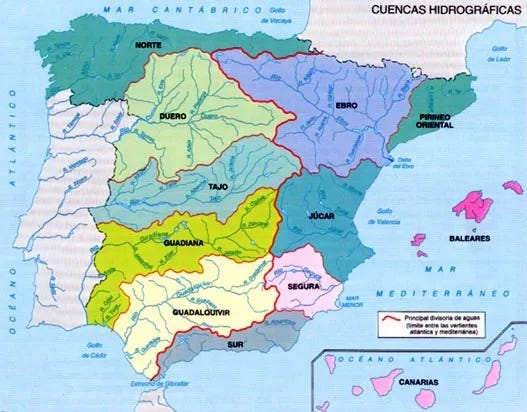
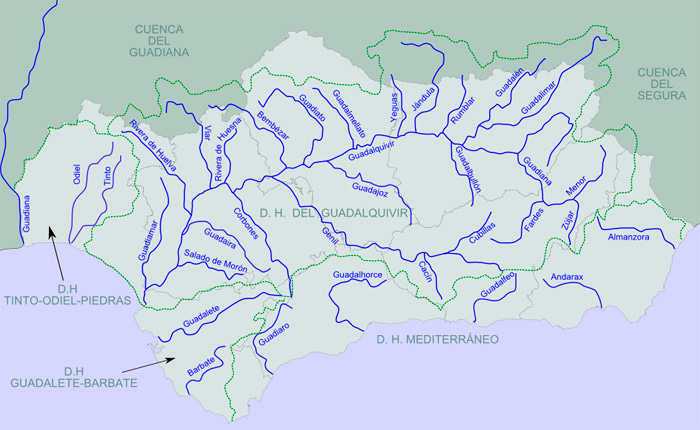
Spain is divided into hydrographic basins.
Management is based on basin criteria, not on regional or city boundaries.
Our basin is the Guadalquivir Basin. Here are a few data.
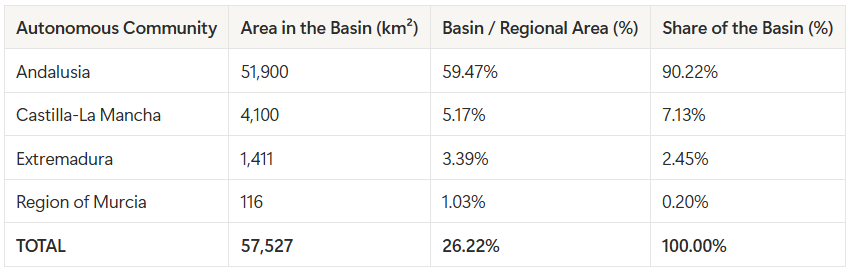
The river network extends over 10,578 km of freshwater watercourses and around 238 km of transitional waters in the Guadalquivir estuary.
This week it is breaking news, as historical rains are delivering some of the highest storage levels ever recorded, with flooding scenarios occurring for return periods of 10, 50 and even 100 years.
Who manages the basin?
Hydrographic Confederations (CHs) in Spain are public bodies under the Ministry, responsible for managing an entire hydrographic basin, grouping main rivers and tributaries regardless of administrative boundaries.
The CHs have responsibilities for water management within their basin, including:
Planning and management of water resources:
They prepare and implement the River Basin Management Plan, which defines how water will be used and protected.
Control of uses and concessions:
They grant water use rights (irrigation, supply, industry, energy) and supervise compliance.
Environmental protection:
They manage ecological flows, protect wetlands and aquatic ecosystems, and monitor water quality.
Infrastructure maintenance:
Dams, canals, gauging stations, flood and drought alert systems.
Risk prevention and management:
Floods, droughts, pollution spills.
Inspection and sanctions:
They monitor compliance with water regulations by users.
Agriculture is the largest water consumer in Spain, and the CHs directly influence it:
Distribution of irrigation water:
The CHs decide how much and when water can be used from reservoirs and rivers for irrigation, according to availability and priorities.
Restrictions during drought:
During scarcity periods, they can reduce irrigation allocations, prioritising urban supply or ecological flows.
Regulation of wells and groundwater:
They control groundwater extraction for irrigation to avoid overexploitation. There are hundred of thousands of illegal wells around the country, there is no enough capacity to supervise and control all of them.
Promotion of efficiency:
They may recommend or require more efficient irrigation systems and basin-based quotas.
So these entities execute hydrological planning (I’m preparing a very interesting episode on this in 2026…), execute investments (here lies one of the problems: planning investment is not the same as executing it), and plan the hydrological cycle and water consumption for users, with priority given to domestic, agricultural and industrial uses.
How do they calculate this water?
Irrigation quotas are water limits assigned to each user or irrigation community, normally expressed as:
m³ per hectare (volume of water per cultivated surface unit)
Irrigation days or available flow per period
These quotas are used to:
Avoid overexploitation of reservoirs and rivers
Guarantee urban and industrial supply
Maintain minimum ecological flows in the river
Key factors include:
Water availability in reservoirs
Analysis of storage levels at the beginning of the season
Estimation of expected rainfall and evapotranspiration
Calculation of maximum distributable volumes without deficit risk
Priority of use
Urban consumption > agriculture > industry (although this depends on agreements)
During droughts, agricultural irrigation quotas are usually reduced first.
Type of crop
High-value or deficit-sensitive crops (e.g. citrus, vegetables) may receive higher quotas per hectare.
Less sensitive crops (rainfed cereals, olive groves) receive less water or lower irrigation frequency.
Farm surface
Normally proportional to registered hectares in the irrigation community
Some agreements allow modulation based on irrigation system efficiency (drip vs flood)
Coordination with irrigation communities
The CHG establishes an annual distribution plan, negotiated with irrigation communities.
The communities allocate water to each farmer based on surface and crop
This last point, these communities, organised in different regions, are the interface and distribute water within their zones and among farmers.
In fact, tomorrow 09th February I’m visiting the next community thanks to the WEX Global Event.
Organización | La Comunidad | CR Valle Inferior del Guadalquivir
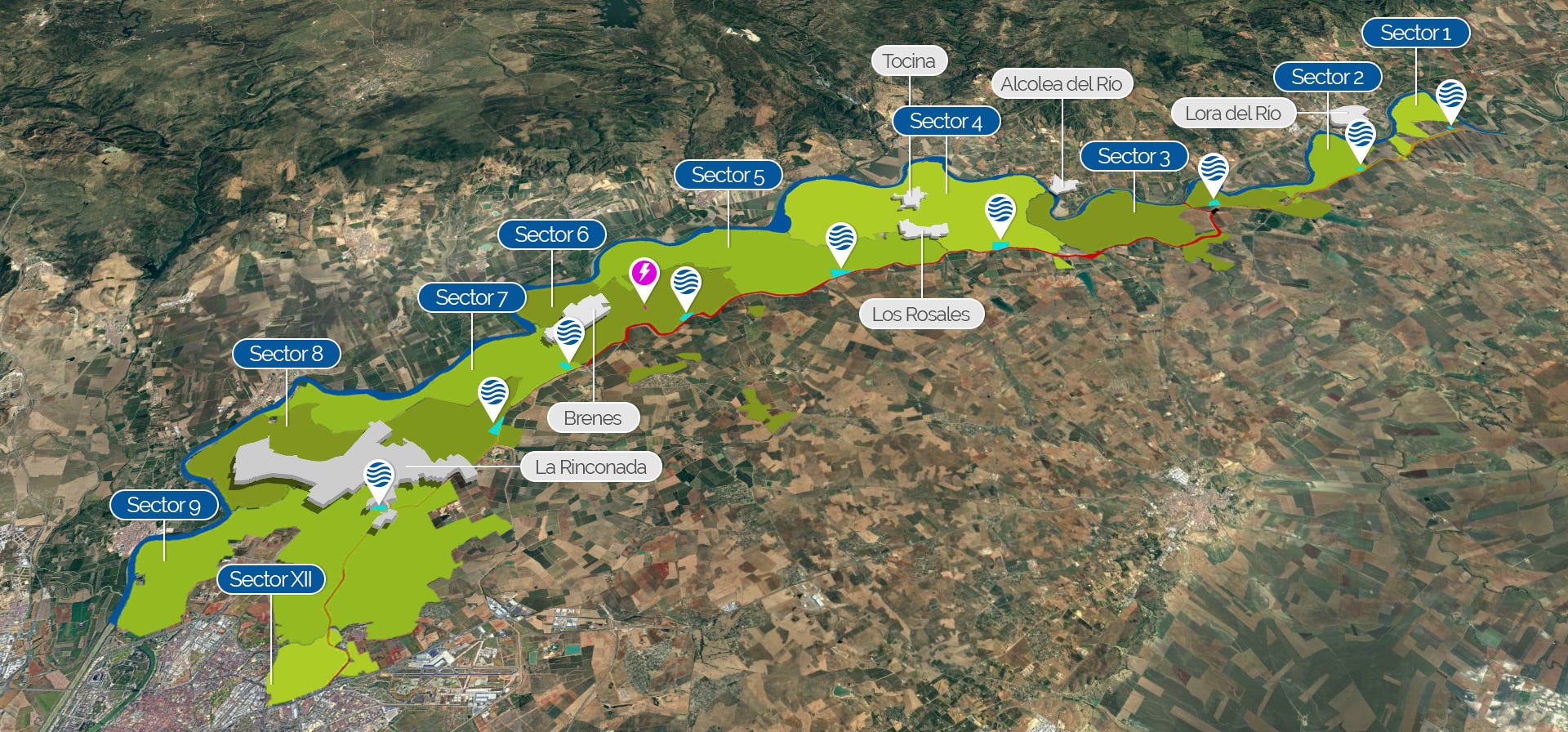
The relationship between the Confederation and the Communities is one of supervision and technical cooperation.
Concession and Allocation: The CHG grants the Irrigation Community a global administrative concession defining the maximum volume it can divert. Each year, the CHG communicates the specific allocation for that season (e.g. 50% of their concession right during drought).
Internal Distribution: It is the Irrigation Community that agrees on and executes the internal distribution of that volume among its farmers and plots.
Infrastructure: The CHG manages dams and main canals, while Communities manage the secondary pipe network, internal regulation ponds and pumping systems.
In the Guadalquivir basin, hundreds of these communities operate (more than 1,000 if groundwater ones are included), ranging from small traditional organisations of a few hectares to large irrigated areas such as the Lower Guadalquivir Valley, which manages nearly 19,000 hectares.
But how much water is consumed in agriculture, and for which crops?
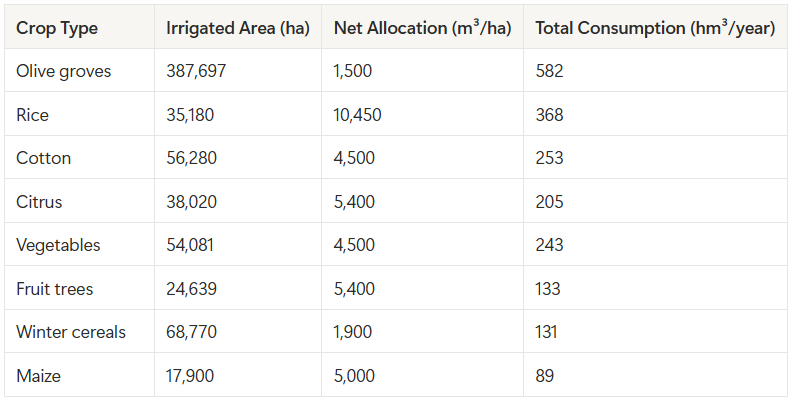
Here you can see that each crop has different water intensity, so it is not only the total cultivated area, but also the application rate.
Below is a list of key crops in our region. Some require water no matter what, others can survive with almost zero water beyond rainfall.
The period 2020–2025 has been a very volatile hydrological scenario.
One of my friends has orange trees, and in 2023 he had to urgently drill a borehole, but the salinity obtained was around 2–3 g/l, putting the crops at serious risk.
The drought was on the edge of becoming socially and economically devastating.
These droughts will return, probably with even more force; historical data show that droughts can last not just 2 or 3 years, but even 7–12 years.
74.77% of irrigation water comes from surface sources (rivers and reservoirs), 24.73% from groundwater, and only 0.49% from reclaimed wastewater, an area with huge growth potential according to current investment plans.
That’s why resilience is being strengthened through wastewater reuse and incorporating this flow into the water mix.
Many investments, unlocked thanks to European funds, have been launched, and the regional government called 2022–2026 the “Water Mandate”.
Major farmer concerns in my region
During the last few months, this is what I’ve been hearing from all my contacts.
Severe Restrictions: The Guadalquivir basin has experienced six consecutive years of restrictions, reaching a critical point in 2023 with an 86% cut in irrigation allocations.
Resource Quality: There is degradation of water quality, especially in the Genil River, with high levels of suspended solids and increasing salinity exceeding 2,500 microsiemens, severely affecting crops such as potatoes and cotton.
Limitation of Concessions: Due to lack of resources, the Confederation does not grant permits for new irrigated areas, managing only existing concessions.
Political Contamination: Water management is criticised for being subordinated to partisan and territorial interests (“sardines” of each administration), preventing a national-interest vision.
Loss of Technical Profile: Historically, confederations were technical bodies led by civil engineers; in recent years they have been led by political or legal profiles, perceived as a setback in managing complex infrastructure.
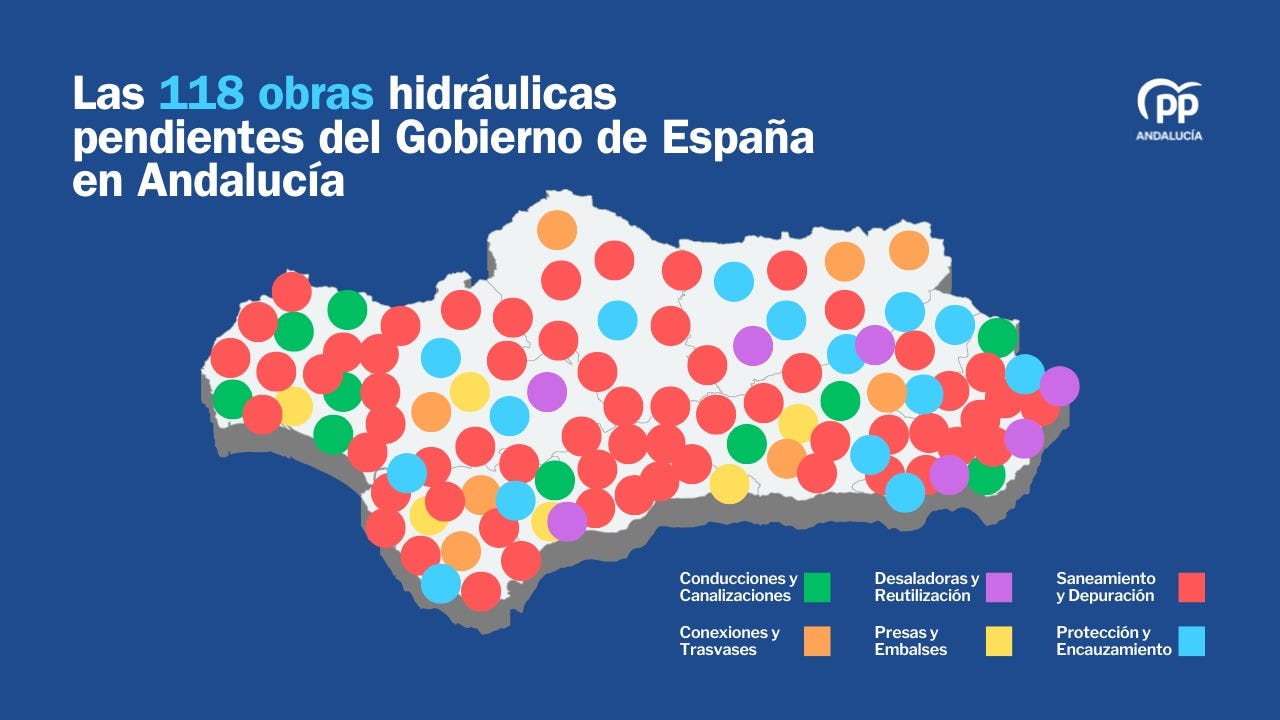
Infrastructure Paralysis: A 20-year paralysis in hydraulic investment is denounced. Vital projects such as the completion of Genil-Cabra have been delayed for more than 50 years, leaving thousands of families unprotected despite expropriations decades ago (now it seems €30M are being unlocked… but who knows).
Excessive Bureaucracy: Administrative procedures are extremely slow; obtaining a licence to build a storage or settling pond can take 3 to 4 years.
Threat of Invasive Species: The entity faces the technical challenge of combating zebra mussels, Asian clams and bryozoans, which clog filters and pipes, potentially disabling entire irrigation networks.
Lack of Coordination in Emergencies: Using flood management as an example, the inefficiency of communication channels such as email is highlighted for warning about flow increases, often arriving when flooding has already occurred.
Well, I hope you enjoy our conversation, and that we keep working on shedding light on how our business actually operates, and on how we can seize new opportunities and create future leaders capable of making good decisions.
Thanks for reading, watching, engaging, and sharing!


