

Tabark Majid, water engineer based in London at Buro Happold, while she grew up in the UK and studied at Imperial College, her roots are in Iraq, a country defined by two of the most storied rivers in human history: the Tigris and the Euphrates.
This region is considered to be the "cradle of civilization", but we rarely discuss the reality of those water systems.
Tabark represents the energy of the next generation of engineers who are looking back at their heritage with a technical and critical eye.
It matters because Iraq’s water case study show transboundary water issues, the geopolitics of water, internal contrasts in water management within a single country, the role of large-scale grey infrastructure to ensure water availability, and strategies for flood mitigation…
As I’ll develop further later on this essay, Iraq is pushing ahead with a massive seawater desalination initiative near Basra, the largest desalination project of its kind in the world. The facility is expected to produce about 1,000,000 m³ of fresh water per day to help address chronic water shortages caused by prolonged drought and declining flows in the Tigris and Euphrates rivers, which have been severely affected by climate and upstream damming.
At the same time, parts of northern Iraq have recently experienced heavy seasonal rainfall and flooding after years of drought.
What a contrast! On the one hand, Iraq is investing in major desalination infrastructure to secure water supplies in response to drought conditions, while on the other hand intense rains and floods are emerging in ways that complicate water management and resilience planning.
Why the rivers look different today
When Tabark returned to Iraq after more than a decade, she was struck by a sight she didn’t expect: the rivers were nearly empty.
For someone who understands the hydraulics of a river system, seeing the Tigris and Euphrates at such low levels was surprising.
We cannot treat rivers as isolated local resources.
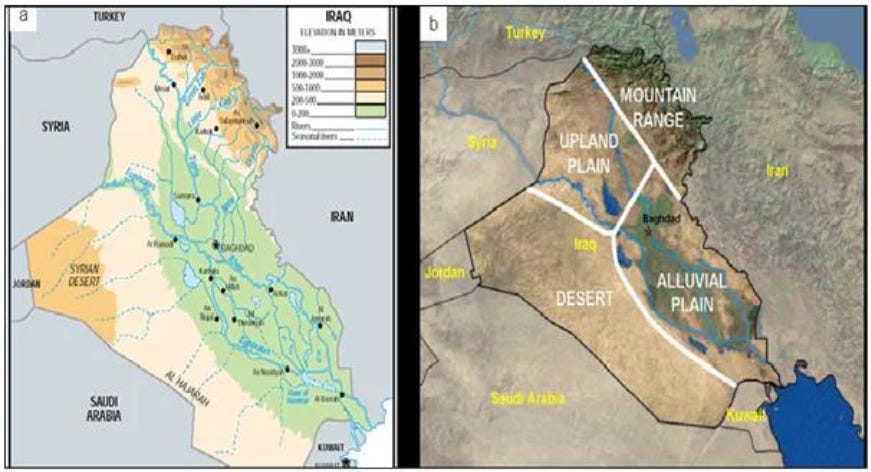
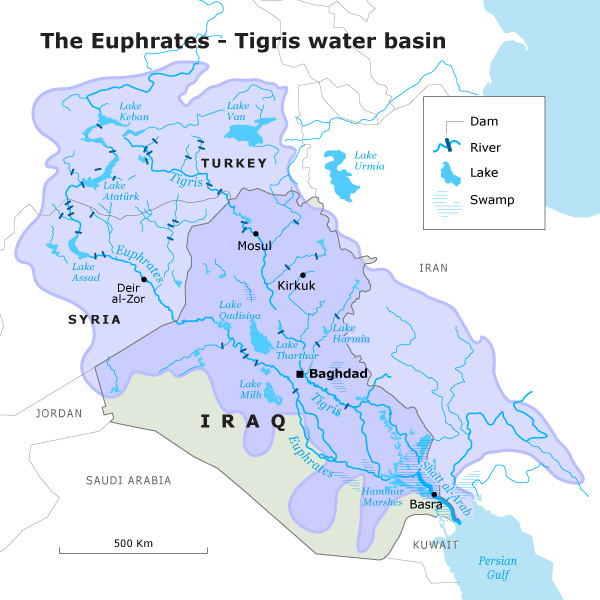
The geography here is unforgiving. Iraq covers nearly half of the river basin but contributes almost no surface water to the flow.
Meanwhile, Turkey contributes about 90% of the water while covering much less of the basin.
This physical reality creates a natural dependency that defines every political and economic decision in the region.
The shift from natural to regulated systems
One of the most important takeaways from our talk was the “pivotal point” in the 1960s and 70s.
Before then, the rivers followed natural cycles of flooding and drought.
Since then, massive infrastructure projects—like the Southeastern Anatolia Project** project in Turkey, also known as “GAP”—have turned a natural system into a regulated one.
**It centers on the harnessing of the Euphrates and Tigris rivers to transform Turkey's southeastern provinces through energy production and massive irrigation. The plan envisages 22 dams and 19 hydroelectric power plants (HEPP). The project targets the irrigation of 1.7 to 1.8 million hectares of land, which represents about 20% of Turkey's total irrigable area.
This is another clear case study of geopolitics and transboundary water, complementing our famous cases of Nile River, Indus River, etc.
With storage capacity now four or five times the annual flow of the Euphrates, the power has shifted upstream, having the decision-making power to open or close the gates.
For Iraq, this means that the “life or death” resource they rely on for irrigation and drinking water is no longer fully in their hands.
Quality is as important as quantity
We often focus on whether there is enough water, but Tabark reminded me that flow volume and water quality are inseparable.
As the water moves from the mountains of Turkey down to the flat plains of southern Iraq, the salinity increases naturally due to the soil and geology.
When the flow is reduced by upstream dams, the concentration of salt and pollution becomes much higher.
By the time the water reaches cities like Basra, it is often too salty or contaminated to use without advanced treatment.
Having a river nearby does not guarantee having clean water, as you can see in the below picture taken in Basra.
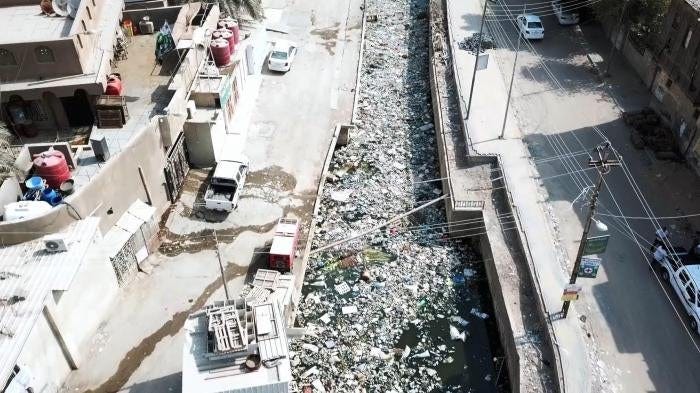
The water supply remains contaminated with untreated sewage, industrial waste, and medical runoff (including antibiotics and toxins from hospitals). Basra is the "sink" for Iraq's waterways.
Most families must spend a significant portion of their income, roughly $7–$10 per week per household, to buy clean water from private purification plants or trucks
The invisible impact of water engineering
Tabark and I talked about the role of the water engineer and why it often feels undervalued.
Unlike a bridge or a skyscraper, our best work is often invisible. If we do our job perfectly, nothing happens. There are no floods, the taps stay on, and the water is safe.
She made a great point about “outreach.” If we want to attract more young people to this sector, we have to get better at showing the impact.
We need to move beyond the idea that engineering is just about building things. It is about managing risks and protecting communities.
Tabark said we should celebrate “no-flooding” days to remind society that the stability they enjoy is the result of constant, quiet engineering work.
Too much water!
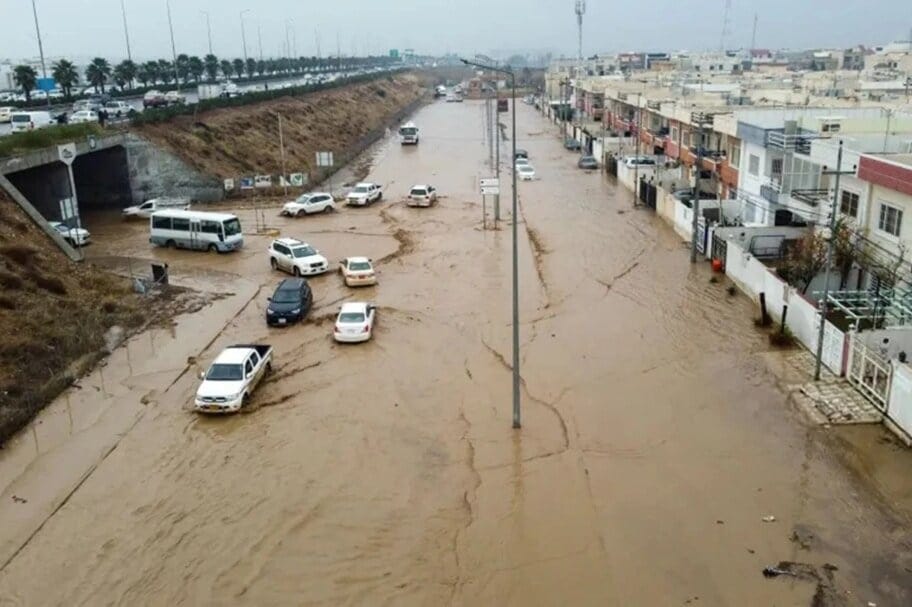
Iraq is facing a severe crisis due to torrential rains and flash floods that began in mid-March. While the country has struggled with drought for years as commented, this sudden deluge has overwhelmed infrastructure and displaced thousands.
At least 4 deaths and over a dozen injuries reported due to lightning strikes and collapsing structures.
Approximately 7,500 people have been forced to leave their homes.
Over 31,000 individuals across multiple provinces have suffered significant property loss or lack of access to clean water and electricity.
I’m increasingly valuing the role of engineers like Tabark Majid, working at the intersection of hydrology, flooding, and urban planning.
Given the growing importance of this field, I’ll make a conscious effort to give it more visibility and recognition in what I share.
I’m also glad to see that our networking chat is becoming one of the strongest gatherings so far, specially in hydrology/flooding theme. It’s a great signal of the interest and momentum building around these topics.
I expect to bring more practical elements into it, potentially including live demos or workshops focused on digital tools that can be applied in real-world water management and planning.
And now the biggest RO desalination plant
At a certain point, it becomes difficult for any country to resist taking decisive action to secure water for its population. That breaking point has clearly been reached here.
When you consider all the factors, water controlled upstream, significantly reduced river flows, rising contamination levels, and the degraded quality by the time it reaches Basra and the Gulf, the situation becomes unsustainable.
And this is not a marginal issue. The south is home to millions of people, alongside critical industrial activity and agriculture.
In that context, desalination becomes a strategy for independence. A way to secure reliable drinking and industrial water supply (availability!), while preserving what freshwater remains for agriculture, which continues to be a key economic aspect.
So in early 2026, the Iraqi government awarded a $2.4 billion contract to a Chinese-Iraqi consortium led by PowerChina to build a massive seawater desalination plant of 1,000,000 m3/day in Basra. It is expected to take nearly four years to complete.
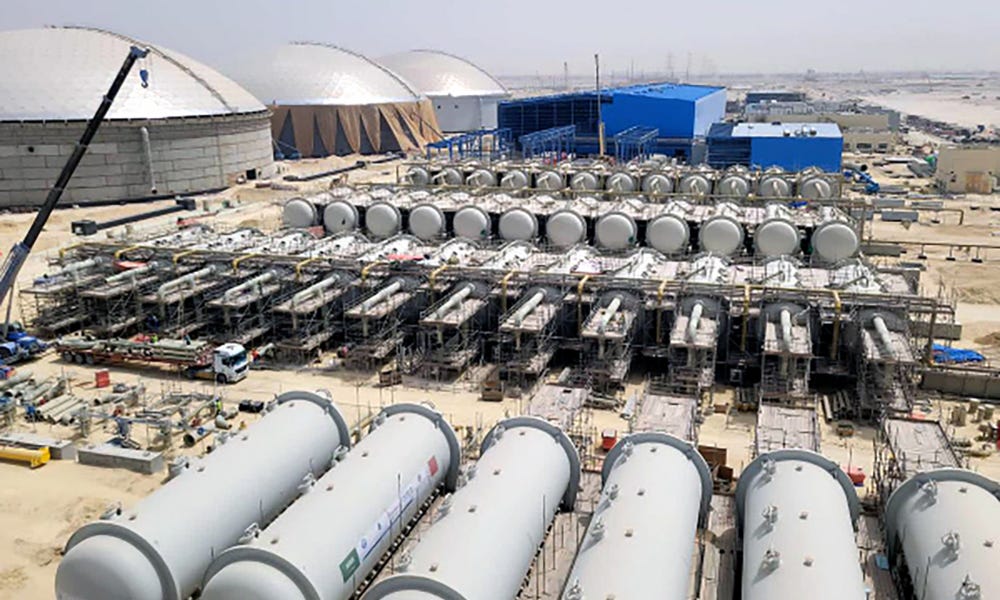
China has spent years investing in and developing infrastructure, especially across Africa, and this is yet another example of how it is shaping the global water landscape.
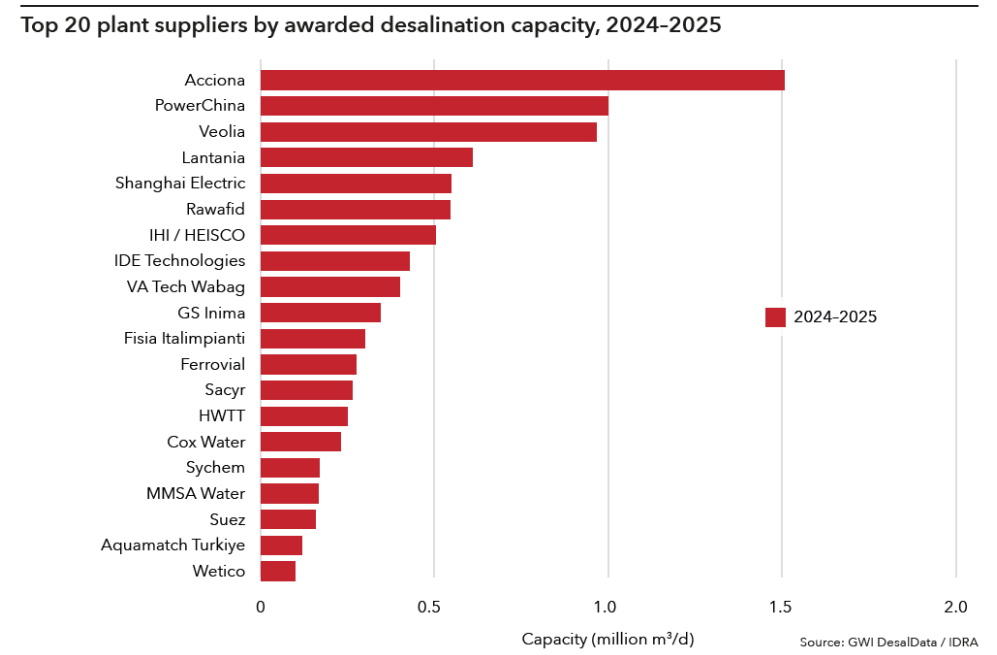
In desalination, scale changes everything. Delivering a single large-scale plant in just one year can immediately position you among the top players worldwide, as you can see below.
If you’re interested in desalination, two things I’d like to share 2 points.
I’ll be in Marrakech this June for the Euromed Desalination Conference, where I’ll be giving a short session on learning at scale in mega-desalination plants. Let me know if you’ll be there.
Given this growing importance, I’m organizing a basic-level Desalination Course for those starting out or looking to enter the field. The pace of this infrastructure development is outstripping the availability of experienced professionals. Seriously.
From what I see firsthand, anyone entering now. regardless of their background, can benefit significantly from a practical, structured learning approach.
If you’re interested, send me a message. I’ll aim to gather a small cohort and build something valuable.
One last thing
This week I managed to convince my wife to watch a conversation on YouTube instead of a Netflix series. She agreed, but on one condition: A foot massage in the meantime. I said fair enough.
Ben is reading this, he’s been a great supporter of The Water MBA for quite some time. In fact, we managed to bring together a really interesting episode on innovation in membrane spacers with Aqua Membranes. I’m a huge fan of the way he approaches marketing. Some of the videos I’ve come across are genuinely funny, I really enjoy them.
So I was watching them, talking about water companies and social media, and around minute 14:00, Ben actually mentioned The Water MBA and said what we’re doing is great.
I turned to my wife and said, “Hey, did you hear that?”
She just smiled and said, “Well… he’s your friend.”
Thanks a lot to Ben for the kind words, I really appreciate it.
You can watch the exact moment here:
I’ve been talking about this for the past three years: the world has changed, and so has the ecosystem.
The way people consume content is completely different now, what we consume directly shapes how we understand the world.
That’s why consuming high-quality content matters more than ever, and why we need to actively use the platforms where people are already spending their time.
Last year, I bought a new smart TV. On the remote, there was a dedicated button for YouTube. It made me curious. I started asking friends, and many of them said the same thing: “I don’t really watch TV anymore, I just follow YouTube channels.”
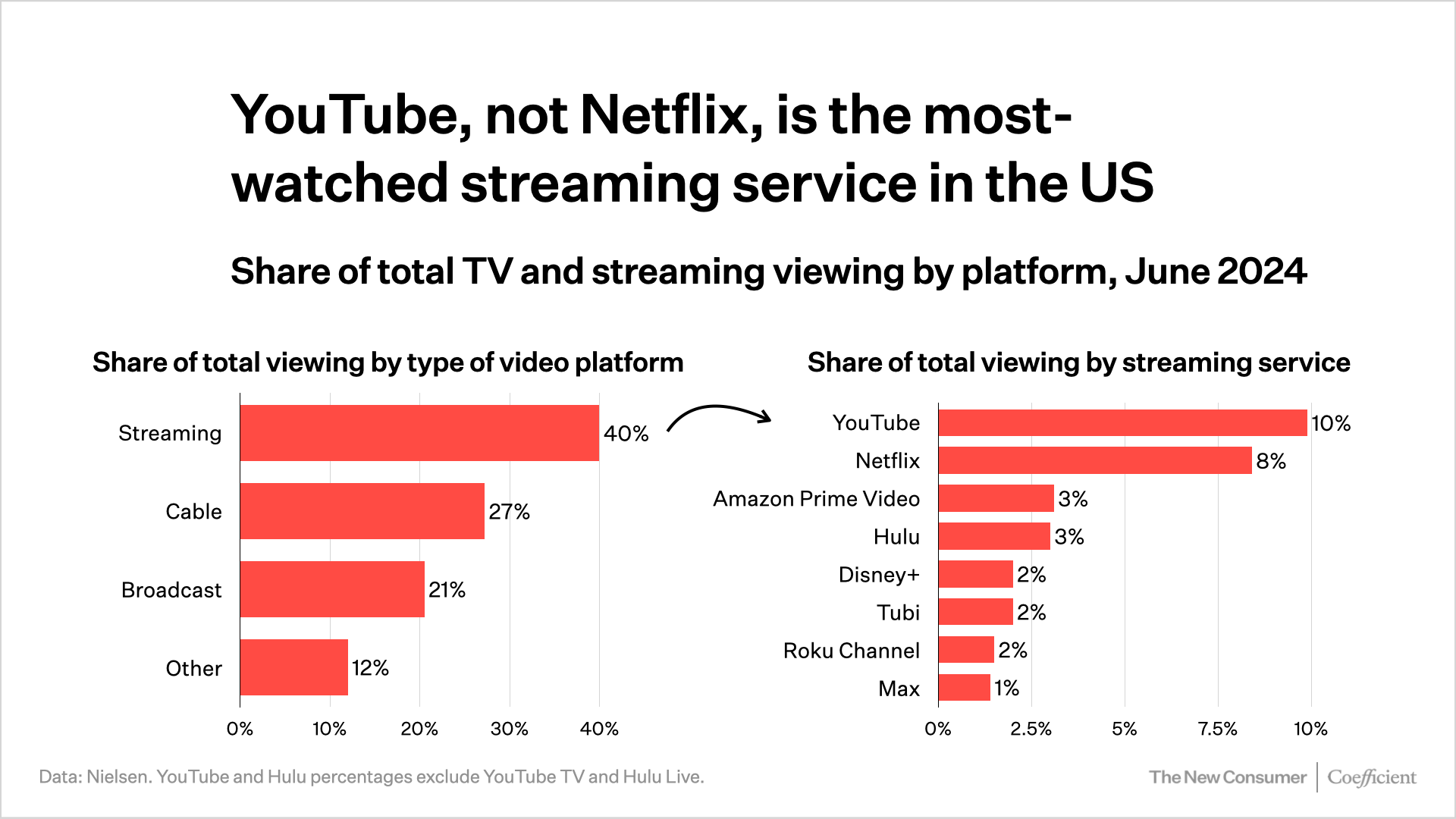
I’m both a producer and a consumer. I realized I was doing the same. I go to YouTube to watch what interests me.
That’s one of the reasons I decided to open months ago a small window there as well, to make it easier for those who primarily use YouTube to access this kind of content.
And I strongly recommend adding Björn’s channel to your list. It’s high-quality, highly relevant for water professionals, and there’s a lot we can learn from it in terms of communication and marketing.
Thanks everyone for your support!


