
Today is World Water Day 2026, a moment to recognize the people working tirelessly in Water, Sanitation, and Hygiene (WASH) a sector often underfunded and under-recognized.
Despite limited financial incentives and reliance on NGOs and good-willed initiatives, this field is arguably the most impactful in our industry.
On this occasion, I’m sharing our podcast conversation with Jessey Nyamohachi from the Ryan’s Well Foundation.
Jessey’s insights highlight not only the technical challenges of bringing water to remote communities but also the human dimension, especially the gendered impact of water scarcity.
The first minute of the video summarize perfectly the 2026 World Water Day motto on gender, and the last 10 minutes showcase images of Ryan’s Well Foundation initiatives on the ground.
These professionals deserve a wider audience and recognition for their work.
The weight of the walk
Jessey shared a vivid memory from his childhood in rural Uganda.
Before school, he would spend hours walking to a well to fetch water.
By the time he arrived at his classroom, he was already physically exhausted.
This isn’t just a nostalgic story; it is the daily reality for millions.
In Sub-Saharan Africa, women and children spend an estimated 200 million hours every single day fetching water.
When we talk about “water stress,” we aren’t just talking about a lack of liquid in a pipe.
We are talking about a massive loss of economic opportunity and human potential. If you spend five hours a day carrying a jerrycan, you don’t have time for education or starting a business.
Why infrastructure fails without ownership
One of the most striking points Jessey made was about the “broken borehole” phenomenon. You can often find rural communities where a well was drilled years ago but now sits in disrepair.
This usually happens when an organization installs a solution without involving the local people.
He emphasized that if a community feels a project belongs to “the NGO” and not to them, they won’t maintain it.
Sustainability isn’t just about the quality of the cement or the pump; it is about the social contract.
The Ryan’s Well Foundation focuses heavily on creating water committees, often led by women, to ensure the community has the tools and the desire to keep the water flowing long after the technicians leave.
Choosing the right tool for the terrain
There is no “one size fits all” solution for water access. Jessey explained how their technical approach changes based on the local geography.
In Northern Uganda, where the water table is deep, they drill deep wells.
In Western Uganda, where groundwater is closer to the surface, they focus on protected springs.
We also discussed rainwater harvesting. In areas with heavy seasonal rains, catching water from rooftops and storing it in large tanks is a simple, low-maintenance way to provide clean water.
It reminds us that sometimes the best engineering isn’t the most complex, but the most appropriate for the environment.
The link between water and dignity
Beyond the drinking water itself, we touched on the critical role of sanitation.
Jessey shared examples of gender-sensitive and disability-sensitive latrines. In many schools, a lack of private, clean toilets is a leading reason why girls stop attending once they reach puberty.
When we provide a school with a rainwater tank and a hand-washing station, we aren’t just improving health statistics. We are creating an environment where children can stay in school and live with dignity.
Water is the foundation upon which every other part of development such as health, education, and economy is built.
What about the cities in Uganda
I think it is interesting to look also at Uganda’s water utilities. Although our episode focuses on where the network ends and where utilities fail to reach, because of the reasons we discussed, Uganda is actually one of the major reference cases in the sector.
You know urban water management in developing countries often struggles with the same problems: weak institutions, poor billing systems, high losses, and limited investment.
It is an interesting case where a poorly performing public utility managed to turn itself around. The common approach in such situations is often to rely on the private sector to drive improvements.
However, this case shows that it is also possible to significantly improve a public utility through internal reforms, by strengthening management, incentives, and accountability from within the organization.
In the 1990s, Uganda’s urban water utility was a classic example.
The National Water and Sewerage Corporation (NWSC), responsible for supplying cities such as Kampala, suffered from low service coverage, high water losses, and poor financial performance.
Like many public utilities across the Global South, it was widely seen as inefficient and unsustainable.
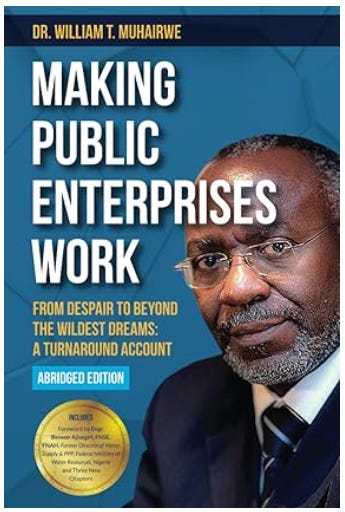
The turning point came with a management reform led by William T. Muhairwe.

Rather than privatizing the system, the reform focused on internal performance management.
The utility introduced clear targets for each city operation, performance contracts for managers, strict monitoring of indicators such as non-revenue water and billing efficiency, and incentive systems for staff.
Operational autonomy increased, while accountability for results became much stricter.
The results were striking. Over the following years, NWSC expanded service to many more urban centers, dramatically increased the number of household connections, and improved financial sustainability.
Staff productivity improved, revenue collection strengthened, and the utility became one of the most studied reform cases in the global water sector. Within Africa, it began to be seen as one of the most competent public water utilities.
Eventually the rapid gains slowed and performance stabilized as the system matured and expansion became more complex. Leadership also changed over time. Yet the institutional culture introduced during the reform period proved durable.
Mr. Muhairwe left on 2013, he has received multiple international honors, including recognition among Water and Wastewater International’s “Top 25 Industry Leaders.” His book Making Public Enterprises Work: From Despair to Promise chronicles the NWSC transformatio, I’ve not read yet, but I add in our library to follow-up.
Today, Uganda’s urban water management is often cited as evidence that public utilities can improve dramatically when management incentives, operational autonomy, and performance monitoring are aligned.
The reforms did not solve every challenge, but they left a lasting institutional legacy that continues to shape urban water services in the country.
Thanks for reading, sharing and engaging, and happy world water day!


