The Water MBA: The Dynamics of the Water Business — (ongoing)
I want to share a book that helps readers truly understand our business from A to Z: the interconnections, the challenges, the barriers, every dot connected in a reading experience designed to deliver maximum value per page.
My goal is to make it desirable, effective, and engaging, with a clear outcome: after reading this book, a water professional will have a clear, comprehensive understanding of the full business picture, be better prepared to act accordingly, interact confidently with peers, and identify new opportunities within our industry.
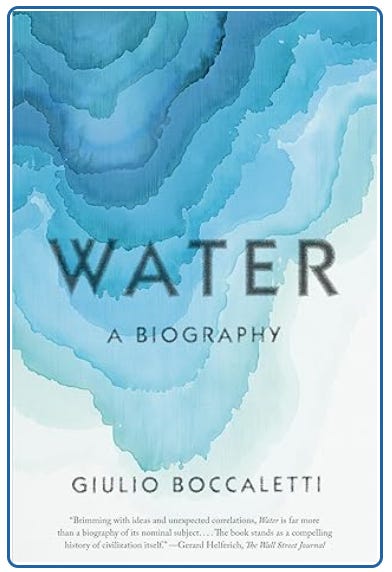
Water: A Biography — Giulio Boccaletti
A book that reframes water not as a resource, but as the central organizing force of civilization, economy, and power.
Giulio Boccaletti walks through history, geopolitics, infrastructure, and governance to explain how societies rise and fall based on how they manage water. This is a systems and strategy book rather than a technical one.
After reading it, professionals will see their daily work in a much broader context, understanding how policy, economics, climate, and infrastructure are deeply intertwined.
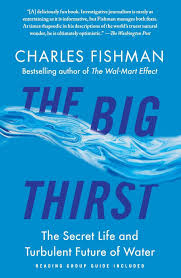
The Big Thirst — Charles Fishman
A book that exposes the real economics and inefficiencies of water use, particularly in developed economies.
Through real-world cases, the book explains how cities, industries, utilities, and consumers misuse water due to outdated incentives rather than scarcity. It offers a clear view of demand management, pricing, and behavioural change.
After reading it, readers gain a sharper understanding of why the “water crisis” is often a management problem rather than a supply problem.
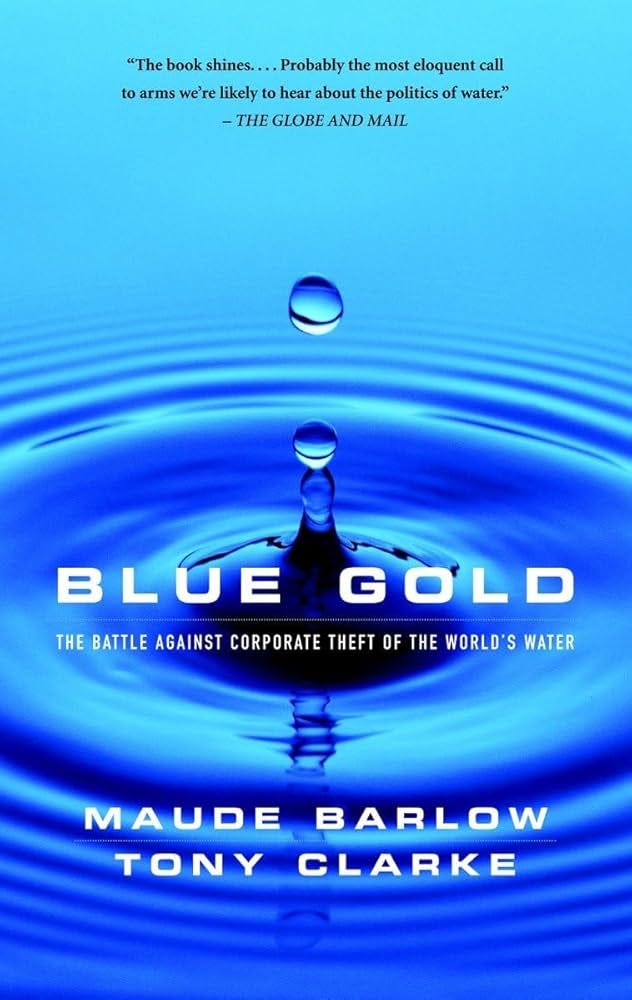
Blue Gold — Maude Barlow & Tony Clarke
A book that challenges readers to think critically about ownership, privatization, and governance of water.
It examines who controls water, who profits from it, and how these dynamics shape public trust, regulation, and political risk.
After reading it, water professionals gain perspective on the social and ethical dimensions that increasingly influence project success and policy decisions.
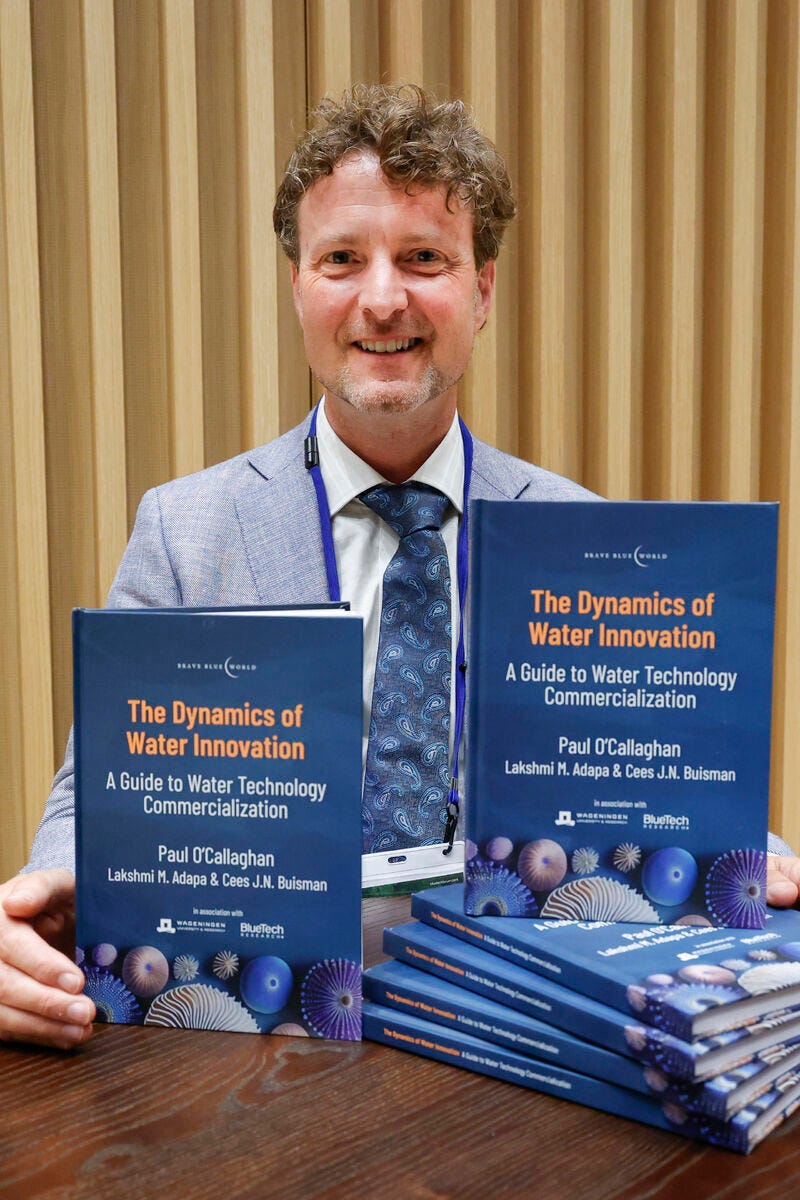
The Dynamics of Water Innovation — Paul O’Callaghan
A book that explains how innovation in the water sector actually happens—not in theory, but in practice.
Paul O’Callaghan connects technology, regulation, utilities, financing, and human behaviour to show why water innovation is slow, and more importantly, how it can be accelerated. The book helps readers understand the invisible forces that shape adoption, scale-up, and failure in water solutions.
After reading it, a water professional will better understand why good ideas struggle, how ecosystems really work, and where to position themselves to drive meaningful change.
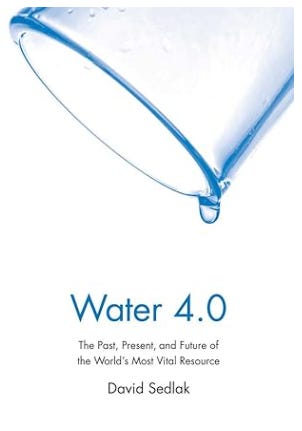
Water 4.0 — David Sedlak
A book that reframes the story of water not just as a background element of life, but as the hidden infrastructure that has shaped civilization, public health, and modern urban living.
Environmental engineer David Sedlak traces the evolution of water systems over 2,500 years, from ancient Roman aqueducts to 19th-century advances in water treatment and 20th-century sewage innovations, showing how each “water revolution” enabled cities to grow and thrive.
He then confronts the urgent challenges facing today’s aging infrastructure and explains how emerging technologies, policy shifts, and reimagined systems could define the next revolution in how we supply, treat, and manage water.
This is a systems-level book that blends history, engineering, and forward-looking analysis rather than a highly technical manual.
After reading it, professionals in planning, policy, environment, and infrastructure will see water not merely as a resource to be managed, but as a core determinant of economic vitality, public health, and societal resilience.
Personal Note: Highly recommended!!
Plan B 4.0: Mobilizing to Save Civilization — Lester R. Brown
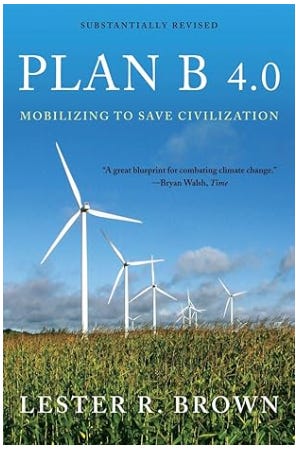
The book is endorsed by Jim Lauria, whose reputation and long-standing credibility in the water industry lend it direct validation.

Esther R. Brown’s Plan B 4.0 reads less like an environmental manifesto and more like an engineering briefing for civilization. The book’s strength lies in showing how food, water, energy, land, and economics are tightly coupled systems. One of its most striking insights is the water footprint of grain, particularly when food is diverted to ethanol production, effectively exporting vast volumes of water from already stressed aquifers. Brown’s framing of groundwater as capital rather than income is especially sobering: once depleted, it cannot be easily replaced.
Brown extends this analysis to the growing tension between agricultural and urban water use, the geopolitics of food scarcity, and the reality that many “land grabs” are ultimately about securing water. He argues that our current trajectory resembles a Ponzi scheme built on overdrawing natural systems, and he challenges professionals—from engineers to architects—to rethink water use through measurement, reuse, and localization. Plan B 4.0 is not a comfortable read, but it delivers a clear message: water is not just another resource—it is the operating system of civilization.
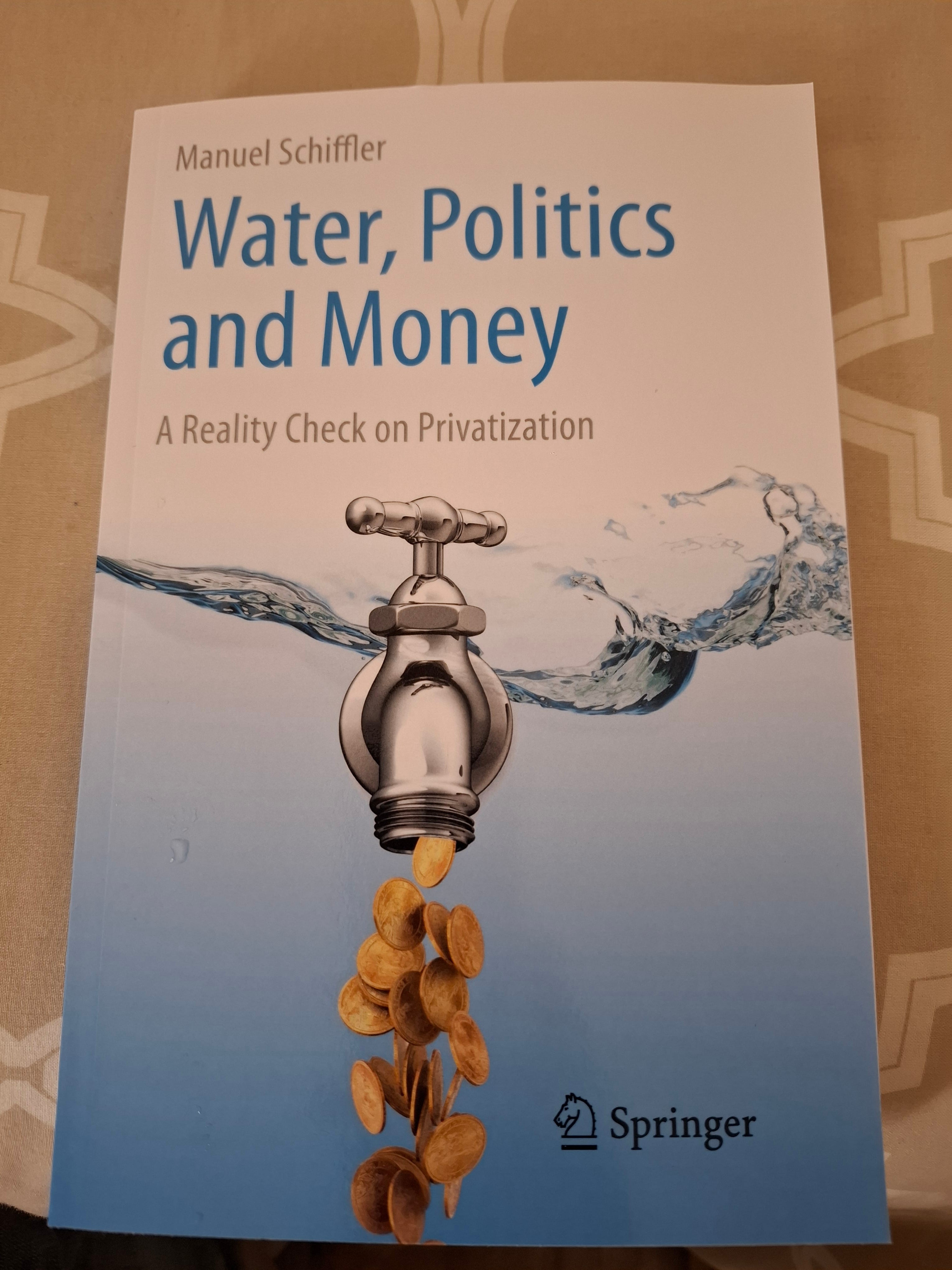
Water, Politics and Money — Manuel Schiffler
A book that reframes the story of water not merely as a public service, but as a complex intersection of politics, economics, and societal priorities, where management decisions can have profound impacts on equity, access, and sustainability.
Economist Manuel Schiffler examines the evolution of water governance and privatization over the past decades, comparing experiences from more than a dozen countries—including the United States, France, Germany, Bolivia, and the Philippines—to uncover what works, what fails, and why.
He explores how different models—from fully public utilities to private operators and public–private partnerships—have shaped the delivery, quality, and affordability of water services worldwide.
He then confronts the pressing challenges of the 21st century: balancing efficiency and public accountability, managing scarce resources, and navigating the political and financial pressures that define modern water systems. Schiffler shows that success depends not simply on the ownership model, but on institutional culture, governance, and context-specific strategies.
This is a systems-level book that blends economics, policy, and practical case studies rather than a technical manual.
After reading it, professionals in water management, infrastructure, policy, and development will see water not only as a utility to be supplied, but as a lens to understand power, governance, and social equity in modern societies.
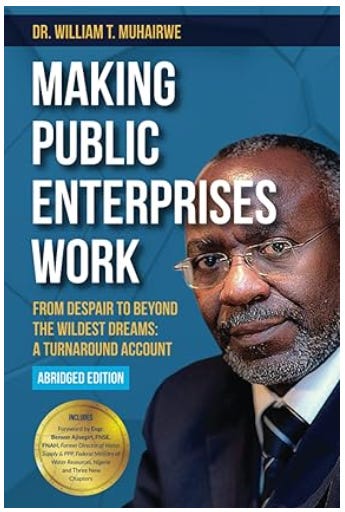
MAKING PUBLIC ENTERPRISES WORK:
In Making Public Enterprises Work: From Despair to Beyond the Wildest Dreams: A Turnaround Account, Dr William T Muhairwe, former Managing Director of Uganda’s National Water and Sewerage Corporation (NWSC), discusses the approaches used to turn around the underperforming State enterprise into a remarkable success story.
Chronicling incredible turnaround strategies such as ‘The 100-Days PIP’ orchestrated by Dr Muhairwe and team, this book is a timeless masterpiece that uses the case study of NWSC to illustrate that: Yes, public enterprises can work if they are well managed and operate under an enabling and supportive environment guaranteed by government and other stakeholders.
Beyond the odds-beating turnaround of NWSC, this abridged edition also illustrates that Dr Muhairwe’s turnaround formula was not a one-off. It works. Not only has NWSC continued to thrive and go from glory to glory long after Muhairwe’s tenure as CEO, but the same formula has been replicated with much success across the world—from Africa, to the Caribbean and Asia.
This book is at once challenging and inspiring. A recipe for change and a call to action for both public and private enterprises in their pursuit of excellence.
Blue Gold: The Fight to Stop the Corporate Theft of the World’s Water
In this “chilling, in-depth examination of a rapidly emerging global crisis,” Maude Barlow and Tony Clarke, two of the most active opponents to the privatization of water show how, contrary to received wisdom, water mainly flows uphill to the wealthy (In These Times).
Our most basic resource may one day be limited: Our consumption doubles every twenty years―twice the rate of population increase. At the same time, increasingly transnational corporations are plotting to control the world’s dwindling water supply.
In England and France, where water has already been privatized, rates have soared, and water shortages have been severe. The major bottled-water producers―Perrier, Evian, Naya, and now Coca-Cola and PepsiCo―are part of one of the fastest-growing and least-regulated industries, buying up freshwater rights and drying up crucial supplies.
A truly shocking exposé, Blue Gold shows in frightening detail why, as the vice president of the World Bank has pronounced, “The wars of the next century will be about water.”