

We are starting 2026 on a very strong note with a very special episode. Our guest today is, honestly, one of the most inspiring professionals I have met so far.
Space reserved for future sponsors, more info here.
It is interesting to consider:
Can an Architect with experience in the fashion industry spark a revolution—or better yet, add massive value—to our waste water business today?
Especially in a technology like MBBR (Moving Bed Biofilm Reactor) that many of us considered “consolidated” long ago?
The answer is a resounding yes.
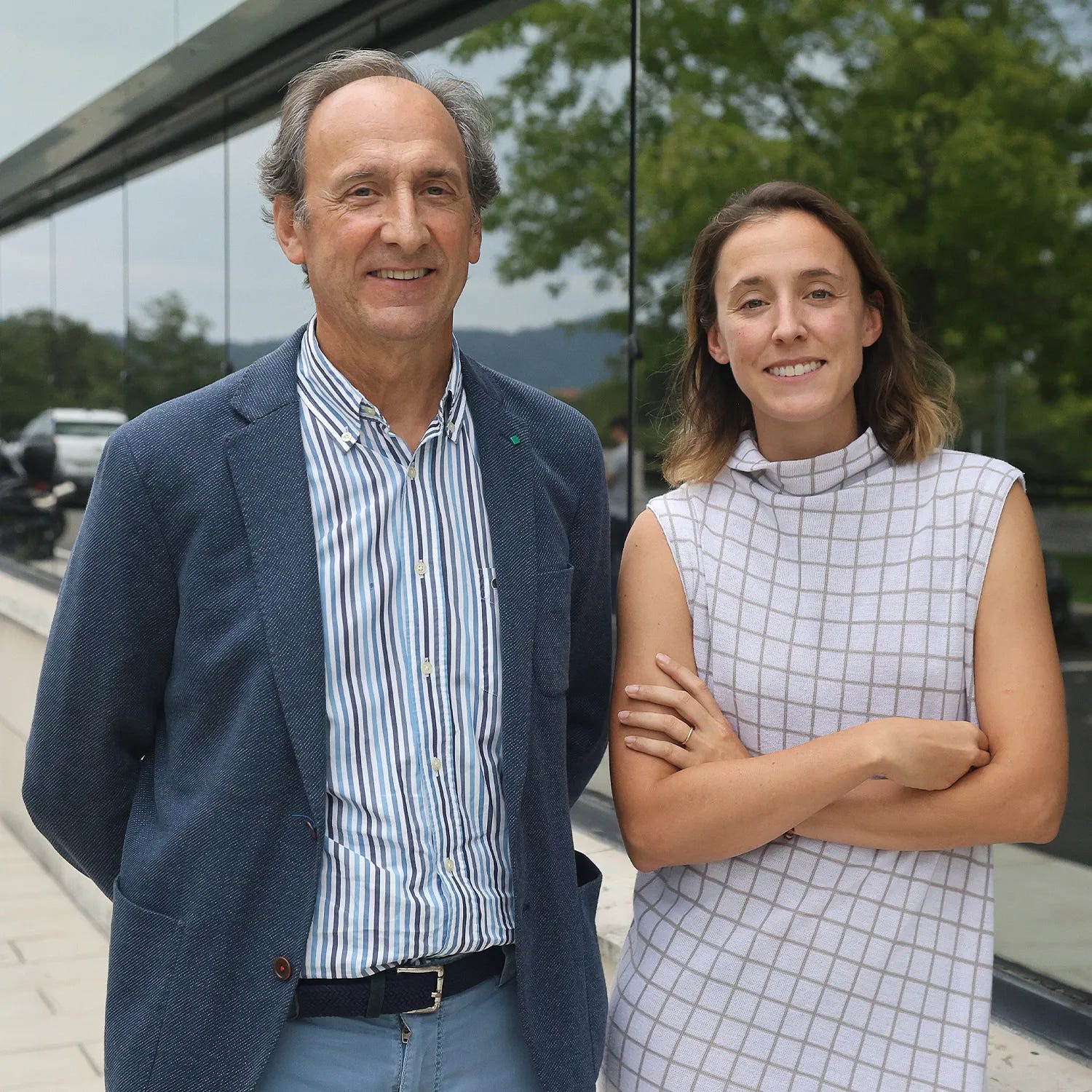
This is the story of Ines Larrea, co-founder of Cimico.
What we talk and share is essential for investors, founders, and large companies looking to implement “new” technologies in their projects.
The synergy of business and technical expertise
One of the most significant takeaways from Ines’s journey is the importance of a balanced founding team.
She transitioned from architecture and fashion (yeah clothing and that stuff!) to water, bringing the business acumen and entrepreneurial mindset needed to complement her father’s deep R&D knowledge (explained below).
In our sector, we often see startups led solely by technical experts who struggle because they focus too heavily on the technology while neglecting market demand.
Ines mentioned that her father Luis Larrea (a highly recognized expert in biological treatment) was the technical engine, but she was the one helping to build the company around it.
For an investor, a team that combines high-level technical depth with strong business management significantly de-risks the investment.
It ensures the product is not only functional but also marketable.
Solving the references
The primary challenge for any water tech startup is the lack of a track record.
Ines was very candid about this: clients are investing huge sums of money and they demand proven references to ensure reliability.
It is the classic “you need a reference to get a contract, but you need a contract to get a reference”.
They overcame this initial barrier by leveraging the personal professional reputation of Ines’s father.
Because he was already trusted by Spanish EPC (Engineering, Procurement, and Construction) firms, they were willing to give Cimico its first shot.
However, as Ines pointed out, jumping from a small plant to a facility treating 100,000 cubic meters a day is a massive hurdle.
Even if the physics of the technology is the same, the perceived risk for the client grows with every cubic meter.
Scaling innovation in a conservative market
Scaling a water technology is not just about building a bigger tank or item, it is about building a bigger bridge of trust.
Ines explained that in MBBR, you can be “aggressive” or “cautious” with your design.
They use mathematical simulations with 98% accuracy to propose designs that are sometimes “half” the size of their competitors.
While this optimization is a huge selling point (lower CAPEX), it also creates a challenge: convincing a client that a smaller footprint will actually work.
To scale, a company must prove that its solution is not just a “lab success” but a robust industrial tool.
For investors, seeing that a startup can navigate these skeptical conversations and successfully scale from 5,000 to 50,000 cubic meters is the ultimate proof of value.
The “cash cow” strategy for R&D
I found their approach to product sequencing brilliant.
Recognizing that radical innovation is difficult to sell immediately, they use established (but optimized) MBBR technology as a “cash cow” to generate the revenue needed to fund more disruptive R&D.
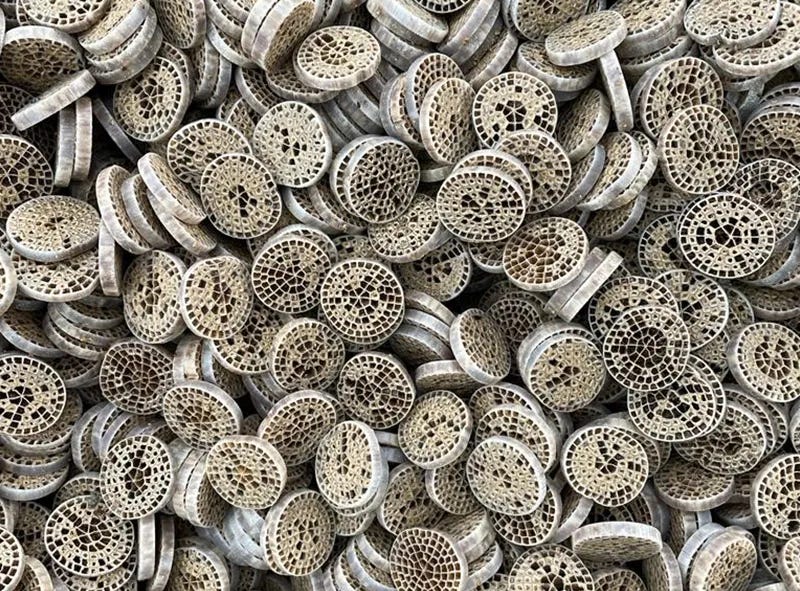
This steady income supports the development of next-generation solutions like energy-efficient processes, Anammox, and digital twin modules.
Their goal is to shift their business mix over the next five years so that digital solutions represent 30% of their activity.
It is a pragmatic lesson:
you have to maintain the business of today to afford the breakthroughs of tomorrow.
If you can’t sell what you have now, you’ll never survive long enough to build what’s next.
The "innovation tax": why being better is sometimes harder
There is always a catch when you try to disrupt the status quo.
Imagine you are working on a project with a 3-million-euro budget (the carriers from MBRR supplier + civil works associated + proportional of electrical and piping systems, etc).
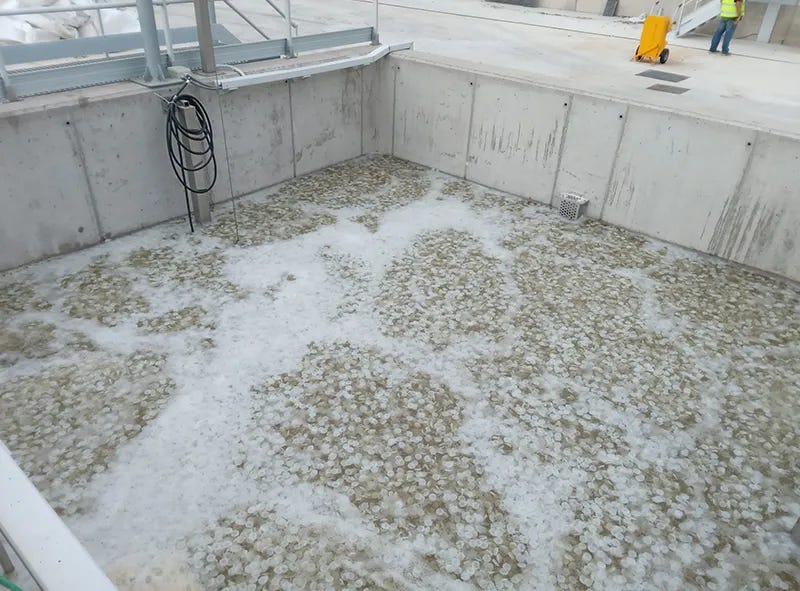
You go to the market for the core technology (the MBBR), and most suppliers give you a similar price and size for the concrete tanks.
Then, a company like Cimico comes along.
Their offer is 25% cheaper, and even better, they tell you they only need 70% of the tank volume because their design is so optimized.
Logically, this is a win-win. But in reality, this is where the friction starts.
Large end-users often hide in the “comfort zone” of established monopolies or approved vendor lists.
They ask:
“Why is this so much smaller? What if it fails? Why should we risk it when the expensive, oversized option is ‘safe’?”
As a contractor, you find yourself in the difficult position of having to “sell” the innovation to a skeptical client that thinks you just want to save money.
It takes a huge amount of effort to bridge that gap of uncertainty where nobody wants to be the first one to take the leap.
The future is even better
What interests me most about them isn't just what they have now, but what is coming next.
I believe their best work is still a few years away, and I want to follow their development closely.
I suspect they will provide some very big surprises on the international stage and huge value to all of us.
If you have read this far, remember this:
it doesn’t matter how consolidated a business seems; there is always, always room for innovation.
Great professionals (even an architect from the fashion industry!) can enter our sector and make us better on a global scale.
Innovation, effort, talent, purpose, and passion are the ingredients that create the great companies and solutions we discussed today.
I sincerely hope you take 30 minutes to listen to this conversation with Ines; I promise it is worth every second.
See you next week!