

Of all the equipment in a desalination plant, the dual-media pressure filter (DMPF) looks like the easiest to design.
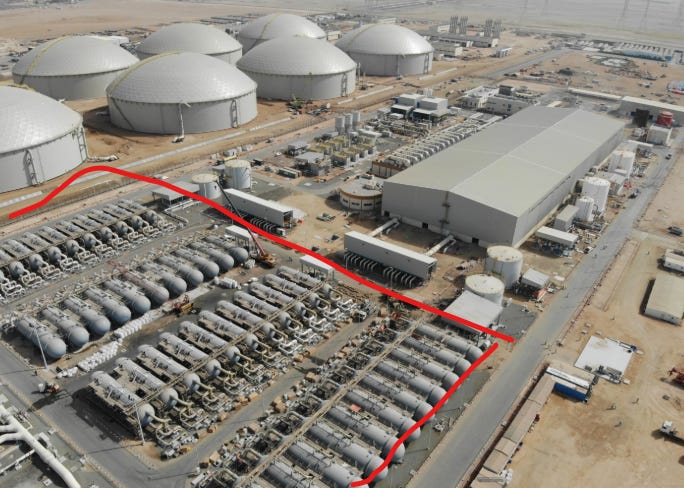
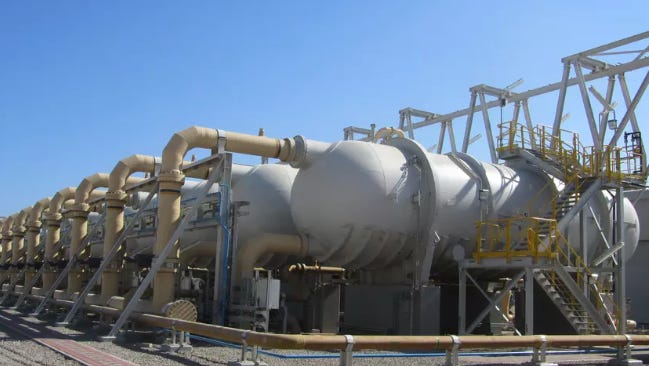
Ask me: “Ramón, for an X m³/day plant with this feed water, how many filters do I need and what do they cost?”
You will have an answer in two minutes.
Flow divided by filtration rate, area per filter, round up, add two spares, done.
It is so easy that this week I used AI to build a 3D artifact where you change the diameter, the length or the height of the nozzle plate and watch the rates at N, N−1 and N−2 change live, together with the nozzles, the bed layers and the weight of the vessel.
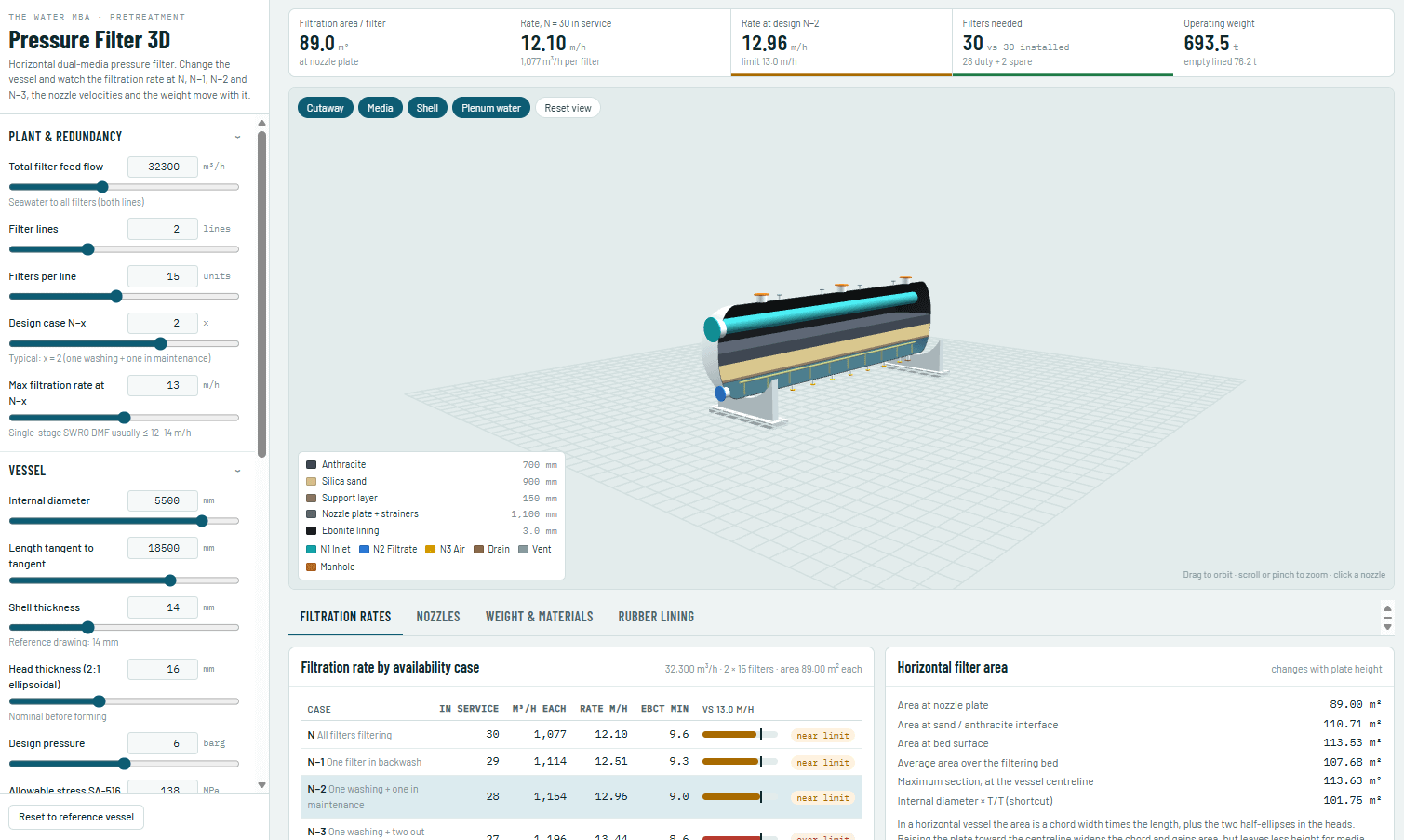
I will use it in the Desalination course I am preparing, so people see the parameters move instead of reading them in a table. I am a bit behind, I admit. The last two weeks have been somewhat special. But this module is taking shape.
And here is the question.
If it is that easy, why do problems appear? And why does my design differ from another engineer’s, given the same question and the same water?
That is today’s topic: process criteria, where to fabricate these filters, the famous rubber lining challenge, the filtration nozzles and a real operating problem that came up a few days ago in the community WhatsApp group about mudballs.