I went to Soria on holiday and I came back with a case study.
We arrived, dropped the bags, and my wife drank a glass of tap water and told me it tasted strange.
I gave her the typical answer every “every city tastes different, that does not mean it is bad, and I would bet it is very good quality…”
Then I did what every water engineer actually wants to do, which is go and look.
That is an occupational hazard in this business. You cannot spend thirteen years and then walk past a river without reading it.
But Soria rewarded the habit more than most places would.
It is a province of 90,000 people on the headwaters of one of the most important river in Europe.
📢 This post may be truncated in your e-mail due to the length. Kindly read here in browser for full experience.
Let me set the scene before I get technical.
The province that stopped growing
We often talk about population growth as a challenge for water systems.
Well, here we have an area where population growth is actually not the issue, but it brings a different set of challenges.
And, of course, it’s not exempt from the need to adapt to new compliance requirements and regulations.
Soria is the least populated province in Spain: 90,000 spread over 10,300 km².
That is a density of roughly 8.7 inhabitants per km² — not just the lowest in Spain, but one of the lowest in the European Union.
For context, the Duero catchment basin as a whole sits around 28 hab/km², and Spain around 95.
Soria capital holds about 41,000 people, which means nearly half the province lives in a single town.
This is not the residue of a place that was always empty.
The province peaked at 161,182 inhabitants in 1950 and then lost nearly half of them in a single generation of emigration between 1950 and 1975.
Six per cent of its residents are now over 85 years old.
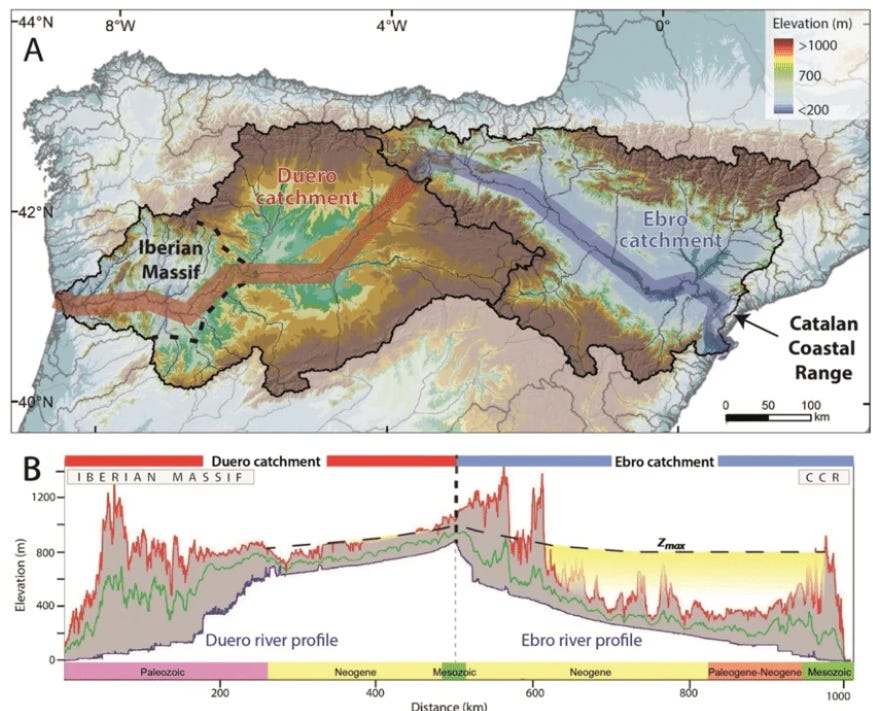
Here’s some context on this river basin, together with another major one: the Ebro.
The river you underestimate
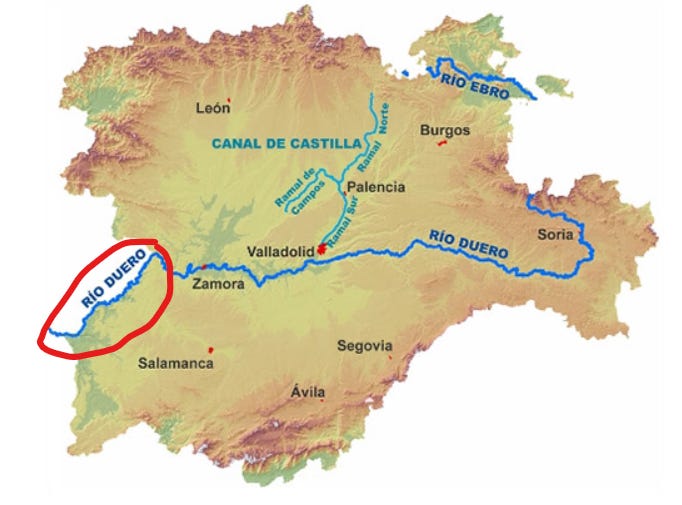
The Duero is 897 km long, o run through Spain, as international border as shown in the below picture, and Portugal.
Its basin covers around 98,000 km², the largest in the Iberian Peninsula.
And here is the number that people get wrong. At the Porto gauging station, before it reaches the Atlantic, the Duero discharges between 650 and 675 m³/s.
At the Spanish–Portuguese border it is already carrying about 570 m³/s.
That makes it the highest-discharge river of the peninsula at its mouth, ahead of every other headline name:
River Approx. mean discharge at mouth Duero (Porto) 650–675 m³/s Ebro (Delta) ~600 m³/s Tajo (Lisbon) ~440 m³/s Miño ~340 m³/s Guadalquivir (Sanlúcar) ~160 m³/s Guadiana ~78 m³/s
The Duero’s specific discharge is modest — about 6.6–6.7 L/s per km². It is not an especially wet river.
It is a very large catchment.
Volume comes from area, not from abundance.
In Soria, of course, you see none of that. The Duero through the capital is a river you could throw a stone across.
Standing in a flood zone without knowing it
First day we walked the river in the city itself, the stretch below the medieval bridge and the Monastery of San Juan de Duero, along the path towards the hermitage of San Saturio.
We had lunch at Soto Playa, a restaurant on the left bank in the green corridor. It is a good place.
It is also, I said to my wife somewhere between the torreznos and the grill, sitting in what looks unmistakably like a floodplain.
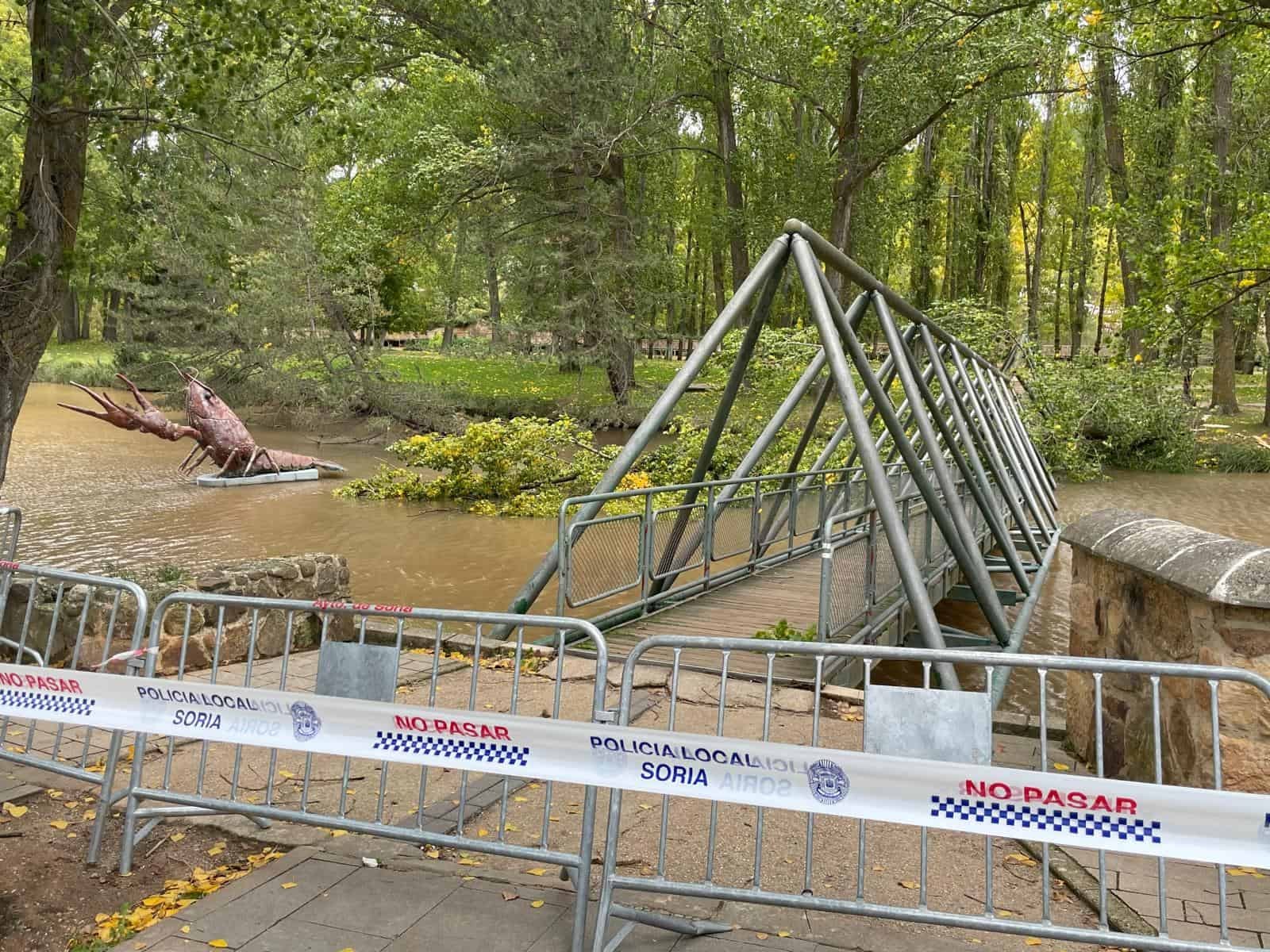
It was. Six months earlier the restaurant had been underwater.
The walkway where I was with the little kid, the bridge was broken few weeks ago.
The February 2026 flood episode was the longest and most intense the Duero basin has seen in a decade.
It ran from 26 January to 24 February.
The Confederación Hidrográfica del Duero (CHD) issued 2,780 flood warnings across 124 gauging stations and 52 river reaches, of which 511 were red-level, the category that means generalised overbank flooding.
At the Garray–Soria gauge just upstream of the city, the Duero peaked at 194 m³/s.
Soria did not lose a city to that flood.
The green corridor along the Duero — the wooden walkways, the meadows, the footbridges — flooded, and that is exactly what it is for.
The city built amenity on top of conveyance.
When the flood came, the flood plain did its job, the water went where the hydraulics said it would go, and the built city was untouched.
The one exception is a permanent building sitting inside that same envelope.
That is a planning decision, not an engineering failure, and it is a reminder that flood risk management is only ever as good as its weakest land-use consent.
The reservoir and the price of regulation
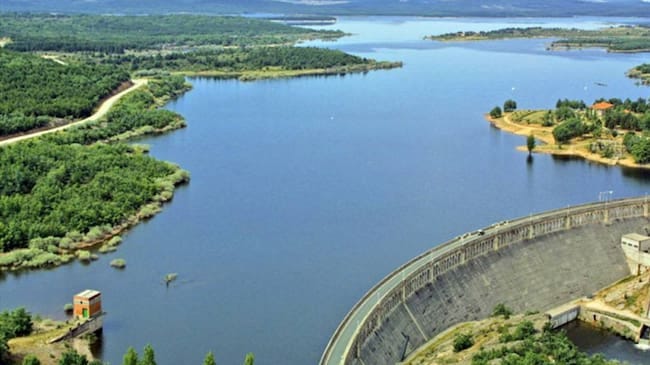
Thirty-odd kilometres north-west, at Vinuesa.
Cuerda del Pozo was inaugurated on 9 September 1941.
It is a gravity dam, 40.25 m high, 425 m along the crest, impounding 248.8 hm³ over 2,289 hectares from a catchment of only 548 km².
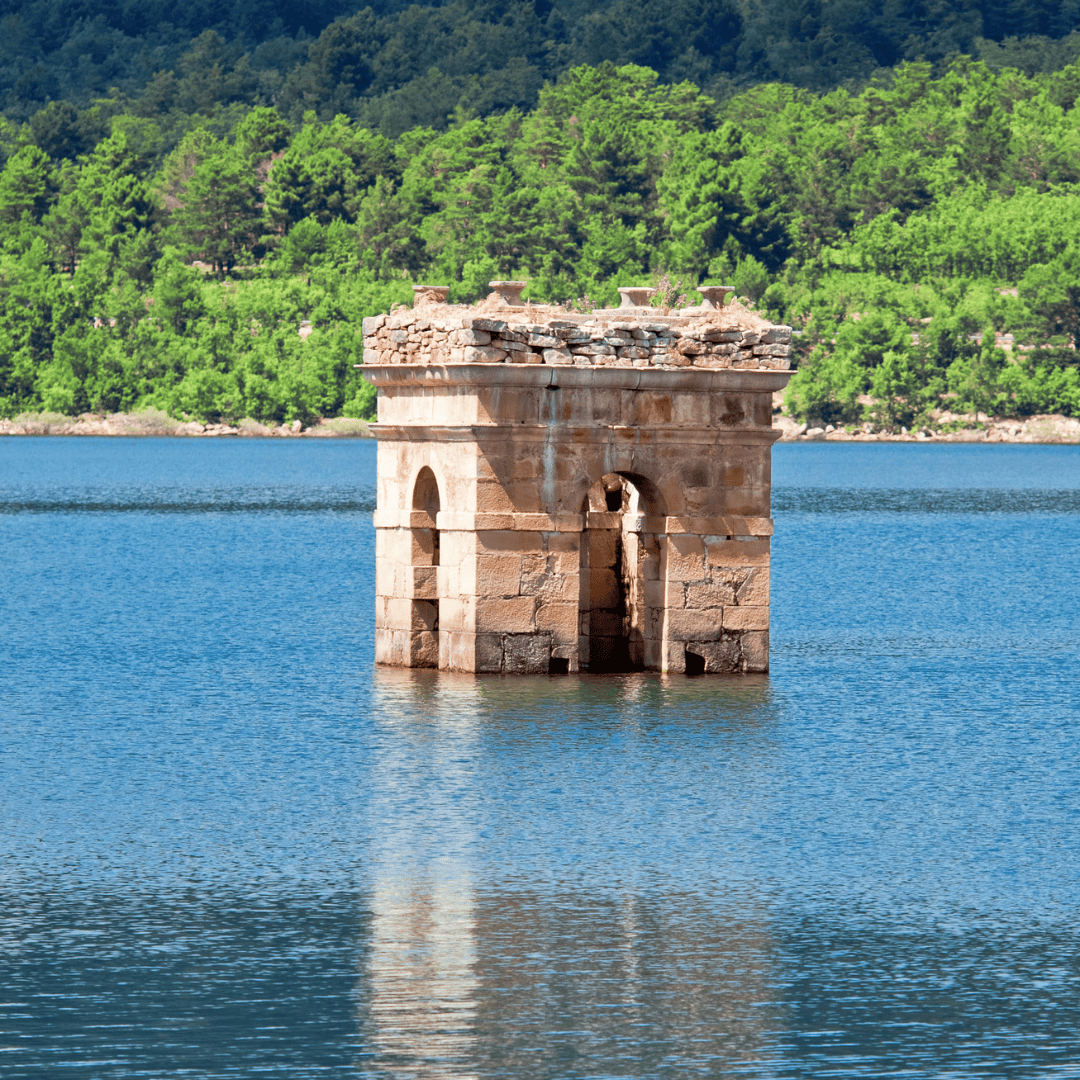
La Muedra village was drowned during its construction.
The population — around 340 people — was expropriated and largely resettled in Vinuesa a few kilometres away.
The church bell tower still stands above the waterline, and in drought years you can walk on the cracked ground where the houses were.
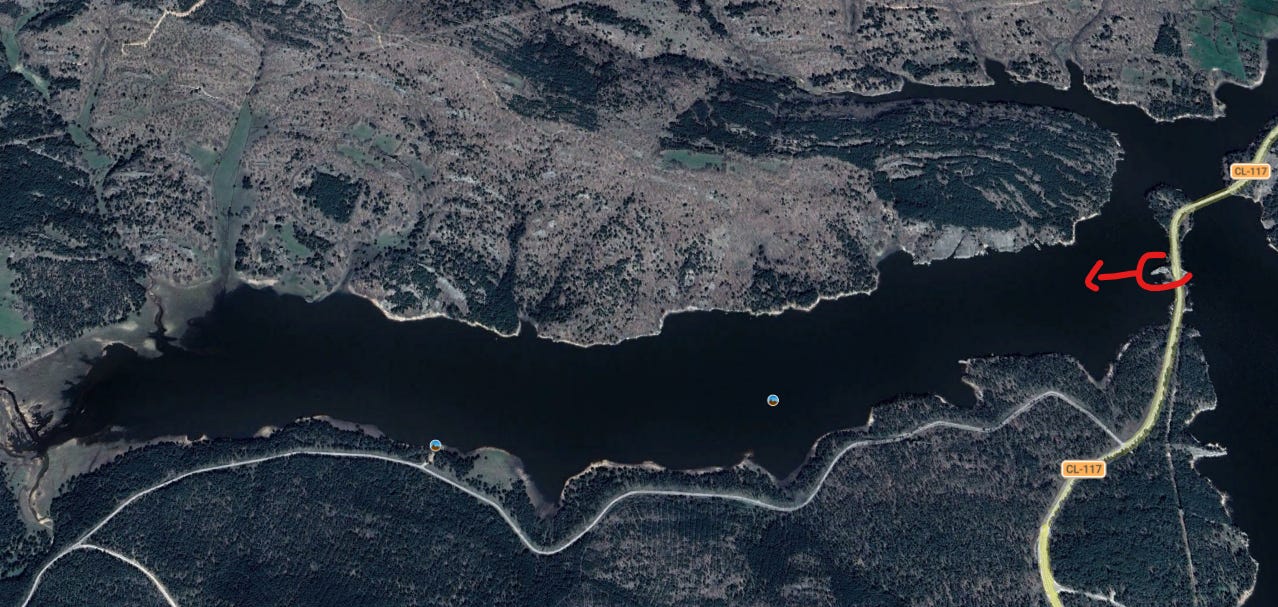
When we visited, the reservoir was at 65.6% (163 hm³).
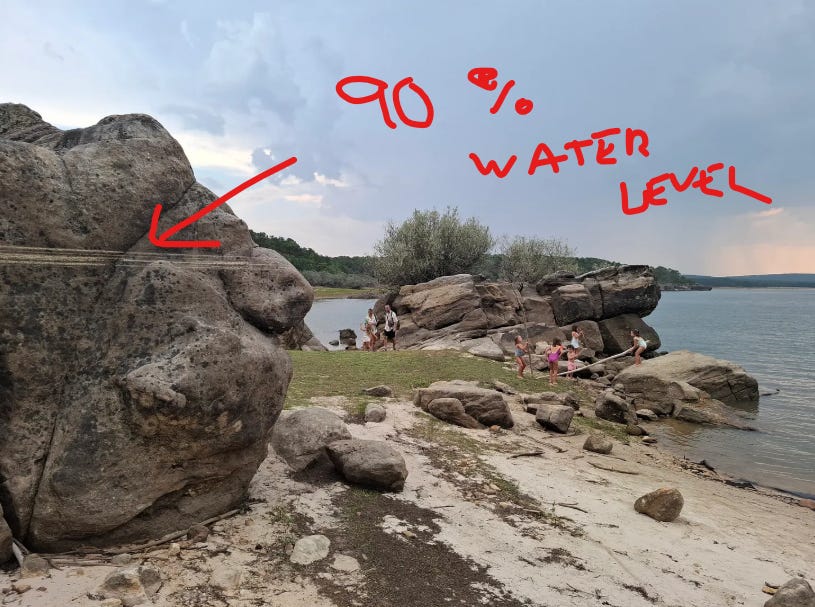
The high-water marks were clearly visible on the banks, the reservoir touched nearly 90% in the equivalent of the previous year.
This is where I found myself explaining reservoir operation to my family, so let me put it here too, because it is the single most misunderstood thing about dams.
A reservoir that is full is not a reservoir that is working.
The reservoir has to do two jobs.
It has to store water so that Soria and the irrigation districts downstream have a stable supply through the dry season, and it has to keep enough empty volume to absorb the next flood without having to make a panicked release.
A reservoir at 100% in November is not a success story, it is an operator with no options haha I know one friend who, in 2024, after many years of severe drought in Spain, were suddenly faced with a flood season unlike anything they had experienced in their lifetime. And I can tell you, he could barely sleep at night.
The professionals responsible for dam safety and dam operations are incredibly valuable. They carry a huge responsibility on their shoulders, especially when extreme events can change so quickly from drought to floods.
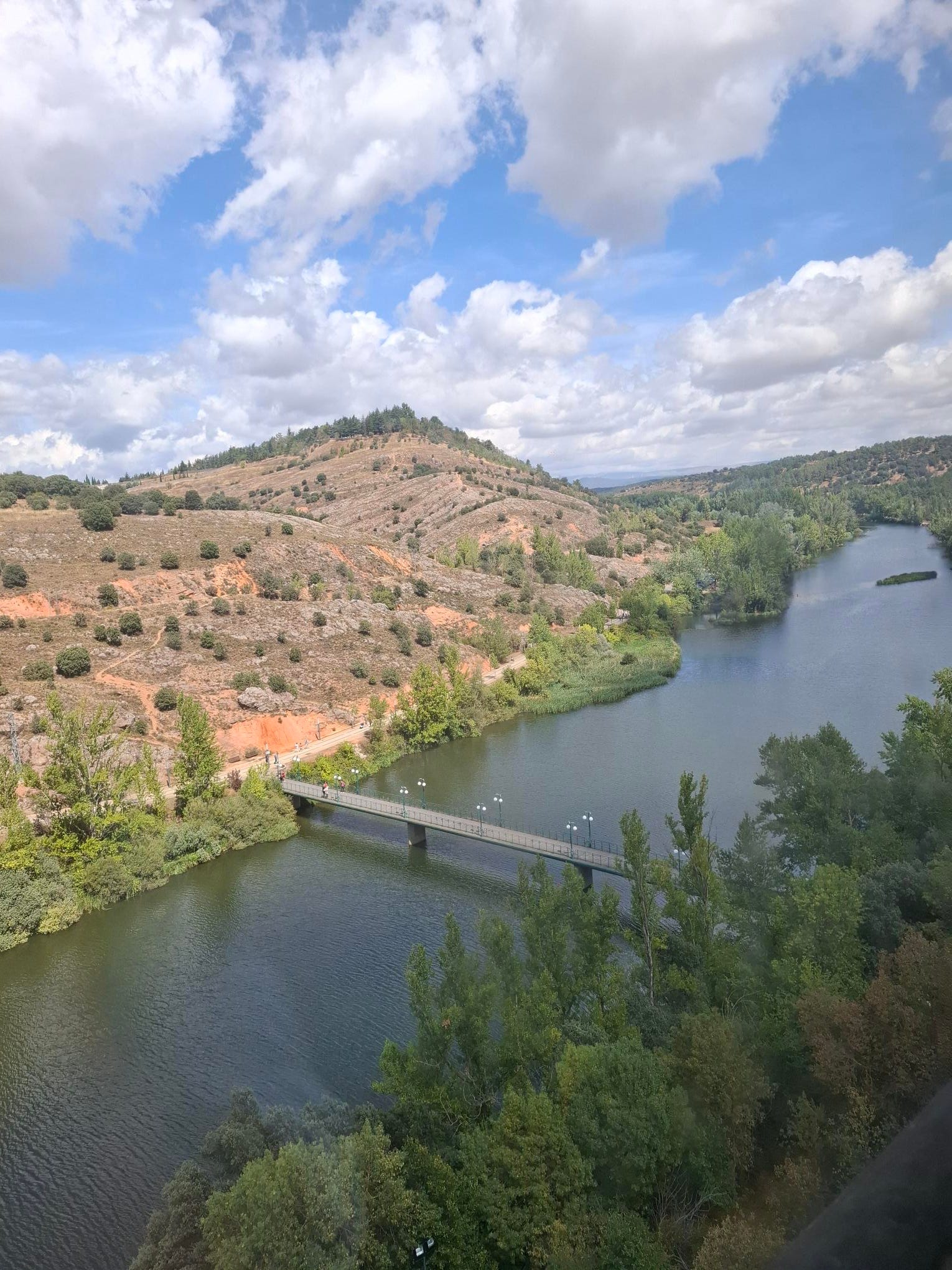
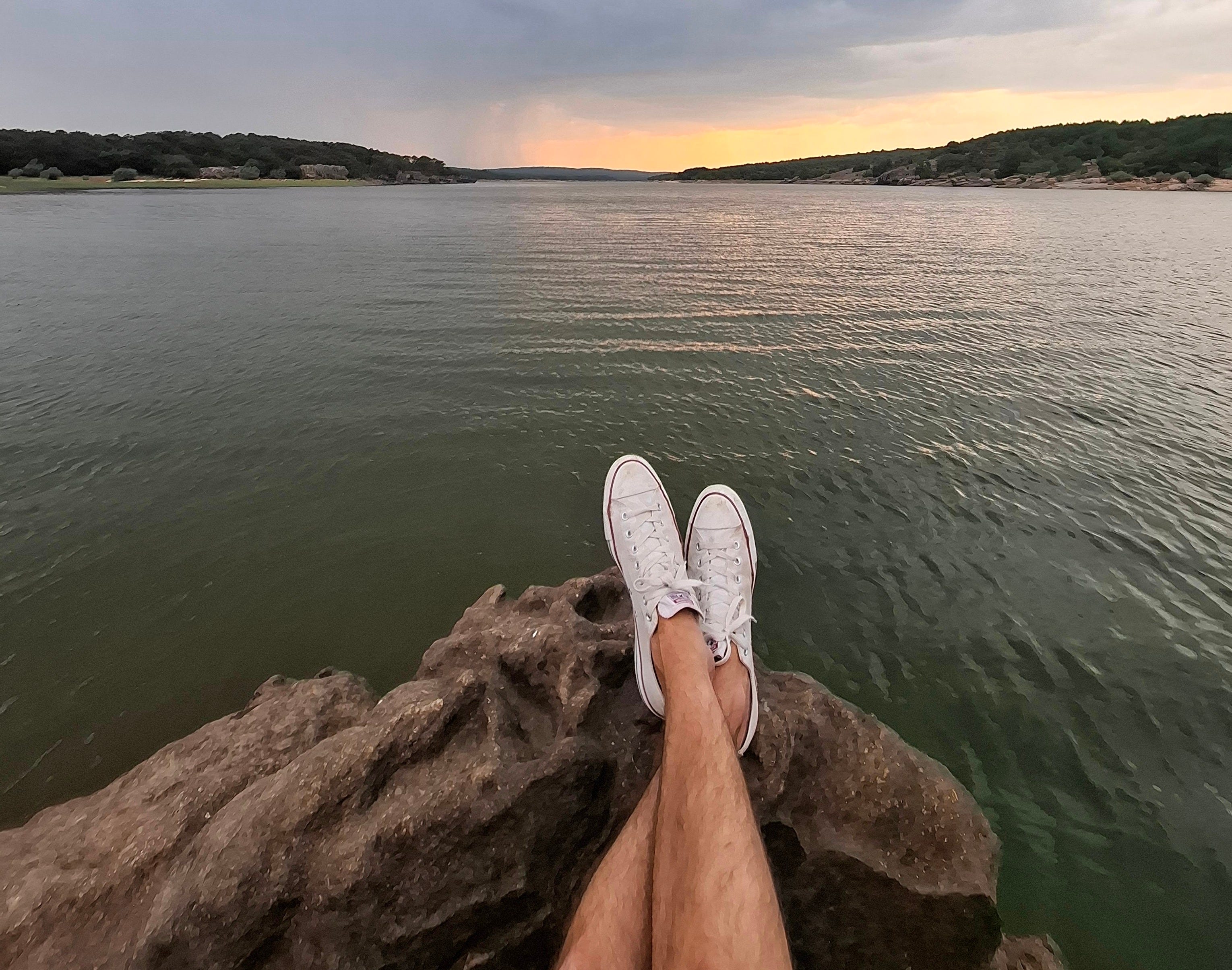
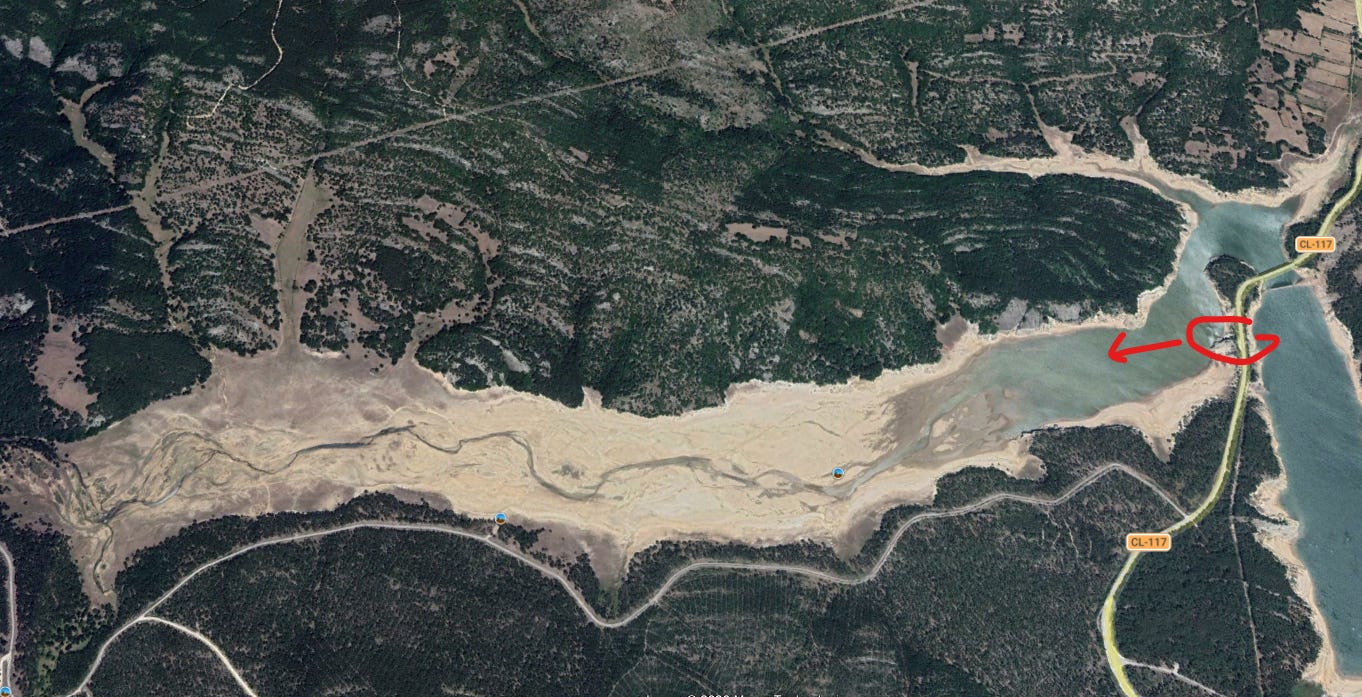
I took the picture in this direction.
In late August 2022, at the depth of the drought, it was down at 39%. The picture would look like very different!
Why Soria has the water but not the turbines
Cuerda del Pozo is the largest reservoir in Soria province and sits around sixth by capacity in the whole Duero basin.
And yet the Duero basin generates close to 25% of Spain’s hydroelectric energy — around 180 plants, 3,787 MW installed and an average producible output of some 7,600 GWh/year.
Aldeadávila alone, at about 1,140–1,240 MW, is the most productive hydroelectric plant in the country and accounts for roughly 8.5–10% of national hydro generation on its own.
None of that is in Soria.
The reason is the one that governs all hydropower and that anyone sizing a pump already knows in their bones: power is head x flow.
Soria has the flow’s origin but almost no head — the Duero drops gently across the meseta for hundreds of kilometres.
The Arribes del Duero, on the Portuguese border, has around 400 m of drop concentrated into a granite canyon.
Fourteen reservoirs there are dedicated exclusively to hydropower and hold 4,457 hm³ between them, about 80% of the basin’s installed hydro capacity.
Where the Duero is born
At around 2,160 m. The water comes from two mechanisms.
Infiltration through the sandstones and conglomerates of the Sistema Ibérico feeds a baseflow, and snowmelt from the Urbión massif adds a strong spring pulse.
One honest correction to my own first instinct, though, and I think it matters for anyone using Soria as a teaching case: the Duero is mainly snow-influenced at its birth.
By the time it passes Soria city it is already behaving as a pluvial river typical of a continental Mediterranean climate. The snow signal is real but it is local, not basin-wide.
Which means the Colorado River analogy people reach for — where a bad snowpack year in the Rockies is a reliable early-warning signal for water scarcity all the way down to Mexico — only partly applies.
In the Colorado, snowpack is the reservoir.
In the Duero, snowpack is one input among many into a system whose real regulating capacity is 7,600 hm³ of concrete.
That is a different risk profile, and worth being precise about, because “we have a snowpack problem” and “we have a reservoir operation problem” call for entirely different investments.
A little bit of hydrogeology
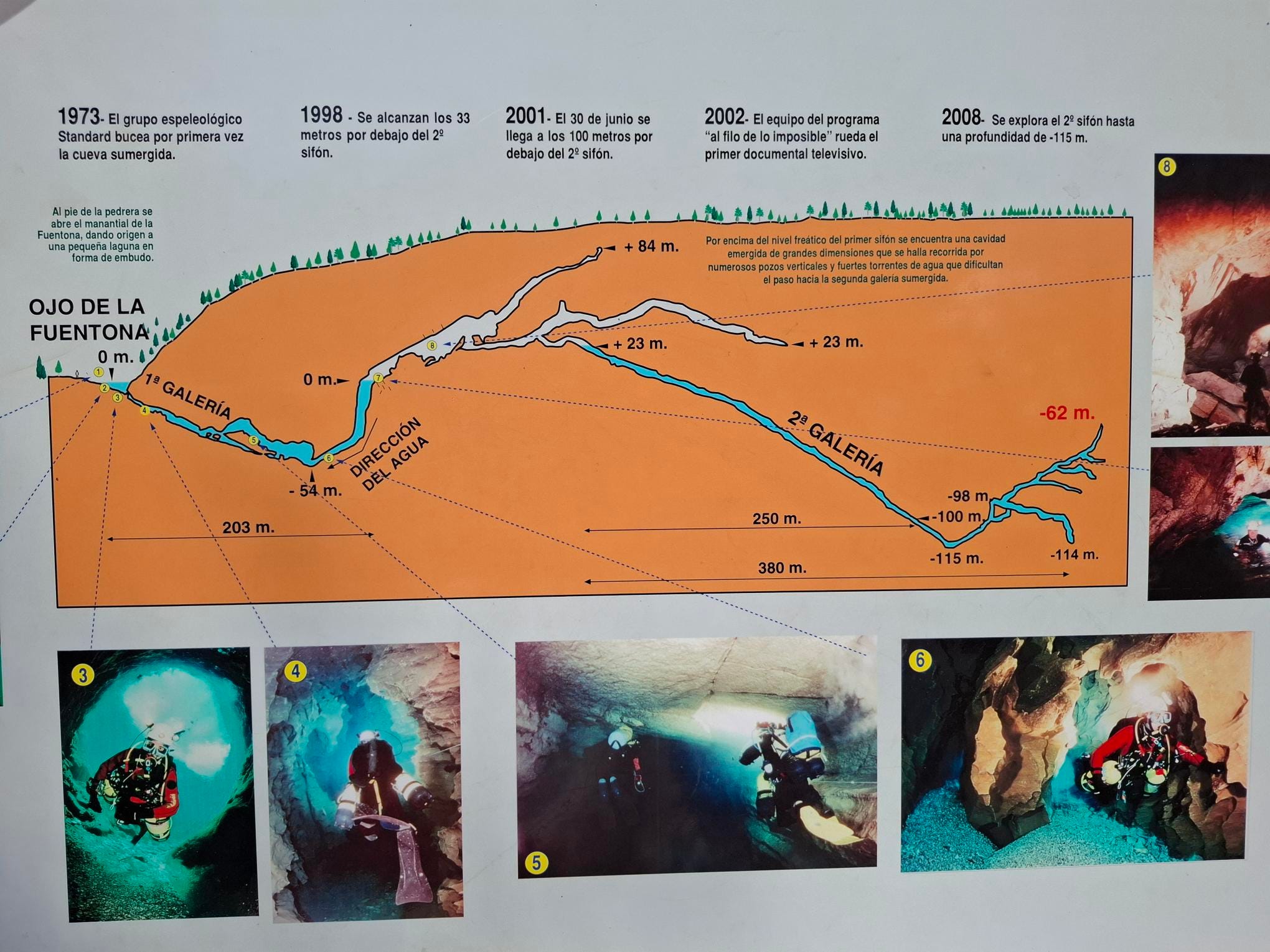
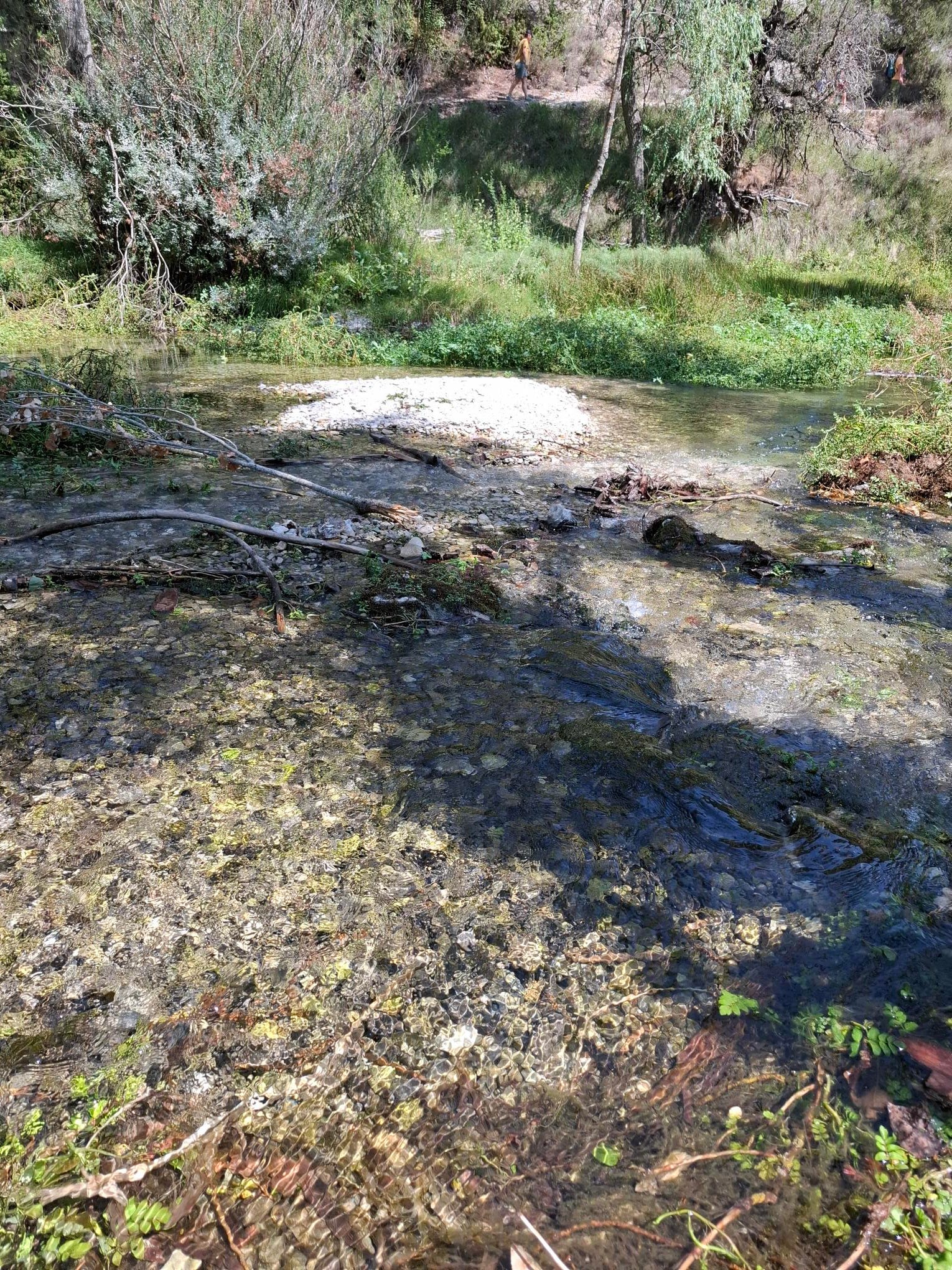
Impressive visiting the origin of one of the rivers feeding the main one Duero.
An aquifer pops up in kind of a small lake and subsequently a river shown in the below picture.
How Soria drinks
Simple:
1. Storage and regulation. Cuerda del Pozo dam releases a controlled flow into the Duero — a few m³/s in normal conditions, rising through the irrigation season, and 116 m³/s when it is passing a flood.
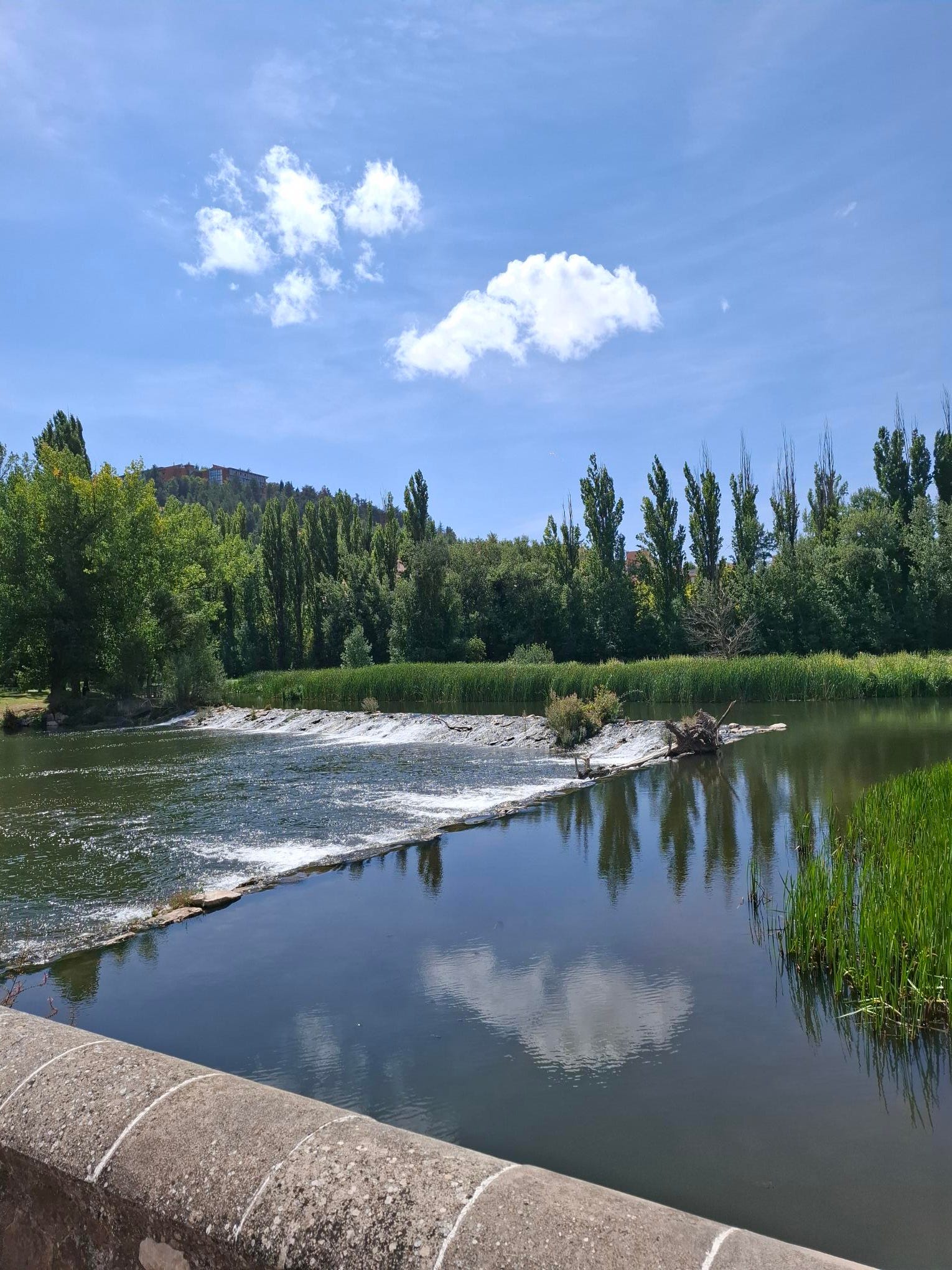
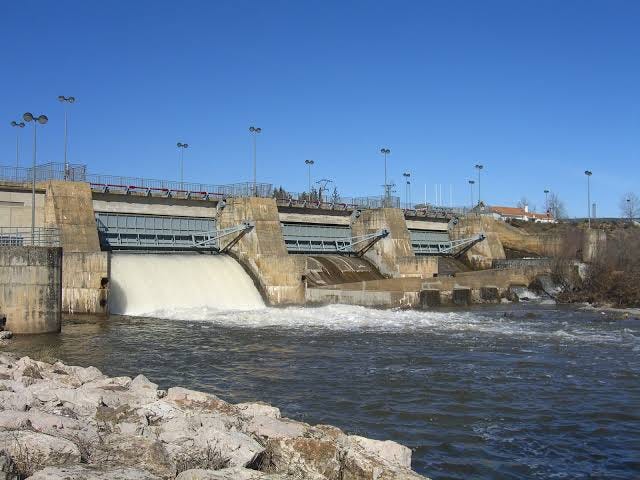
2. Abstraction. Roughly 20 km downstream the dam, the Azud de Campillo de Buitrago — a small weir 75 m long and 7.8 m high, owned and operated by the riber basin authority (not the water utility) — creates the head needed to divert supply.
A DN800 steel main passes through a bore in the right abutment and carries raw water to the drinking water treatment plant (ETAP in Spanish).
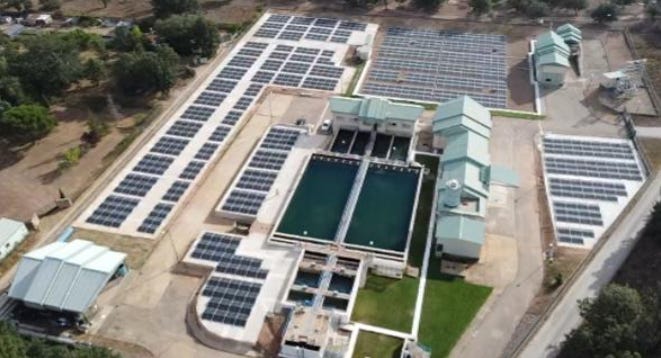
3. Treatment. The main runs to the municipal Drinking Water Treatment Plant.
The Soria drinking water treatment plant has been operating since 1991.
After more than three decades of operation, the facility has undergone several modernization investments and is now entering a new phase focused on digitalization, automation and potentially the expansion and refurbishment of its treatment line.
By the way, it’s worth highlighting that this city is home to two of Spain’s most famous athletes.
Walking through the city centre, I happened to come across one of them, Abel Antón, who won the World Marathon Championships twice, in 1997 and 1999.
Born in 1962, he has spent his entire life drinking water from an old-fashioned drinking water treatment plant, one that historically struggled to cope with turbidity and organic matter, particularly during the rainy season.
So, a funny question around a beer came: are we maybe over-treating our water today? We’ve not won any marathon again…!
4. Distribution. Treated water is pumped and gravity-fed into the network and the service reservoirs.
Who runs it
This is the part I find most interesting from a sector-structure point of view, because Soria did something “unusual”.
In 2013–14 the municipality re-tendered its integrated water cycle — supply, sewerage and treatment — not as a straight concession but as a mixed-economy company.
The result is Agua de Soria S.L, a public–private vehicle in which the City Council retains ownership alongside a private partner (Sacyr), on a 25-year term.
🏛️ City of Soria: 26%
🏢 Private partner: 74%
That is neither the fully municipalised model nor the fully privatised concession.
It is the middle path: the municipality keeps a seat inside the operating company, sees the books from the inside, and shares in the upside, while importing operational capability and investment capacity it does not have in-house.
The deal included a €12.6 million canon payment to the city and around €30 million in planned hydraulic investments over 25 years.
Importantly, although the private partner holds the majority of the shares, the municipality retained significant control over key strategic decisions (requiring 75% minimum) through qualified-majority requirements and its representation on the board.
Where it ends, the waste water treatment plant
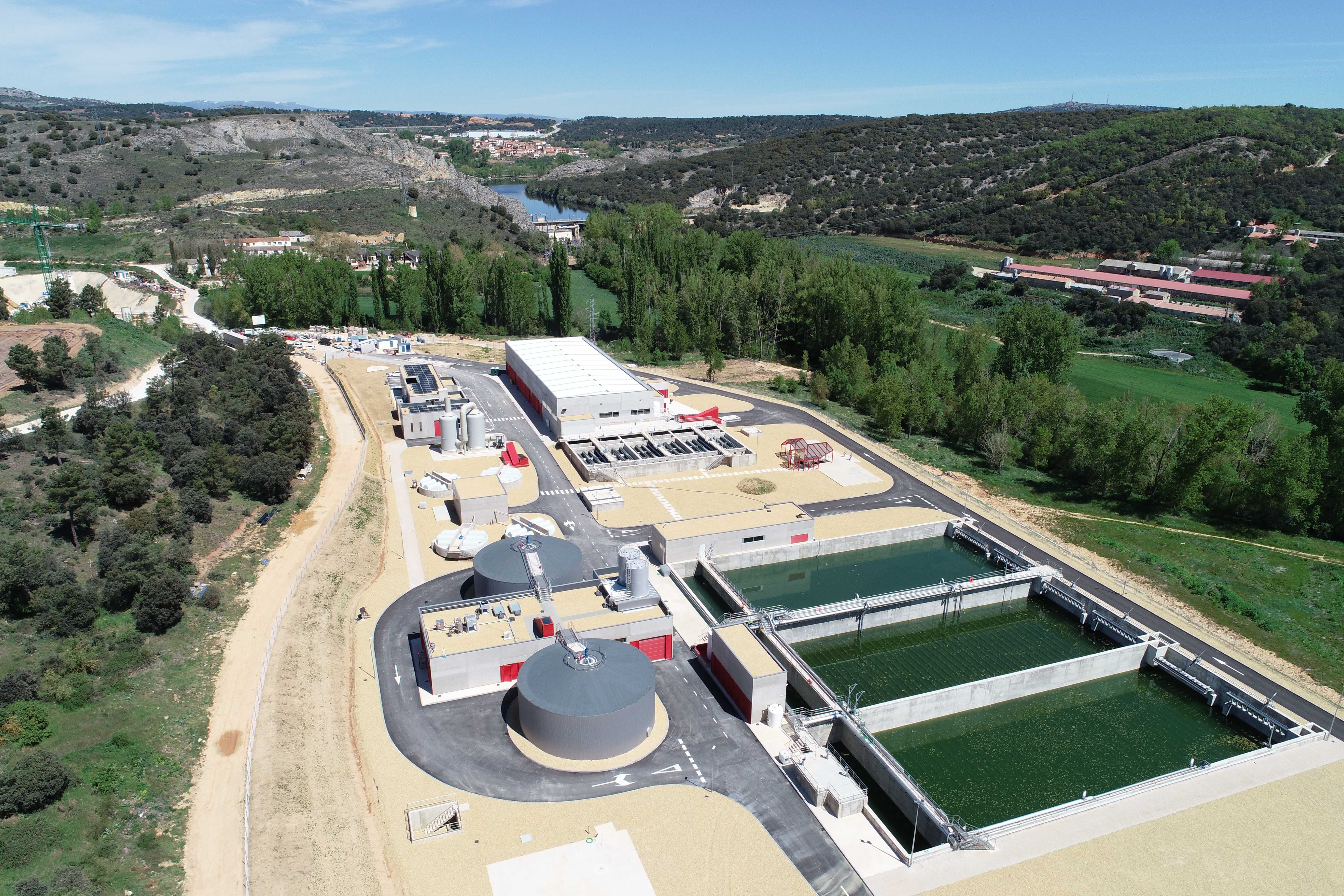
Soria’s wastewater is now treated at the WWTP of Sinova, in the municipality of Los Rábanos, a few kilometres downstream of the city.
It was built by ACUAES, commissioned at the end of January 2025 and officially inaugurated on 10 February 2025, replacing an ageing plant inside the city which is now being demolished as part of a river-restoration programme.
The headline figures:
135,000 population equivalent, expandable to 180,000
24,000 m³/day average flow, 48,000 m³/day peak
Total investment around €85 M for the plant, ~€100 M including the emissary tunnel, collectors and environmental works
Funded roughly 56% from EU funds, 21% Junta de Castilla y León, 21% Ayuntamiento de Soria
A 5 km emissary tunnel connecting the city and Los Rábanos discharge points to the plant
For a city of 41,000 to build a plant sized at 135,000 p.e. deserves comment, but not sure if part of it is industrial load or it is deliberate headroom…
Before the new Sinova WWTP, Soria was served by an older WWTP.
The old plant was not simply replaced because it was old. The project was driven by the need to improve treatment to meet the Urban Wastewater Treatment Directive requirements, particularly nutrient removal because the receiving water body is in a sensitive area
THE NEW PROCESS LINE
Emissary and storm management.
The 5 km tunnel doubles as a storm tank, storing up to 8,000 m³ per rainfall event.
In its first 100 days of operation — with nine days exceeding 10 L/m² and one reaching 35 L/m² — it eliminated untreated discharges to the Los Rábanos reservoir for the first time.
It also carried the plant through the 28 April 2025 Iberian blackout: the EDAR was without power for ten hours and still did not spill untreated flow to the river.
That is what resilience looks like in practice.
Pretreatment. Screening, grit and grease removal.
Primary treatment and storm treatment, designed for 1.7 m³/s — six times average dry-weather flow, or 144,000 m³/day.
Sizing the primary line at 6× average is what allows the plant to take a wet-weather peak into full treatment rather than bypassing it.
Secondary: SBR with nutrient removal. A sequencing batch reactor biological process at an average 1,000 m³/h, with biological nitrogen and phosphorus removal.
This is not optional: the receiving water is a declared sensitive zone under Directive 91/271/EEC.
SBR is a sensible fit here, it handles variable load in a batch cycle without needing separate clarifiers, which suits a plant whose incoming flow swings hard between seasons.
Sludge line: anaerobic digestion with cogeneration.
Digestion with a gas engine recovering biogas as energy.
The plant did not have an untroubled birth, construction of the tunnel punctured an aquifer and generated turbidity discharges into the Duero that drew a CHD enforcement file, and the works ran roughly a year late. That is worth recording too.
Good infrastructure is not the same as painless infrastructure.
Next
Well, this was my week of vacation with the family.
Tomorrow, I’m heading to Disneyland Paris. I’ll probably analyze how Mickey drinks his water… or maybe not! 😄
Because next Sunday, we’re starting a new series of publications where you’ll learn much more about water, starting with the Colorado River.
Thanks, as always, for reading, engaging, and being part of the journey!



That was an educative filled holidays! Our full sympathies with your family but kudos to you for an excellent article.
Great article!!!