I’ll be honest: AI is overwhelming my mind right now.
Not in a bad way, but the pace is exponential, and every week I see another sign that the way we engineers work is about to change for good.
Last week, I spent some time improving my AI skills through two actions.
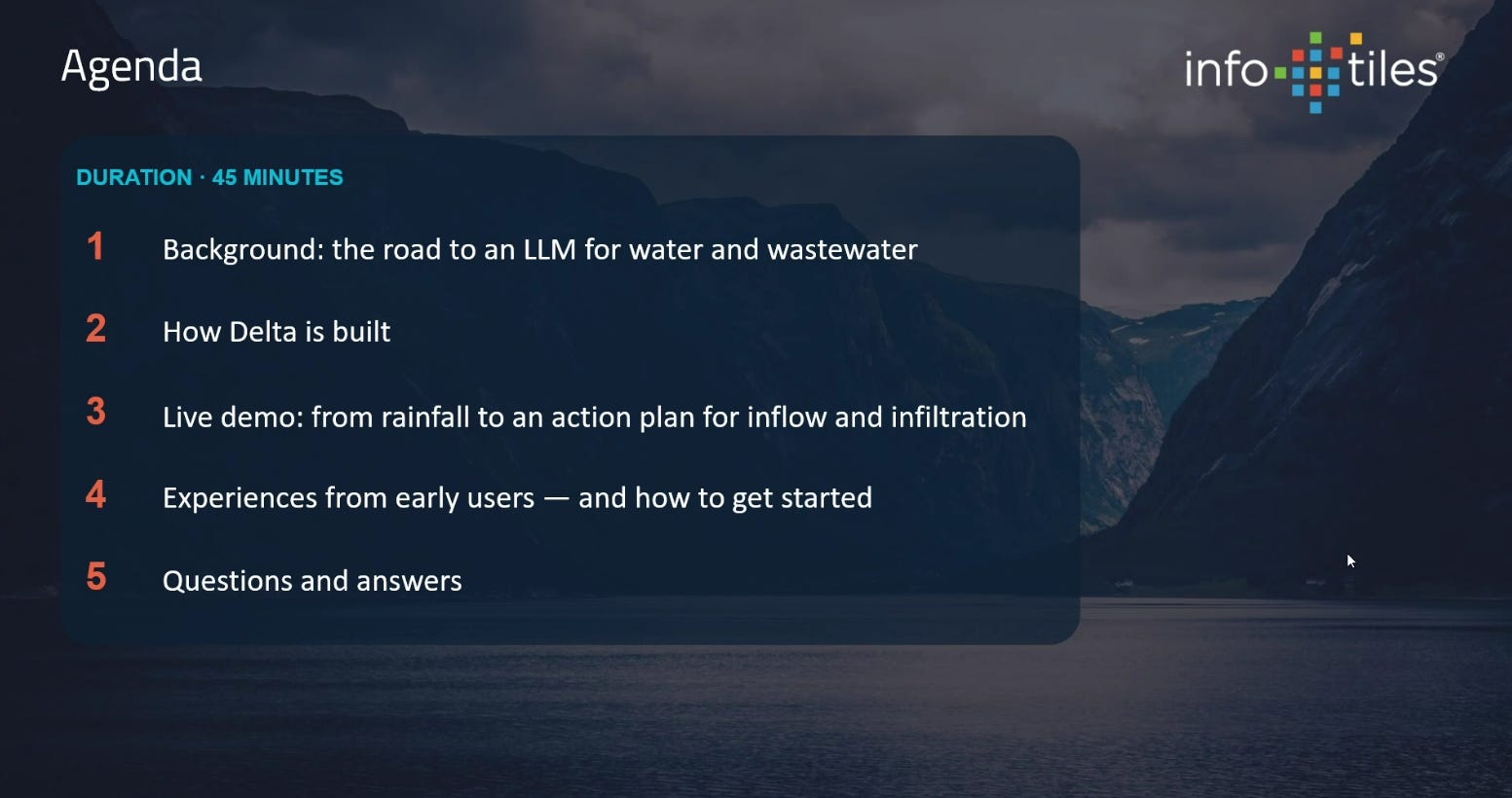
I joined a demo from Infotiles of their Delta platform (thanks, Johny, for the invitation).
Delta applies AI to inflow and infiltration (I&I) analysis in sewer networks.
It is curious that we were talking a few months ago with Marcos (below) about how AI will allow us to operate, to talk to the agents…and then it is already here.
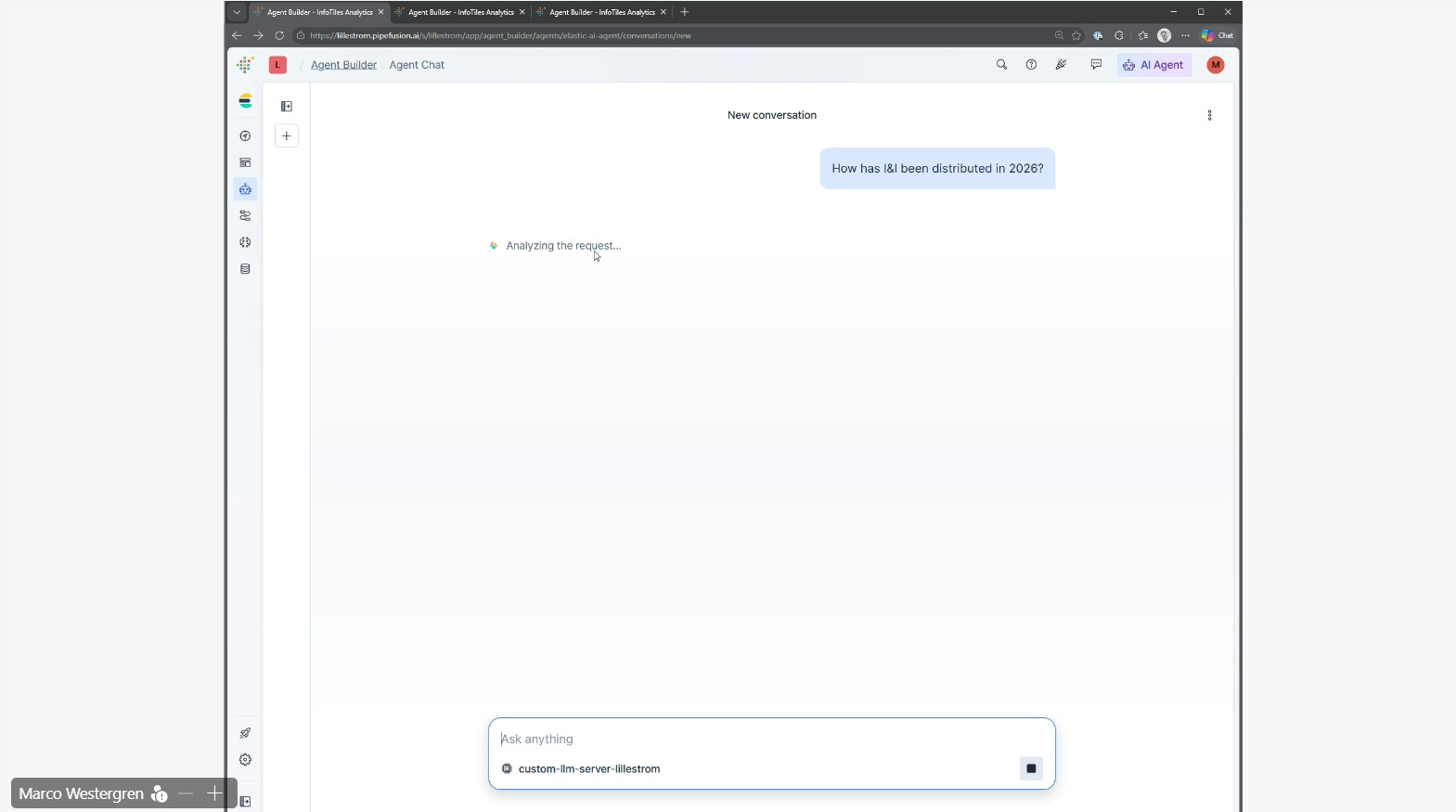
For a large utility, an I&I study can take months or even years. By the time it’s finished, the data it started from is already out of date.
I also attended the recording of the first module of our AI in Water Operations course with Sandro Hansen.
I took three pages of notes, from the first module alone. As I listened to Sandro, I could literally feel my brain rewiring itself. This is probably the best decision I’ve made over the last three years. I’m very grateful, as the content is far exceeding my expectations.
A few headlines I wrote down to discuss further:
AI may fail before AI project begins.
A plant that can make adjustments by itself?
I loved the case studies exposed.
Difference between a digital layer and an intelligence layer.
The 5 questions behind every operational decision.
5 problems → 5 different approaches
Don’t postpone your AI training
This first cohort is the only one that will include a bunch of live sessions with Sandro and me. Later the course will be available on demand, which is great, but you’ll miss the live interaction.
If you’ve been meaning to “get into AI” someday, this is the time. Believe me, we’re going to need it
You still have a few days before we start releasing the content.
Getting back to the Infotiles Demo, I’m going to explain my perspective on what I learned from this.
What I saw is that they used real data from a Norwegian municipality with about 3 million metres of pipe.